Moving a club registry off spreadsheets: a checklist for the board
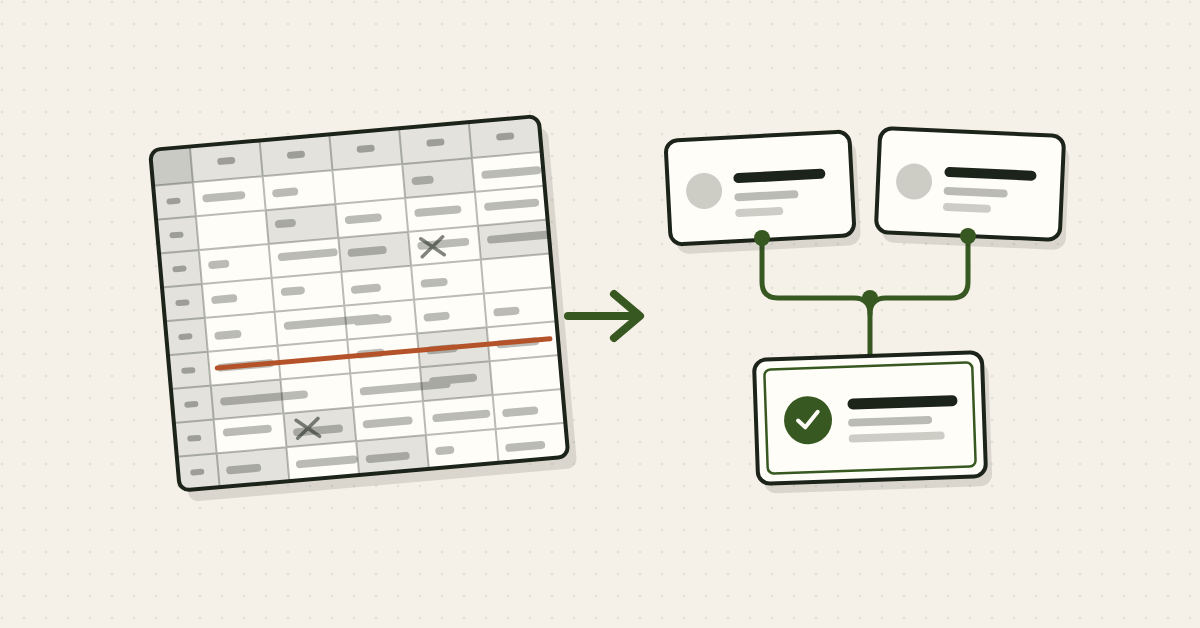
To move a club registry off spreadsheets, the board first names the one official copy, cleans it and freezes it, then sets a cutover date away from the busy season and puts in writing who owns the records afterward. Most of the work is deciding and checking, not typing, and a board that does it before choosing software makes every later step easier.
 Dusty Mumphrey
Founder, Breed Ledger. Senior engineer. Active multi-species breeder.
Published 7 min read
On this page
This checklist is for the board, registrar and secretary of a breed club, society or registry, of any species, whose book still lives in one or more spreadsheets. By the end you will know the signs that the spreadsheet has outgrown the club, the decisions the board owns, and how to clean the records and keep registrations moving while the change happens.
How do you know a spreadsheet registry has outgrown the club?
A spreadsheet has outgrown the club when nobody can say for certain which copy is the real one. Every other sign follows from that.
Watch for these:
- Several copies. One on the registrar's laptop, one emailed to the secretary last year, one printed for the annual meeting.
- One person who understands it. The columns, colors and abbreviations make sense only to the person who built the sheet.
- Transfers recorded late. A sale happens in spring and the owner column changes in autumn, if at all.
- Numbers issued twice, or skipped. Two animals share a number, or a gap appears that nobody can explain.
- Membership and registry out of step. The member list and the book disagree about who is current. One sheep society told members in 2026 that membership due dates had not been updated for some time and asked them to help correct the records [1].
Take the fictional Larkspur Fell Flock Book Society. After lambing, the registrar enters new ewes and rams into a workbook. The secretary keeps a separate member sheet, and the treasurer has a third with fees paid. By registration season the three disagree, and the flock book printed at the end of the year inherits every mismatch.
What should the board decide before anything moves?
The board decides what the official record is, who owns it, and when the change happens. These are governance decisions, and they belong in the minutes, not in an email thread.
- Name the official copy. Pick one file as the book of record. Every other copy becomes a reference only.
- Ownership. Confirm in writing that the society owns the records, and read the terms of any software the board considers.
- Access. List who may read the records and who may change them, by role rather than by name.
- Numbering. Write down the current numbering rule, including prefixes and any numbers retired or reserved.
- History to keep. Decide what counts as part of the record: scanned certificates, inspection notes, old flock books.
- A project lead. Name one person in the society who owns the move, and one deputy.
- A cutover date. Choose a quiet time. For a sheep society that means not during lambing or the main registration season.
- Budget. Agree what the society will spend and who approves it.
Put the numbering rule in writing before the move, even if it seems obvious. It is the rule most likely to live only in the registrar's head.
How do you clean a registry spreadsheet before the move?
Clean the official copy in a working file, and keep the original untouched. The aim is a book where every animal appears once, every number is unique and every parent points to an animal that exists.
- Freeze an archive copy. Save the original as read-only, dated, and store it where at least two officers can reach it.
- One row per animal. Merge duplicates, and keep a note of which rows were merged.
- Check numbers are unique. Sort by registration number and look for repeats and gaps.
- Check parents. Every sire and dam number should match an animal in the book, or be marked as unrecorded.
- One date format. Pick one and convert every date to it.
- Consistent owner names. "J. Smith", "John Smith" and "Smith, J" should be one owner, not three.
- Mark status. Deceased, exported or culled animals should say so, not simply disappear.
- Flag, do not guess. Where a record is uncertain, mark it for the registrar to check. A guessed parent is worse than a blank one.
Larkspur's registrar might find two ewes sharing a number from a busy lambing year. The fix is a recorded decision by the registrar, approved under the society's rules, not a quiet edit.
How do you keep registrations moving during the switch?
Set a cutover date, tell members in advance, and decide how the society will handle applications that arrive in the gap.
Registries that have faced a backlog during a change of system include the American Brahman Breeders Association, which told its members in 2018 that the move to a new system had run into unexpected delays and left a backlog of work [2]. That is the outcome to plan against.
- Announce the date early. Tell members when the old process stops and the new one starts.
- Set a short pause, if needed. A known pause is easier for members than an unexplained delay.
- Prioritise transfers tied to sales. A buyer waiting for papers is the member most likely to complain.
- Acknowledge every application. A short written receipt tells the member their application is in the queue.
- Have a second officer check the new records. In the first weeks, a second officer compares a handful of records in the new system with the frozen archive copy.
Who should run the move, and who owns the records afterward?
One named person in the society should lead the move, working with one named person on the software side, and the board should confirm in writing that the society owns the records. Without a named lead, the move stalls; without written ownership, the board has the same risk it started with.
Societies have learned this the hard way. When the St. Croix Hair Sheep Breeders' registry service provider announced it was closing at the end of 2023, the board had to find a new service provider quickly [3]. The Hebridean Sheep Society's job description already asks its Registration Secretary to maintain and back up the registration database, and to keep notes on where all society data is held for two trustees [4].
If your board chooses Breed Ledger, I run the move with you, and your club keeps ownership of the records it uploads or creates. The registries page sets out how it works for registries.
Key takeaways
- The first decision is which spreadsheet is the official copy. Everything else depends on it.
- Ownership, access, numbering and the cutover date are board decisions and belong in the minutes.
- Clean the records in a working file, keep a frozen archive, and flag uncertain records rather than guessing.
- Plan for applications that arrive during the switch, so the move does not create a backlog.
Frequently asked questions
Can a small registry keep using a spreadsheet?
It can, if one copy is clearly official, at least two people can reach it, and the numbering rule is written down. The risk grows with every extra copy and every year one person keeps it alone.
When should the board set the cutover date?
After the clean-up is finished, not before, and away from the society's busy season. For a sheep society, that means outside lambing and the main registration season.
Should the society keep the old spreadsheet after the move?
Yes. Keep a dated, read-only archive copy where at least two officers can reach it, so any record can be checked against its source.
Who should approve the move?
The board, by a recorded decision. The registrar leads the work, but ownership, budget and the cutover date are the board's call.
Sources
- St. Croix Hair Sheep Breeders, "Grassroots is UP with NEW Features!" (2 July 2026), https://stcroixsheep.org/grassroots-is-up-with-new-features/ (external site), checked 2026-11-03.
- The Brahman Journal, "ABBA Registry Update" (28 June 2018), https://brahmanjournal.com/cattle/abba-registry-update (external site), checked 2026-11-03.
- St. Croix Hair Sheep Breeders, "Welcome to the New Face of SCHSB" (30 September 2023), https://stcroixsheep.org/welcome-to-the-new-face-of-schsb/ (external site), checked 2026-11-03.
- Hebridean Sheep Society, "Registration Secretary Job Description" (approved by Trustees, February 2016), https://Hebrideansheep.org.uk/Documents/Registration%20Secretary%20Job%20Description.pdf (external site), checked 2026-11-03.
About the author

Written by
Dusty Mumphrey
Founder, Breed Ledger. Senior engineer. Active multi-species breeder.
Dusty builds Breed Ledger and breeds more than one species himself. He writes about why club records matter and what he is building next.
About Breed Ledger