What Is a Crested Gecko Morph? Genetics Basics Explained
Part of the Crested Gecko Genetics Series. Last updated March 2026.
Author's Note:
I'm Dusty. I breed crested geckos and leachianus geckos in Tyler, Texas, and I build breeding software (ReptiDex, Geckistry) through my studio Built By Dusty. This guide reflects current understanding from the Foundation Genetics series, a collaborative effort spanning over 20 years and thousands of animals from breeders worldwide. The science keeps moving. I'll keep this guide current as it does.
If you've ever looked at a crested gecko and wondered why it looks the way it does, or how breeders predict what a pairing will produce, this is where to start. This post covers the foundational concepts: what a morph actually is, how genetics terminology works, and the inheritance patterns that drive everything else in the series.
What Is a Morph, Really?
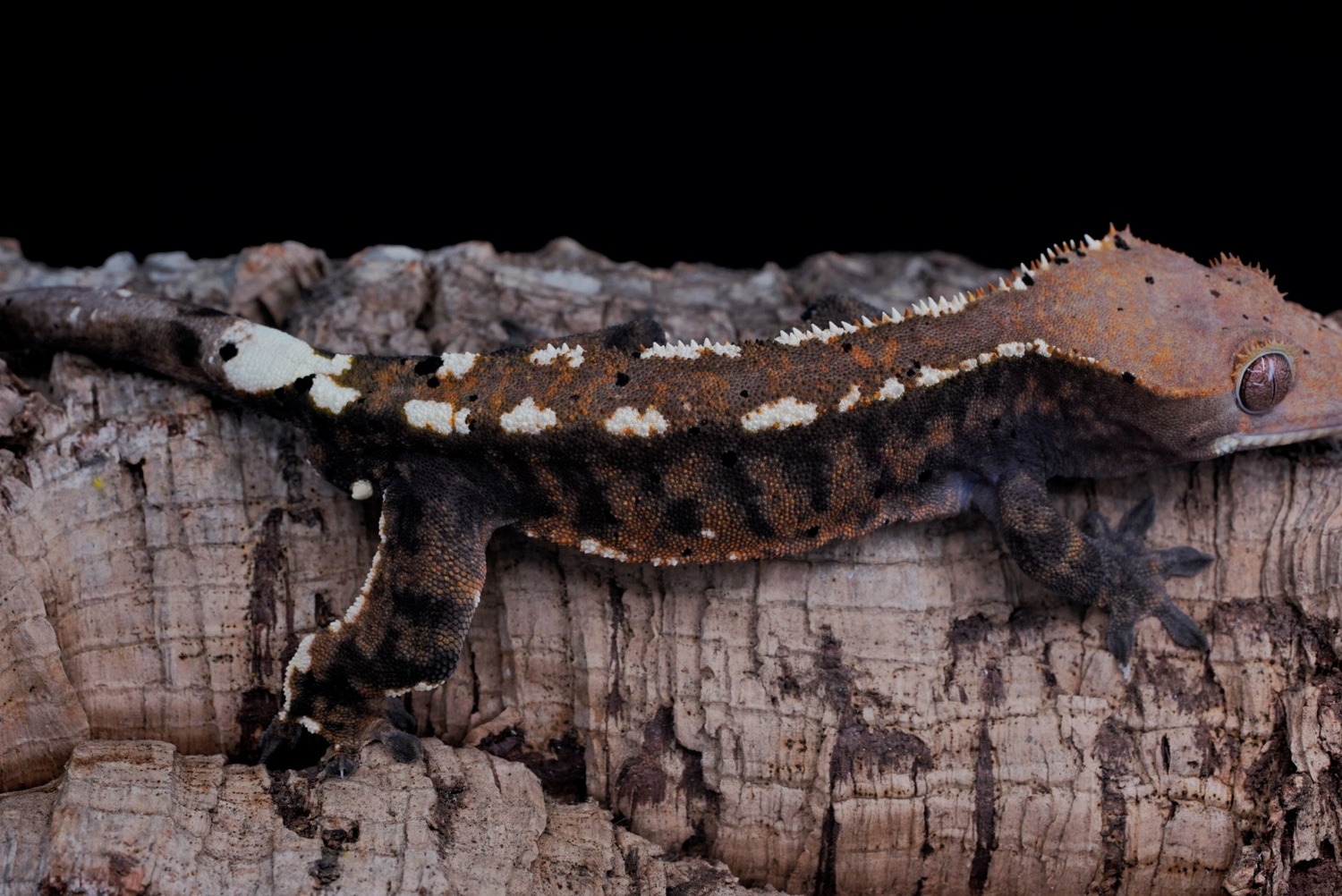
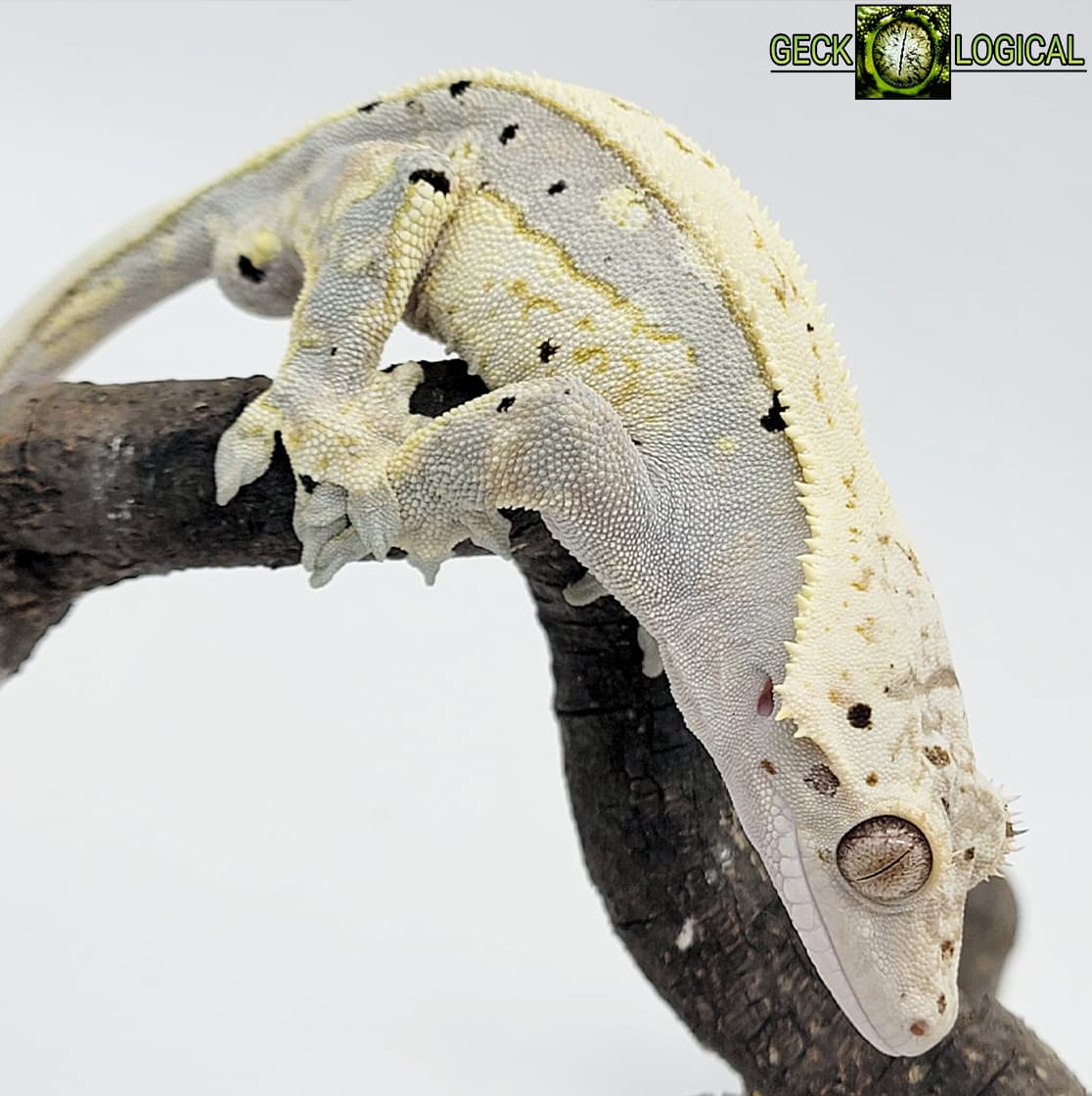
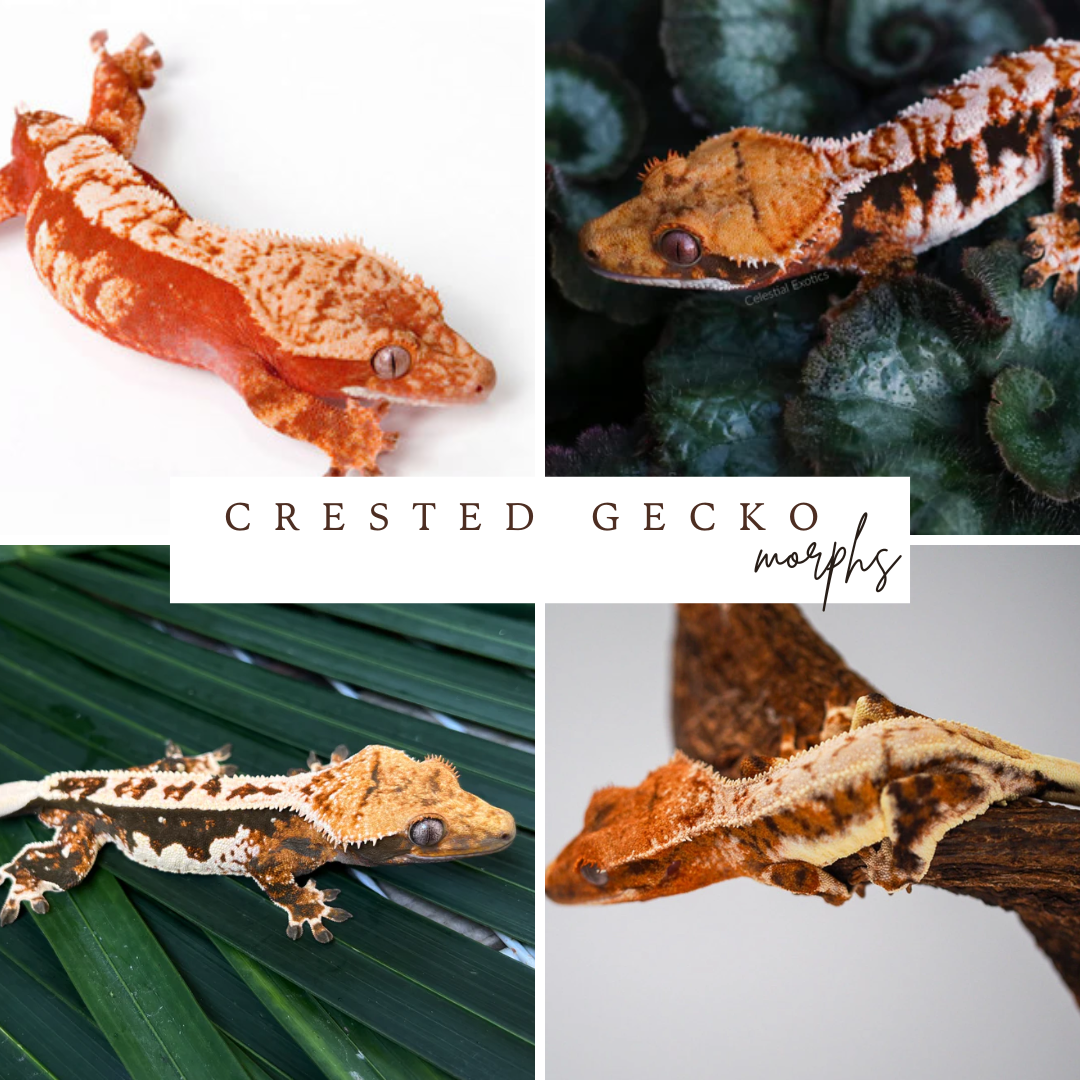
A morph is a genetically-based variation in a crested gecko's color, pattern, or structure. Some morphs are immediately obvious, like a Dalmatian's distinctive spots, while others are subtle or only reveal themselves when specific genes combine in particular ways.
Important Distinction: Many popular "morphs" sold in the hobby are NOT single genes but rather combinations of multiple traits. For example:
- Lavender is not a trait, it's Black Base + Hypo
- Pink is not a trait, it's Red Base + Hypo
- Bi-color is not a trait, it's a phenotype of Phantom
- Buckskin is not a trait, it's Phantom + Yellow Base
Understanding which are true genetic traits versus combination outcomes is critical for accurate breeding predictions.
Morphs can be:
- Simple: Controlled by a single gene with predictable inheritance
- Complex: Result of multiple genes and modifiers working together
- Polygenic: Controlled by many genes that additively create the final appearance (like Dalmatian spotting or White Pattern intensity)
Understanding "Het" (Heterozygous)
What does "het" mean?
"Het" is short for "heterozygous," which in genetics means an animal has two different versions (alleles) of a gene, one copy of each. In the reptile hobby, we typically use "het" to describe animals that carry one copy of a recessive gene that isn't visible.
Examples:
- "Het Axanthic" = carries one Axanthic gene (hidden, looks normal)
- "Het Phantom" = carries one Phantom gene (hidden, looks normal)
Scientific note: Technically, any animal with one copy of a dominant trait is also "heterozygous," but hobbyists rarely use "het" in that context. We use it primarily for hidden recessive genes.
Polygenic vs. Polymorphic: What's the Difference?
These terms sound similar but mean different things:
Polygenic means a trait is controlled by many genes working together to create the final appearance. Most morph traits we discuss,like Dalmatian spots, White Pattern intensity, and Harlequin expression,are polygenic.
Polymorphic means multiple forms naturally exist in a wild population without selective breeding. While wild crested geckos show some natural variation, most of the dramatic morphs we see today are the result of selective breeding for polygenic traits, not natural polymorphism.
Why Understanding Morphs Matters
Morphs are the foundation of crested gecko variety. Understanding them helps you:
- Make informed purchasing decisions
- Identify valuable or rare traits in your collection
- Plan successful breeding projects
- Avoid health risks associated with certain genetic combinations
- Appreciate the complexity and beauty of these remarkable geckos
Genetics Basics (No PhD Required)
Understanding basic genetic concepts helps you predict breeding outcomes and make informed pairing decisions.
Inheritance Patterns
Dominant
Definition: Only one copy of the gene needed to express the trait visually
Examples: Pinstripe, Dalmatian
Breeding: Pinstripe × Normal = ~50% Pinstripe offspring
Visual: If the gecko has the gene, you can see it
Incomplete Dominant (Hobby Term: "Co-Dominant")
Academic Definition: One copy of the gene creates a visible effect, but two copies produce a different appearance or outcome (sometimes lethal)
Hobby Term: Many breeders call these traits "co-dominant," but scientifically, "incomplete dominant" is more accurate. True co-dominance (like AB blood type in humans) means both alleles are fully expressed equally. That's rare in reptile morphs.
Examples: Lilly White, Cappuccino, Sable, Harlequin
Breeding:
- One copy = visible trait (heterozygous)
- Two copies = different expression or lethal (homozygous)
Quick Reference:
| Trait | Academic Term | Hobby Term | One Copy Effect | Two Copies Effect |
|---|---|---|---|---|
| Lilly White | Incomplete Dominant | Co-dominant* | Visible white pattern | Lethal (embryo dies) |
| Cappuccino | Incomplete Dominant | Co-dominant* | Darker appearance | Super (even darker, health considerations) |
| Sable | Incomplete Dominant | Co-dominant* | White patterning | Super Sable (creamy, velvet texture) |
| Harlequin | Incomplete Dominant | Co-dominant* | Intermediate pattern | Super (maximum pattern expression) |
*"Co-dominant" is the common hobby term; "incomplete dominant" is more scientifically accurate.
Recessive
Definition: Two copies required to visually express the trait
Examples: Axanthic, Phantom, Patternless, Red Base
Breeding:
- Two copies (homozygous) = visual expression
- One copy (heterozygous) = hidden carrier ("het")
Challenge: Carriers look completely normal. You can't see the gene without breeding trials or knowing the lineage
Fixed Dominant
Definition: Trait present in all individuals of the species
Example: Tiger, Black Base
Why It Matters: These universal traits provide the foundation that other traits modify
Polygenic
Definition: Multiple genes additively influence trait expression
Examples: Dalmatian spotting intensity, White Pattern coverage, Harlequin intensity
Breeding: Results are less predictable, wide range of expression possible
Strategy: Selective breeding over generations intensifies desired traits
Real-World Example: Dalmatian Pairing
Scenario: Pairing two high-spot Dalmatian crested geckos
Expected Results:
- Most offspring will have spots (dominant trait)
- Spot number and size are unpredictable (polygenic intensity)
- Some offspring may have few spots, others may be "Super Dalmatian"
- Selective breeding over generations increases average spot density
- Cannot predict exact spot count from any single pairing
Why It's Unpredictable: The Dalmatian gene itself is dominant (you either have spots or you don't), but spot density is controlled by multiple genes. Each contributes small additive effects to create the final spot count and distribution.
Real-World Example: Lilly White Pairing
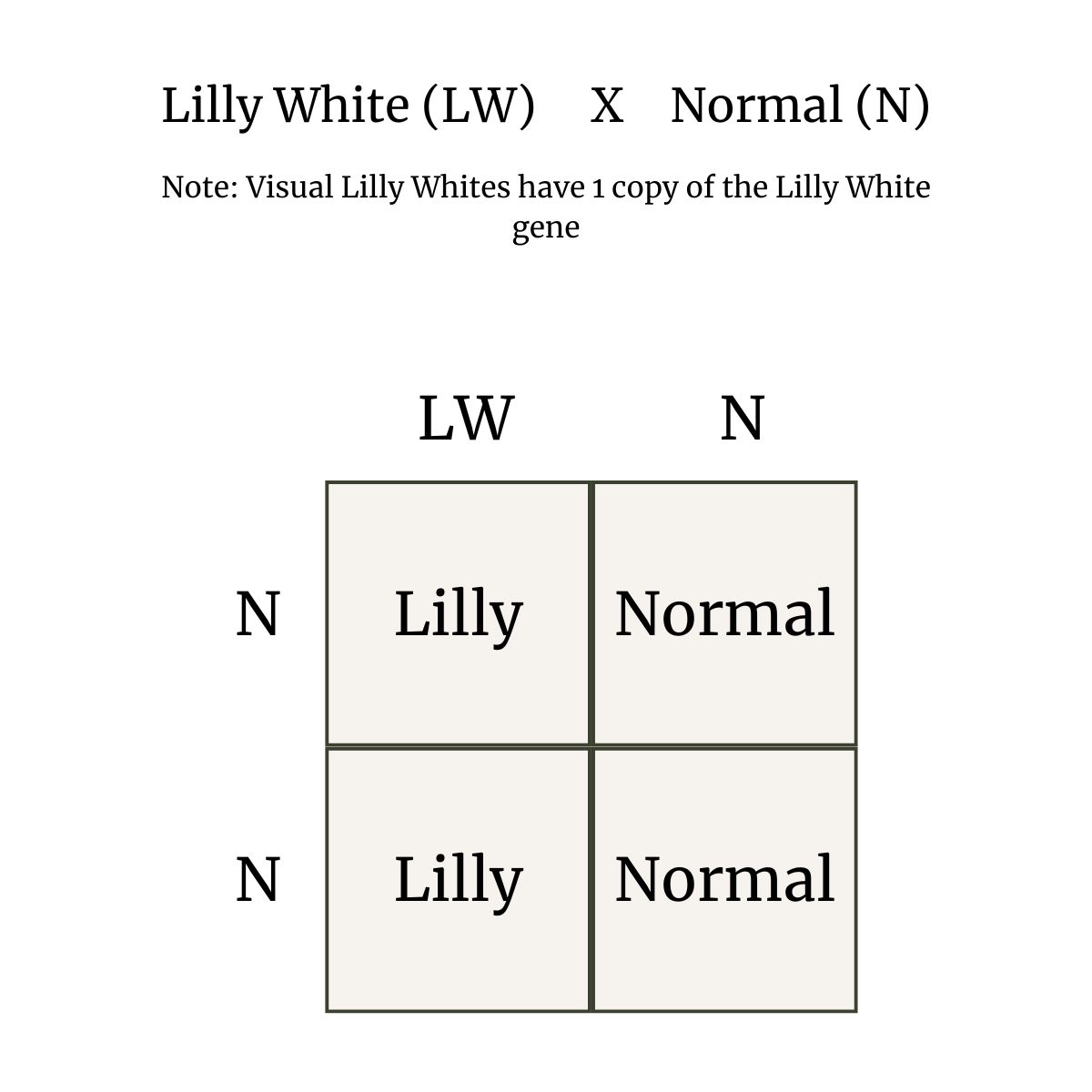
✅ Safe Pairing: Lilly White × Normal
Expected Results:
- ~50% Lilly White offspring (heterozygous L/+)
- ~50% Normal offspring (+/+)
- All eggs viable and healthy
- No health concerns
❌ UNSAFE Pairing: Lilly White × Lilly White
Expected Results:
- ~25% Normal offspring (+/+)
- ~50% Lilly White offspring (heterozygous L/+)
- ~25% non-viable eggs (homozygous L/L = lethal)
- 25% of your clutch will die as embryos
Why It's Dangerous: Two copies of the Lilly White gene (homozygous L/L) cause severe developmental abnormalities incompatible with life. Embryos cannot breathe properly, struggle to eat, have motor skill problems, and typically die within days to one week. This is not a "maybe." It's a guaranteed lethal combination.
Also Dangerous:
- Lilly White × Frappuccino (Frappuccino = Cappuccino + Lilly White)
- Any pairing where both parents carry Lilly White risks producing Super Lilly White
Want to run your own pairing predictions? The free Crested Gecko Morph Calculator gives you exact offspring ratios for Lilly White, Axanthic, Phantom, Dalmatian, Pinstripe, and Hypo combinations. It flags lethal pairings automatically.
Real-World Example: Sable × Cappuccino Pairing
Why This Is Important: This pairing proved the first allelic complex in crested gecko genetics.
Expected Results:
- Offspring show Luwak phenotype (mixture of both super forms)
- Demonstrates allelic incomplete dominance
- Cannot produce Super Sable or Super Cappuccino from this cross
What This Proved: Sable × Cappuccino did NOT produce Super Cappuccino offspring (which would happen if they were the same trait). Instead, offspring showed characteristics of BOTH super forms blended. This proved Sable and Cappuccino are different alleles at the same locus.
Genetic Impossibilities Due to Allelism:
- Cannot produce Super Sable × Super Cappuccino
- Cannot produce Super Cappuccino × Sable
- Cannot produce Super Sable × Cappuccino
Why the Confusion About Terms?
Genetics language in the reptile hobby sometimes differs from what scientists use in academic settings. This happened organically as breeders discovered and described new traits before formal genetic studies were conducted.
Common examples:
- "Co-dominant" vs. "Incomplete dominant": Hobbyists often use "co-dominant" for traits like Lilly White, while scientists prefer "incomplete dominant" as more accurate
- "Het": Used primarily for recessive carriers in the hobby, but technically applies to any heterozygous condition
- "Super": Hobby term for homozygous forms (two copies), whether that's "Super Dalmatian" or fatal "Super Lilly White"
- "Morph" vs. "Trait": Hobby often uses "morph" for any visual appearance, but genetically a "trait" is a heritable characteristic
Both vocabularies are valid in context:
- Use hobby terms when talking with breeders and at expos
- Use academic terms when discussing genetics formally or scientifically
- Understanding both helps you communicate effectively in any setting
Additional Confusion Sources:
- Many "morphs" are combinations, not single genes (Lavender, Pink, etc.)
- Descriptive names became "traits" (Bi-color, Buckskin are Phantom phenotypes)
- Regional naming differences
- Historical naming before genetics were understood
- Marketing language ("True Lavender," "True Pink")
If you have questions about any terminology, reach out. This guide aims to bridge both worlds.
Note:
The field of crested gecko genetics is rapidly evolving. This guide reflects current understanding from the Foundation Genetics series (2024-2025) representing over 20 years of collaborative breeding research. While I've drawn from reputable sources and peer-reviewed breeding data, new discoveries continue. If you have updated information or find something that needs clarification, please reach out so I can keep this guide as accurate as possible.
What to Read Next
Now that you understand the genetics fundamentals, dive into the specific traits:
- Crested Gecko Base Colors, Traits & Modifiers - The three true base colors, every pattern type, and all major color modifiers explained
- Combo Morphs vs Real Traits - Why Lavender isn't a gene, plus practical advice for buyers and breeders
- Crested Gecko Morph Identifier - Free tool to identify your gecko's traits
- Crested Gecko Morph Calculator - Free Punnett square predictions for confirmed traits
About the Author
I'm Dusty Mumphrey, a crested gecko and leachianus breeder in Tyler, Texas. I also build software for breeders through Built By Dusty, including ReptiDex (breeding records app) and the genetics engine that powers this site. If you're a breeder or breed club looking for custom software, get in touch.