Combo Morphs vs Real Traits: What Every Crested Gecko Buyer Should Know
Part of the Crested Gecko Genetics Series. Last updated March 2026.
This is the post that saves you money and prevents breeding mistakes. Many of the most popular "morphs" in the crested gecko hobby are not standalone genes. They're combinations of multiple traits that produce a specific appearance. "Lavender" is not a gene. "Pink" is not a gene. "Buckskin" is not a base color. Understanding the difference between true genetic traits and combo morphs changes how you buy, breed, and talk about crested geckos.
If you need the genetics fundamentals first, start with Genetics Basics Explained. For the full trait reference, see Base Colors, Traits & Modifiers.
Understanding Combo Morphs
CRITICAL CONCEPT: Many popular "morphs" are NOT single genes but combinations of multiple traits.
Common Combo Morphs (NOT Single Traits)
Lavender
- Formula: Black Base + Hypo (B/H)
- NOT a trait: It's a combination
- Appearance: Grey to purple to sky blue depending on hypo form
- Cold Fusion form: Produces strongest blue tones
- "True Lavender" is scientifically inaccurate. It implies a standalone trait that doesn't exist.
Pink
- Formula: Red Base + Hypo (r/H)
- NOT a trait: It's a combination
- Appearance: Neon red to bright pink to cotton candy pink
- At least 12 shades exist depending on hypo form and other modifiers
- Cold Fusion form: Greatest effect
- "True Pink" is scientifically inaccurate. It implies a standalone trait that doesn't exist.
C2 (Cream Squared)
- Formula: Yellow Base + High Hypo + (optional Snowflake)
- NOT a trait: It's a combination
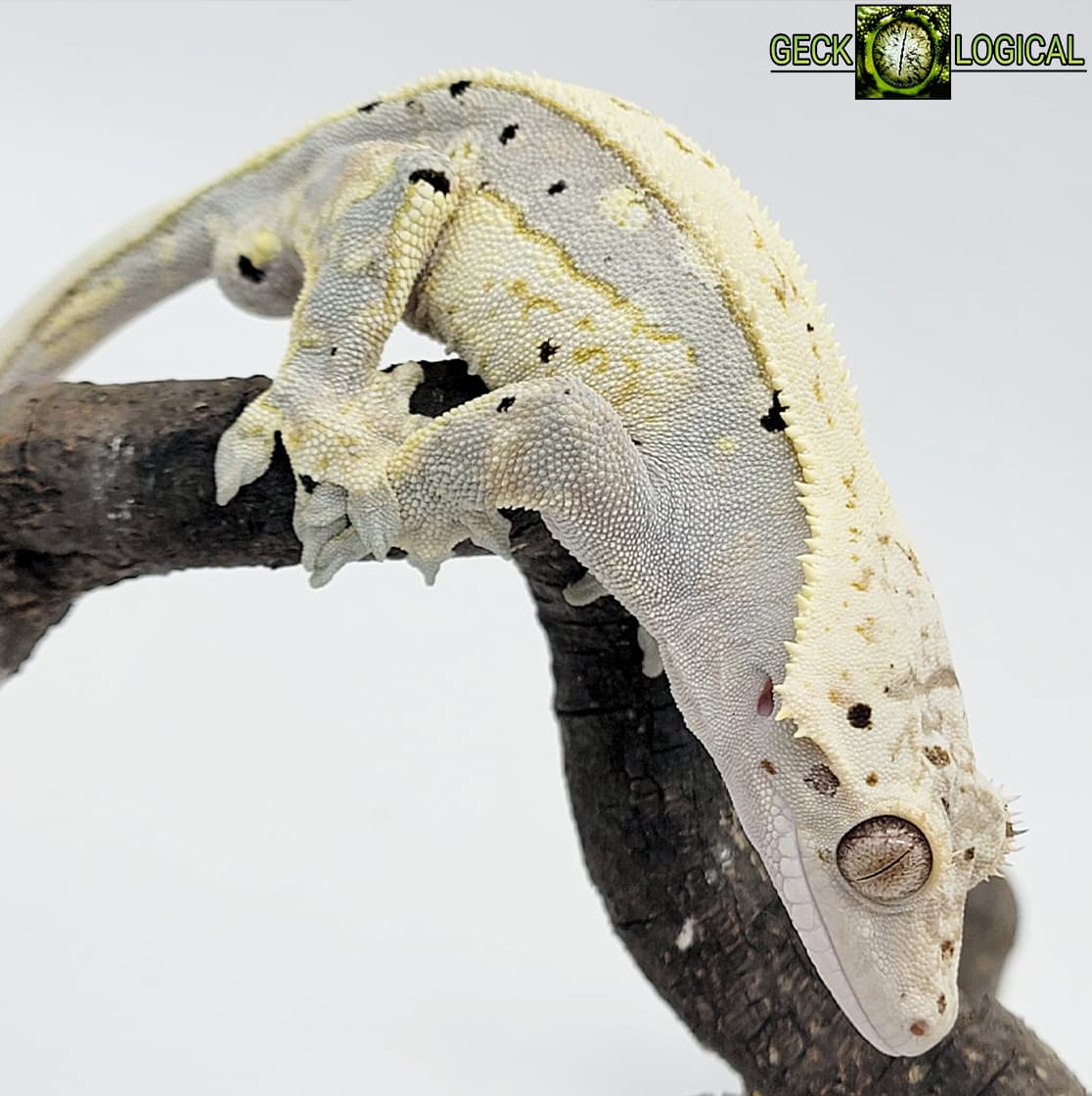
- Appearance: Unicolor white/cream, paper white with proper hypo stacking
- Historical: Coined by AC Reptiles as "Cream squared" (NOT "Citrus")
- Common misconception: "C2 is a gene" or "C2 stands for Citrus." Both are false.
Buckskin/Cream/Tan
- Formula: Phantom + Yellow Base
- NOT separate traits: All are Phantom phenotypes
- Appearance: Tan to cream coloration with melanin blending
- Key distinction: Melanin blending (not clean yellow like Hypo)
Bi-color/Patternless (descriptors)
- NOT separate traits: Both are Phantom phenotypes
- Bi-color: High-dominance Phantom expression
- Patternless descriptor: High-dominance Phantom expression
- Historical confusion: Hobby named these separately for decades
Brindlequin
- Formula: Requires 5 traits at specific expression levels:
- High Harlequin expression
- Tight pinning (Tiger interaction)
- White Pattern
- Dalmatian spotting
- Hypo
- NOT a trait: Complex combination requiring specific conditions
- Difficulty: DIFFICULT to produce consistently
Frappuccino
- Formula: Cappuccino + Lilly White (CAPP/L)
- NOT a trait: Combination of two incomplete dominants
- Appearance: Distinct headstamp with dark pigment and deep orange coloration
- ⚠️ WARNING: Contains Lilly White. Never pair Frappuccino × Lilly White or Frappuccino × Frappuccino
Sorak
- Formula: Super Cappuccino + Lilly White (CAPP/CAPP + L)
- Appearance: Dark granite pattern, translucent grey, no orange/red/yellow pigment
- Health: Same considerations as Super Cappuccino (~11% nostril issues, <3% spectacle eye)
Halloween
- Formula: Black Base + Orange Pattern (B + OP)
- Appearance: Classic orange and black coloration
Tri-Color
- Formula: Base Color + White Pattern + Orange Pattern
- Appearance: Three distinct color zones visible
- Best on: Black Base and Red Base (Yellow Base rarely shows OP)
Blonde
- Formula: Yellow Base + Hypo (y + H)
- NOT Phantom: Clean yellow without melanin blending
- Distinction: Blonde = clean (Hypo), Buckskin = melanin blending (Phantom)
Why This Matters
Understanding combo morphs vs. true genetic traits helps you:
- Predict breeding outcomes accurately
- Avoid paying premium prices for "rare traits" that are actually combinations
- Plan multi-generation projects strategically
- Communicate accurately with other breeders
- Understand market values correctly
Example: If someone sells you a "Lavender het for Phantom," you're getting:
- Black Base + Hypo + Het Phantom (three separate traits)
- NOT a "Lavender gene" + Het Phantom
This distinction affects breeding predictions, pricing, and project planning.
How to Use Genetics Data (and Why It Matters)
Knowledge of genetics empowers you to make better decisions and contribute to the hobby responsibly.
1. Know Your Gecko's Genetics
Action Steps:
- Request genetic information from breeders
- Ask about lineage and test breeding results (proves hidden genes)
- Use trusted resources:
- MorphMarket - Marketplace with genetic info
- Lil Monster's Foundation Genetics - Research documentation
- Geckistry Genetic Database - Comprehensive trait catalog
- Geckistry Morph Identifier - Free tool to identify your gecko's traits
- Document known morphs AND possible het (hidden) genes
- Keep records of lineage when possible
Why It Matters: Understanding what genes your gecko carries (visible and hidden) helps you plan pairings, avoid dangerous combinations, and set realistic breeding expectations.
2. Plan Your Pairings Carefully
Safe Pairing Strategies:
- Research both parents' genetics before breeding
- Use Punnett squares for simple dominant/recessive traits
- Consult genetic calculators for complex scenarios
- Never pair two Lilly Whites or other known lethal combinations
- Never pair Lilly White × Frappuccino (lethal risk)
- Avoid excessive inbreeding (increases health risks)
- Consider health implications of super forms (Cappuccino, Softscale)
Dangerous Pairings to AVOID:
- Lilly White × Lilly White ❌ (25% lethal)
- Lilly White × Frappuccino ❌ (lethal risk)
- Frappuccino × Frappuccino ❌ (lethal risk)
- Excessive inbreeding ❌ (health problems)
Tools and Resources:
- Crested Gecko Morph Calculator - Free Punnett square predictions for confirmed traits
- Breeding forums and communities (verify information independently)
- Genetic databases and peer-reviewed research
3. Track Your Results
What to Document:
- Parent morphs and genetics (visible AND hets)
- Parent lineage (if known)
- Clutch dates and egg counts
- Hatch dates and success rates
- Offspring morphs and characteristics
- Unexpected outcomes or surprises (these reveal hidden genes!)
- Health observations
Why Tracking Matters:
- Helps identify hidden genes (hets) through breeding outcomes
- Spots trends in your breeding program
- Avoids accidental inbreeding
- Documents rare outcomes for the community
- Builds valuable data for genetics research
- Creates transparent records for buyers
Example: If you breed two "Normal" geckos and get Phantom offspring, you've just proven both parents are Het Phantom. Document this. It's valuable genetic information.
4. Stay Curious and Keep Learning
The Field Is Evolving:
- New traits discovered regularly (Marbling identified 2024-2025)
- Genetic research continues (allelic testing ongoing)
- Understanding of inheritance improves (Phantom resolved as Mendelian)
- What's "unknown" today could be tomorrow's breakthrough
Ways to Stay Current:
- Follow reputable breeders and geneticists
- Read Foundation Genetics documentation (Lil Monster's Reptiles)
- Join crested gecko communities (verify information independently)
- Attend reptile expos and educational seminars
- Share and discuss findings with other keepers
- Participate in genetic research projects
Recent Breakthroughs (2022-2025):
- First allelic complex confirmed (Sable/Cappuccino)
- Phantom genetics resolved (definitively Mendelian recessive)
- Super Cappuccino health study (nearly 100 animals)
- Three distinct hypo forms identified
- Tiger confirmed as universal fixed trait
- Marbling discovered as new trait (validation ongoing)
What It Means for Keepers & Breeders
For Keepers
Benefits of Understanding Morphs:
- Make informed purchases - Know what you're getting and what it's worth
- Appreciate diversity - Understand the genetics behind your gecko's appearance
- Spot rare traits - Recognize valuable or unusual characteristics
- Avoid scams - Identify inaccurate genetic claims ("True Lavender," "Buckskin gene")
- Plan for future - Know breeding potential if you decide to breed later
- Join conversations - Participate knowledgeably in community discussions
Practical Applications:
- Choose geckos that match your aesthetic preferences
- Understand why some morphs cost more than others
- Recognize quality breeding when you see it
- Avoid impulse purchases of poorly-labeled animals
- Identify combo morphs vs. true traits
- Ask intelligent questions when purchasing
Red Flags to Watch For:
- Claims of "True Lavender gene" (Lavender = combo)
- "Buckskin gene" or "Bi-color gene" (both are Phantom phenotypes)
- "Super Lilly White available" (lethal. Should not exist.)
- No lineage or genetic information provided
- Unwillingness to discuss test breeding results
- Pairing two Lilly Whites together
For Breeders
Benefits of Genetics Knowledge:
- Set realistic expectations - Understand what's possible from each pairing
- Avoid health risks - Never create lethal combinations (Lilly White × Lilly White)
- Plan strategically - Work toward specific morph goals over multiple generations
- Maintain records - Track lineages and avoid inbreeding
- Price appropriately - Understand market value of different morphs and combos
- Build reputation - Produce quality animals with documented, accurate genetics
- Contribute to research - Document outcomes and share data with community
Ethical Responsibilities:
- Always prioritize animal welfare over novelty
- Never breed lethal combinations:
- Lilly White × Lilly White ❌
- Lilly White × Frappuccino ❌
- Frappuccino × Frappuccino ❌
- Avoid excessive inbreeding (increases health problems)
- Monitor Super Cappuccino hatchlings for nostril/eye issues
- Incubate at appropriate temperatures (69-71°F for Cappuccino)
- Be honest about genetics when selling:
- Distinguish traits from combos
- Disclose possible hets based on lineage
- Provide test breeding results when available
- Don't use misleading terms ("True Lavender," "Buckskin gene")
- Continue education as field evolves
- Share breeding data with community (anonymously if preferred)
Best Practices:
- Outcross regularly to maintain genetic diversity
- Document ALL breeding outcomes (not just successes)
- Evaluate hatchlings for health before selling
- Provide accurate genetic information to buyers
- Stay current with latest research
- Participate in community knowledge-sharing
- Test breed to prove hets (don't just guess)
For Everyone
The Big Picture:
- Understanding genetics enriches appreciation for these amazing animals
- Accurate knowledge helps the hobby move forward responsibly
- Shared data benefits entire community (collaborative research model)
- Ethical practices ensure healthy future for captive crested geckos
- Distinguishing traits from combos improves breeding accuracy
- Avoiding lethal pairings saves lives
Community Contribution: The Foundation Genetics series represents over 20 years of collaborative research from industry leaders worldwide. This work was possible because breeders:
- Documented their results honestly (including failures)
- Shared data across programs (Korea, US, UK)
- Tested hypotheses systematically
- Cross-validated findings
- Acknowledged unknowns
You can contribute by:
- Tracking your breeding outcomes
- Sharing unexpected results
- Reporting health observations
- Asking questions when confused
- Correcting misinformation politely
- Supporting ongoing research
What to Read Next
- Genetics Basics Explained - Inheritance patterns, real-world breeding examples, and terminology
- Base Colors, Traits & Modifiers - Every trait in detail with the quick reference table
- Crested Gecko Morph Identifier - Free tool to identify your gecko's traits
- Crested Gecko Morph Calculator - Run any pairing and see predicted offspring outcomes
- COI Calculator - Check inbreeding coefficients before pairing
Want to track your genetics, pairings, and breeding outcomes in one place? ReptiDex is the breeding records app I built for exactly this. Available on iOS.
About the Author
I'm Dusty Mumphrey, a crested gecko and leachianus breeder in Tyler, Texas. I also build software for breeders through Built By Dusty, including ReptiDex (breeding records app) and the genetics engine that powers this site. If you're a breeder or breed club looking for custom software, get in touch.