Crested Gecko Base Colors, Traits & Modifiers: The Complete Guide
Part of the Crested Gecko Genetics Series. Last updated March 2026.
This is the trait reference. Every crested gecko's appearance comes from a combination of base color, pattern modifiers, and special traits. This post covers all of them: the three true base colors, every major pattern type, and the color modifiers that transform how those base colors express. If you need the genetics fundamentals first (inheritance patterns, what "het" means, how Punnett squares work), start with Genetics Basics Explained.
Not sure what morph your gecko is? Try the free Morph Identifier or browse the Genetics Library for individual allele details.
The Big Picture: Types of Morphs
Crested gecko morphs fall into several main categories, each contributing different aspects to a gecko's appearance.
Base Colors: The Foundation
CRITICAL CLARIFICATION: Only THREE true base colors exist in crested geckos. Many terms used in the hobby describe combinations or phenotypes, not base colors.
The Three True Base Colors:
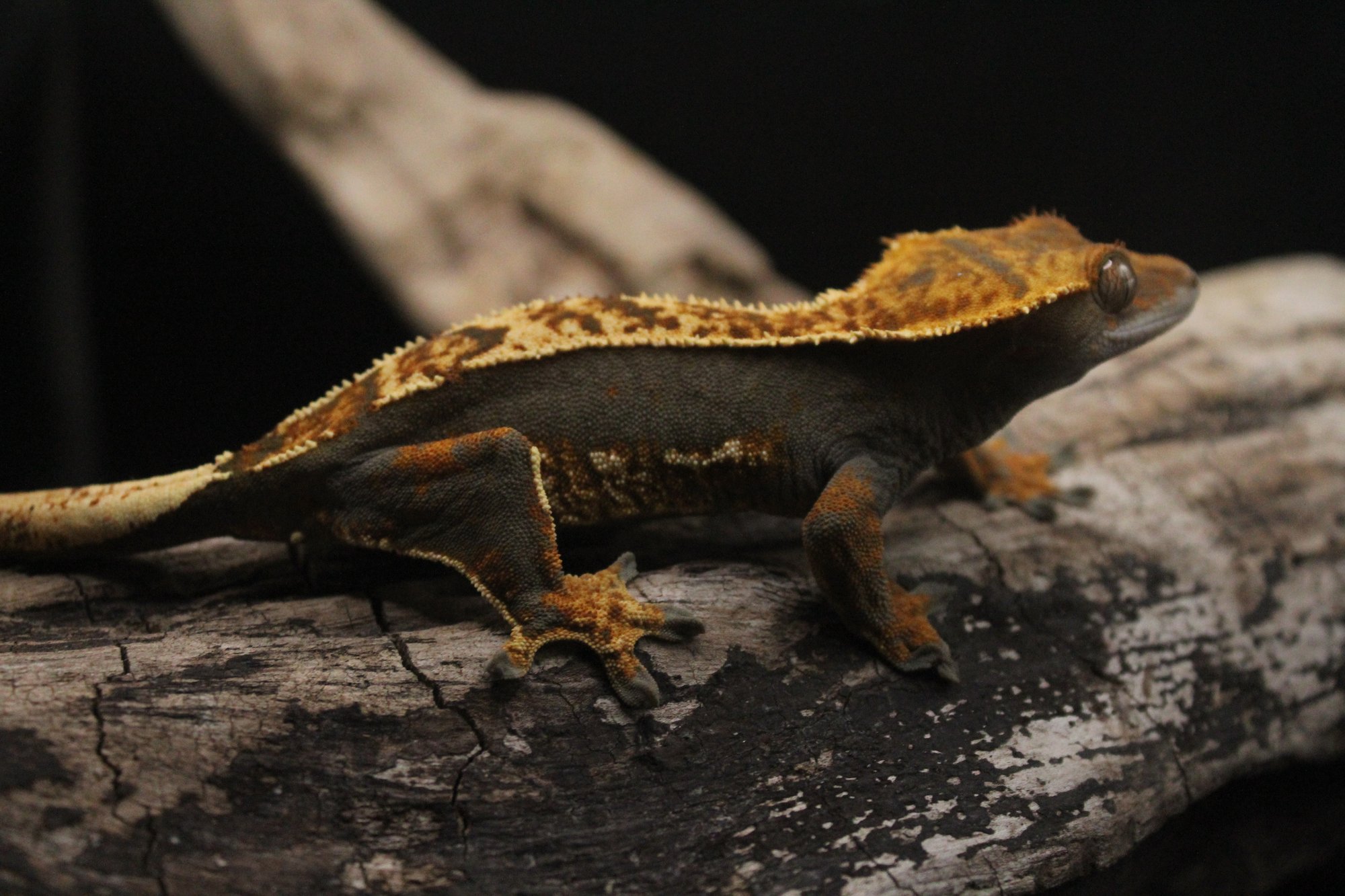
1. Black Base (B) - Fixed Dominant
Genetics: Most prevalent base color, fixed dominant
Appearance: Foundation for darker colorations
Common Combinations:
- Black Base + Hypo = Lavender (grey to purple to sky blue)
- Black Base + Orange Pattern = Halloween (orange and black)
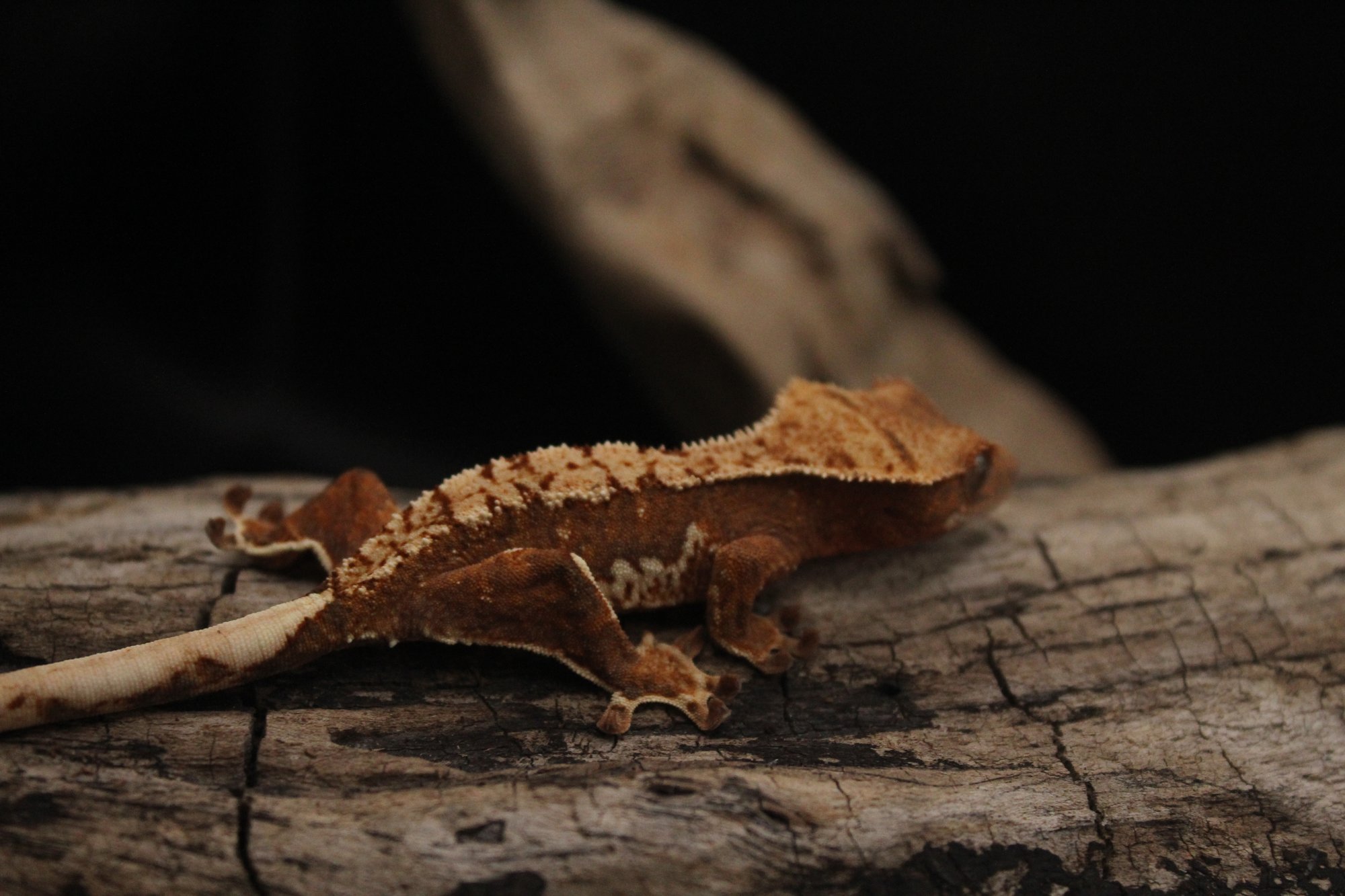
2. Red Base (r) - Recessive
Genetics: Recessive allele
Appearance: Red to deep burgundy tones
Common Combinations:
- Red Base + Hypo = Pink (neon red to cotton candy pink)
- Red Base shows at least 12 different shades when combined with various hypo forms
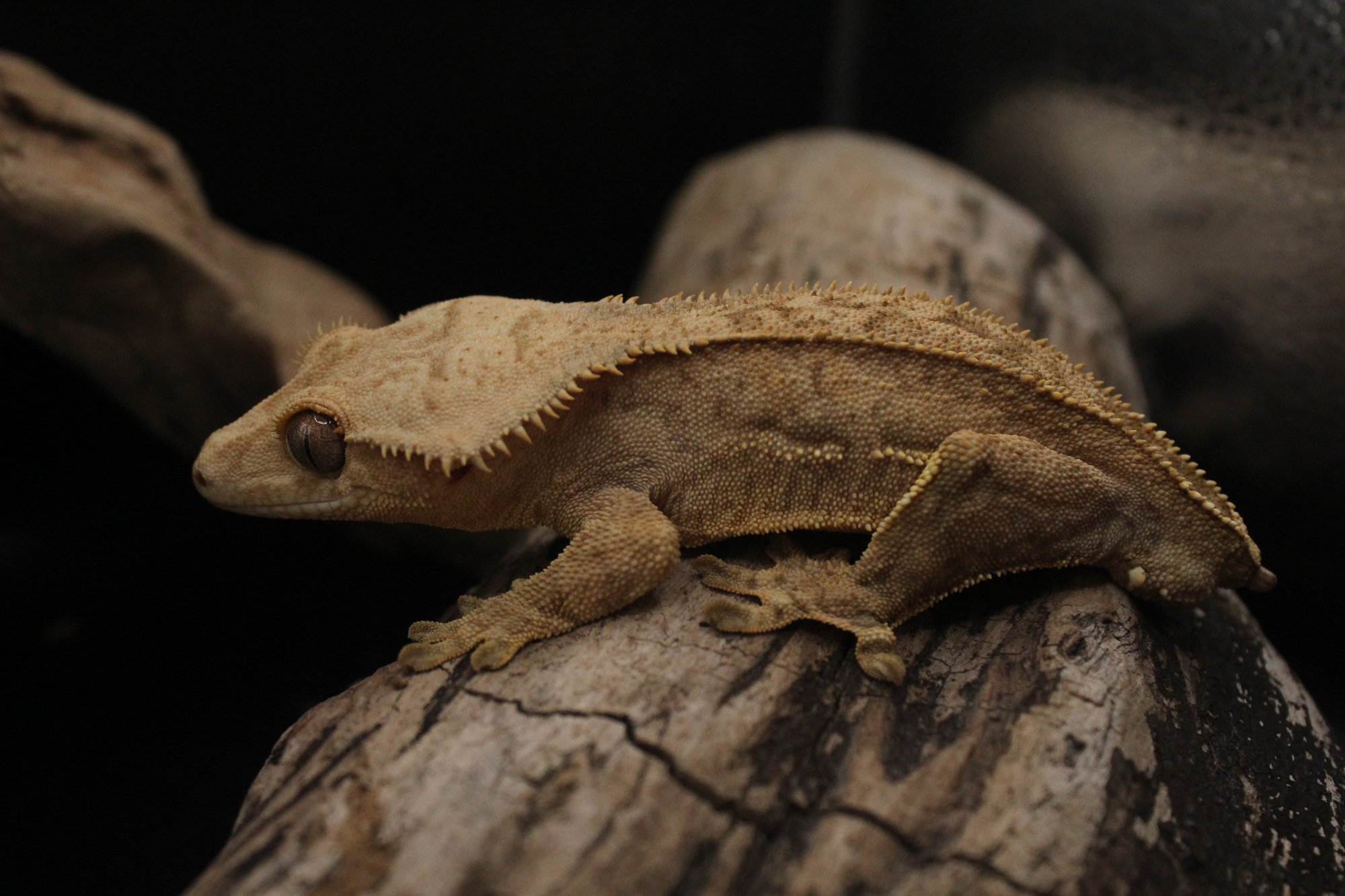
3. Yellow Base (y) - Dominant
Genetics: Dominant allele
Appearance: Bright to pale yellow tones, naturally reduces melanin
Common Combinations:
- Yellow Base + Hypo = Blonde (clean light yellow)
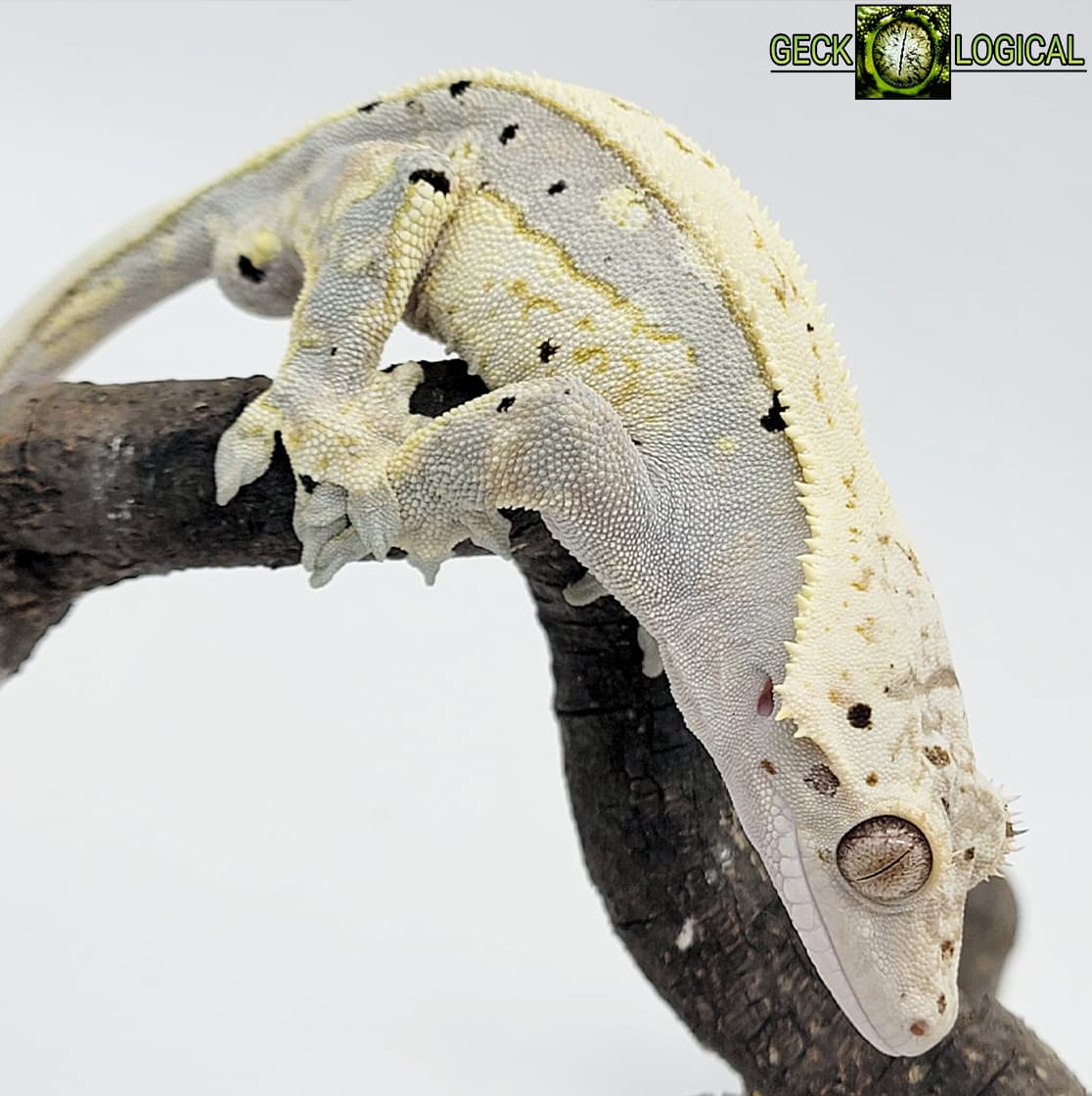
- Yellow Base + High Hypo + Snowflake = C2/Cream Squared (paper white)
- Yellow Base + Phantom = Buckskin/Cream (melanin blending creates tan)
What About Other "Base Colors"?
Many terms commonly used as "base colors" are actually:
- Buckskin = Phantom + Yellow Base (melanin blending)
- Cream/Tan = Phantom phenotypes
- Olive = Color modifier interaction
- Orange = Base color + modifier combination
Pattern Types & Modifiers
Patterns add visual interest and contrast to the base color, creating the distinctive looks we associate with different morphs.
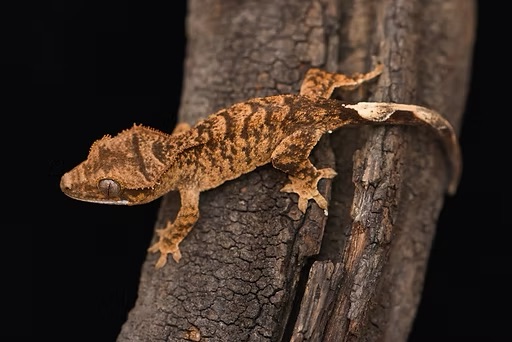
Tiger (TIG) - Universal Fixed Trait
CRITICAL UNDERSTANDING: Tiger is NOT a separate morph you breed for. It's a fixed dominant trait present in ALL crested geckos. Tiger affects how all other patterns express themselves.
Genetics: Fixed, universal presence
What It Does: Creates the foundational pattern structure that other traits modify
Appearance: Vertical striping when strongly expressed
Why It Matters: Understanding Tiger helps explain pattern interactions
Tiger Pattern Variants:
- Marble - Tiger variant with thicker bands spaced further apart
- Reverse Pin - Tiger + Pinstripe interaction
- Brindle - Tiger + Pinning interaction (creates broken striping)
Harlequin (HQ) - Incomplete Dominant
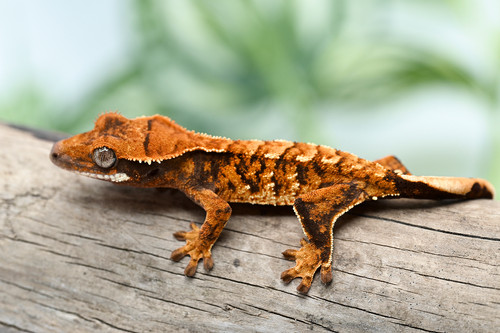
Genetics: Incomplete dominant (wild-type recessive confirmed)
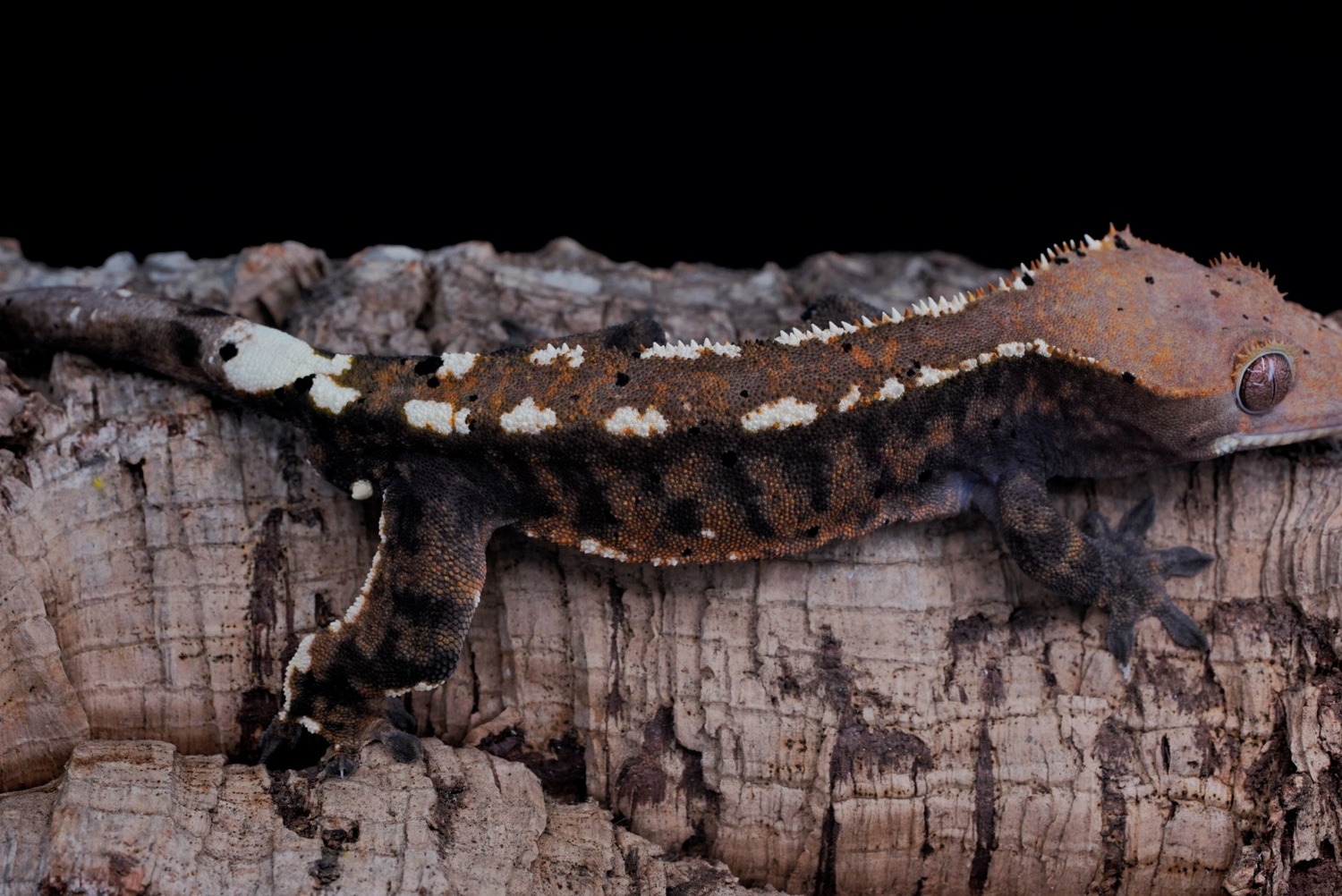
Appearance: Contrasting pattern on limbs and sides, often with cream, yellow, or orange against darker base
Characteristics: Wide range of expression from subtle to extreme contrast
Popularity: One of the most common patterns
Breeding: Het animals (one copy) show intermediate expression; super form (two copies) shows maximum pattern
Flame (FLAME)
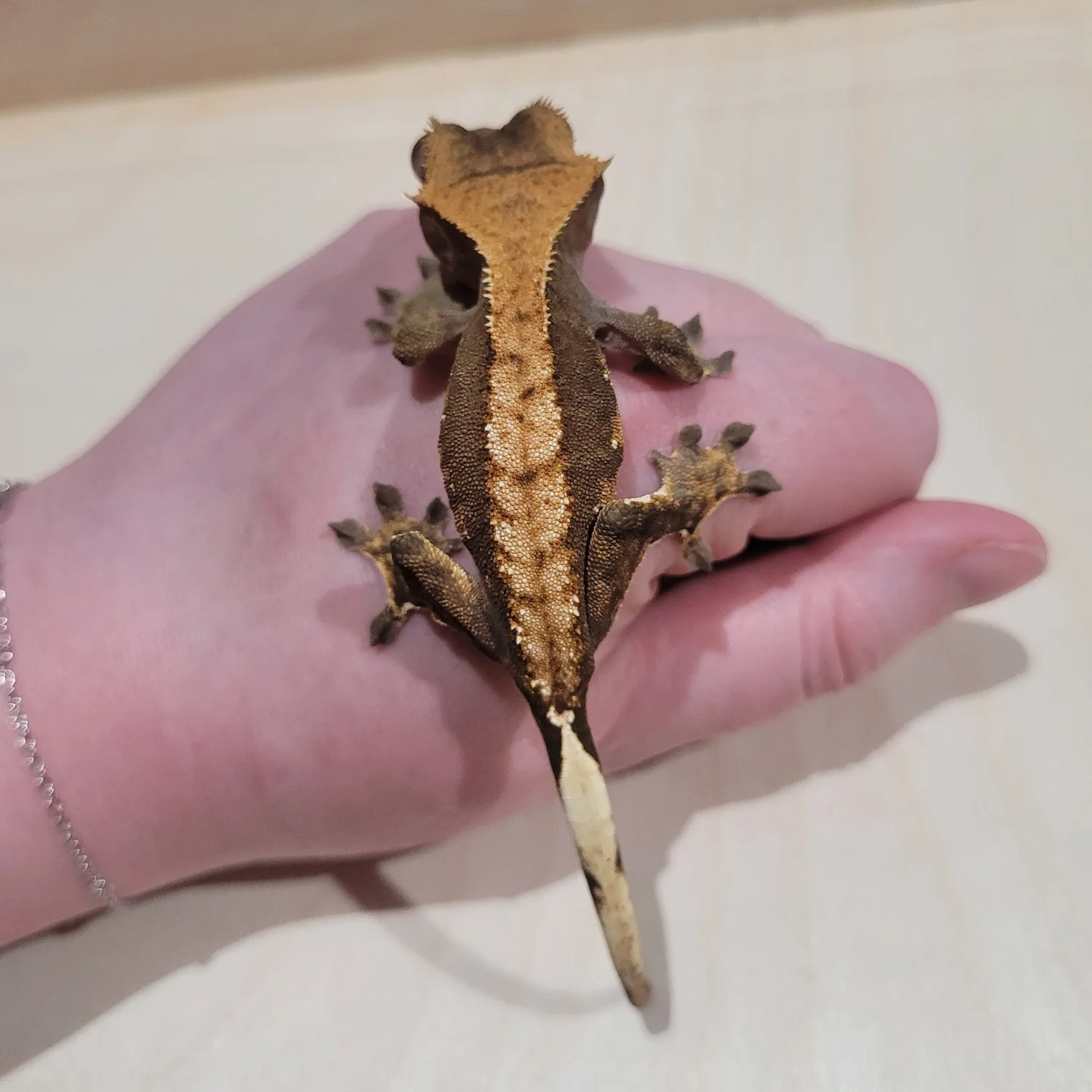
Genetics: Related to Harlequin, separate locus
Appearance: Light dorsal stripe ("flame") with darker sides
Characteristics: Less side pattern than Harlequin, elegant simplicity
Popularity: Classic look, often more affordable than high-expression Harlequin
Pinstripe (PIN) - Dominant
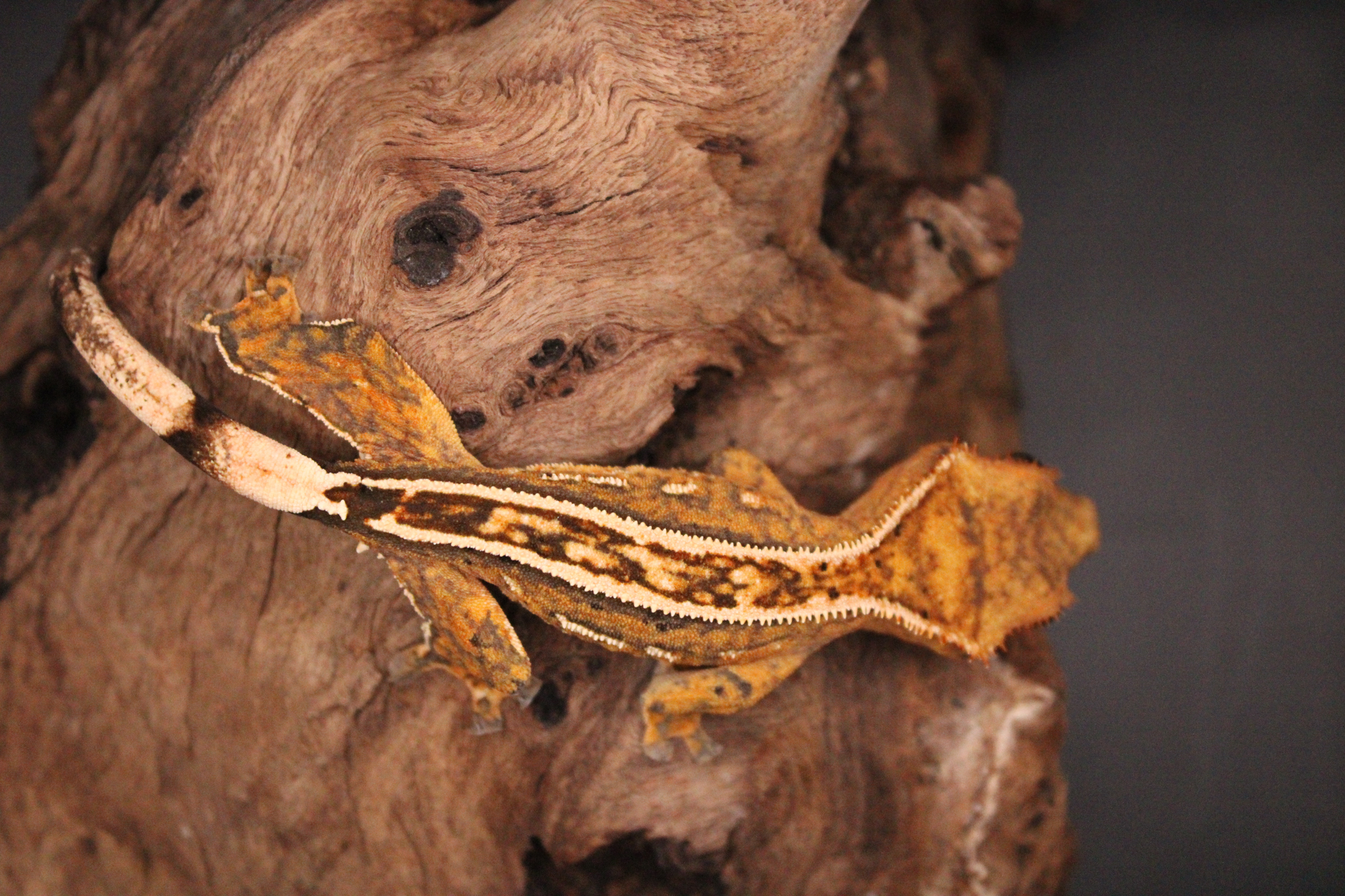
Genetics: Dominant structural trait (decades of breeding data)
Appearance: Raised cream-colored "pins" along the back from head to tail
Characteristics: Clean, crisp lines; combines well with other morphs
Popularity: Highly desirable, adds definition to any gecko
Breeding: Pinstripe × Normal = ~50% Pinstripe offspring
Pattern Interactions:
- Phantom Pin (Phantom + Pinstripe) - White pattern fades from tail to head
- These are NOT linked or allelic. They're separate loci bred together frequently.
Phantom (PH) - Recessive
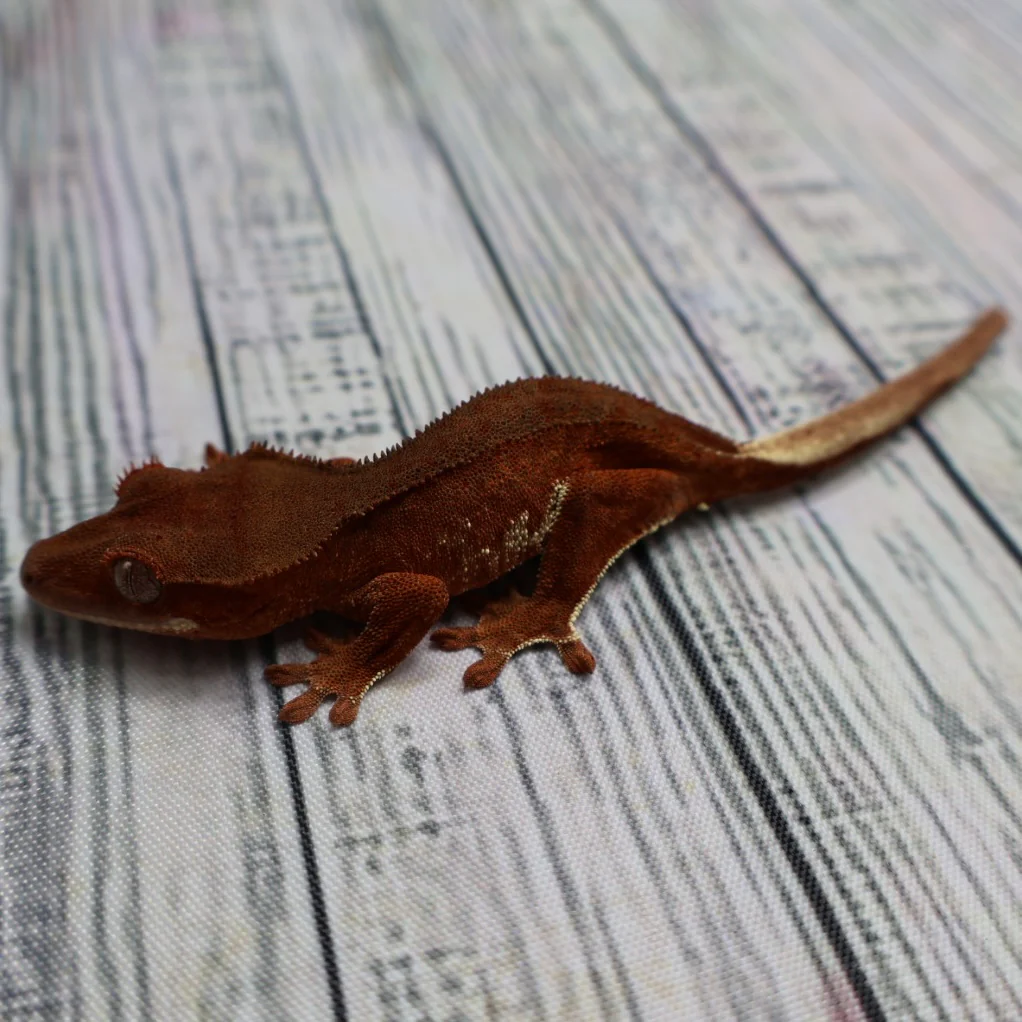
MAJOR CLARIFICATION: Phantom is a melanin-producing trait, NOT pattern-removing. It creates various phenotypes that the hobby historically named as separate "morphs."
Genetics: Mendelian recessive (definitively proven)
Category: Both COLOR_MODIFIER and PATTERN_MODIFIER
Key Understanding:
Phantom is a single trait that produces multiple named phenotypes:
- Bi-color = Phantom phenotype (high dominance)
- Patternless = Phantom phenotype (high dominance)
- Buckskin = Phantom + Yellow Base
- Cream = Phantom phenotype
- Tan = Phantom phenotype
How to Identify Phantom:
- RULE 1: Any bi-color or patternless animal has Phantom
- RULE 2: Yellow-based animal with melanin blending (buckskin, cream, tan) = Phantom
- vs. clean yellow with no blending = Hypo
- RULE 3: On Pinstripe animals, White Pattern fades from tail to head when Phantom present
- RULE 4: Lower dominance Phantom with Pinstripe shows darker head
Breeding: Both parents must carry the gene (or be visual) for visual Phantom offspring. Het animals can show subtle indicators but often appear normal.
Historical Note: The hobby broke this single trait into multiple named phenotypes, causing decades of confusion. Some thought it was non-Mendelian, but it's definitively Mendelian recessive.
Patternless (PTL) - Recessive
CRITICAL DISTINCTION: Patternless is DIFFERENT from Phantom, despite similar appearance.
Genetics: Recessive, distinct locus from Phantom
Appearance: Complete pattern removal. No pattern visible.
vs. Phantom: Phantom shows underlying pattern (darkened) with melanin blending
Proof: Breeding similar-looking animals produces different outcomes depending on which trait is present
Special Traits & Color Modifiers
Special traits add unique characteristics that can transform a gecko's appearance or require special breeding considerations.
Dalmatian (DAL) - Dominant
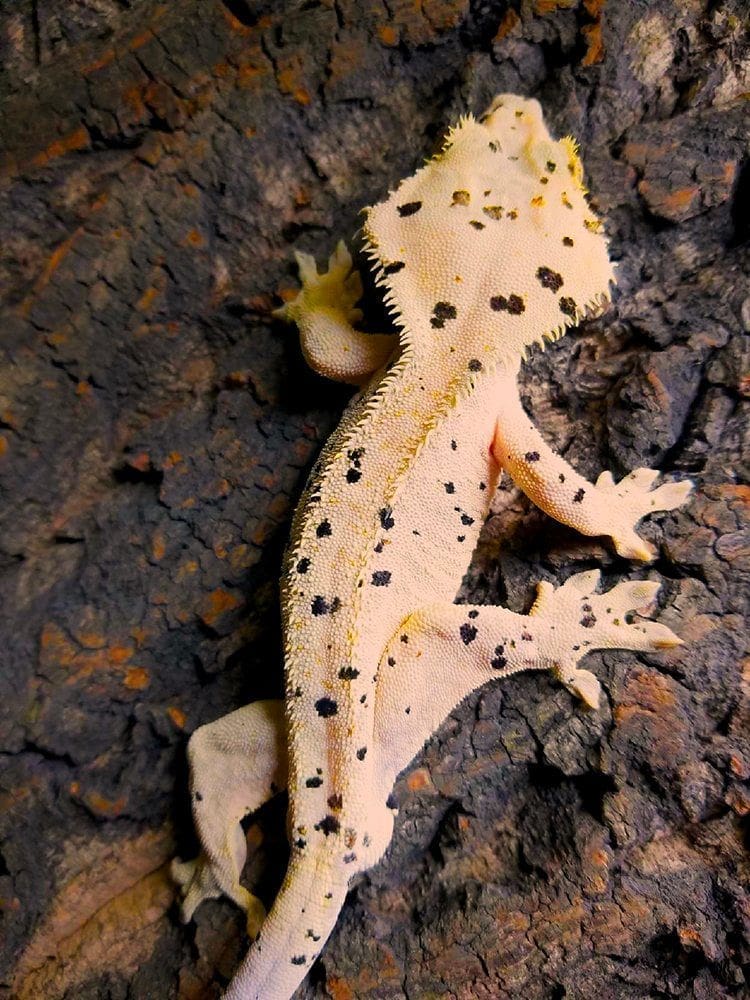
Genetics: Dominant with polygenic intensity (10+ years of breeding data)
Appearance: Black or red spots ranging from few to extreme "super" levels
Special Notes: Every Dalmatian is unique; can combine with virtually any morph
Breeding: Dalmatian animals are more likely to produce spotted offspring, but spot density is polygenic (influenced by multiple genes). Selective breeding over generations increases average spotting.
Lilly White (L) - Incomplete Dominant ⚠️ LETHAL WHEN HOMOZYGOUS
Genetics: Incomplete dominant (often called "co-dominant" in hobby)
Appearance: High-white morph producing dramatic white pattern and pattern reduction
Breeding Outcomes:
- One copy (heterozygous) = Lilly White visual
- Two copies (homozygous) = LETHAL. Embryos cannot develop properly.
Safe Breeding:
- Lilly White × Normal: ~50% Lilly White, ~50% Normal offspring ✅
- Lilly White × Lilly White: ~25% Normal, ~50% Lilly White, ~25% non-viable (lethal) ❌
⚠️ CRITICAL WARNING:
- NEVER pair two Lilly Whites together (25% embryonic lethality)
- NEVER pair Lilly White × Frappuccino (Frappuccino contains Lilly White)
- Super Lilly White is LETHAL: Offspring struggle to breathe, cannot eat properly, have motor skill problems, typically die within days to one week
Why It's Dangerous:
Super Lilly White (homozygous L/L) causes severe developmental issues incompatible with life. This is not a "weak" trait. It's an absolute lethal combination.
Cappuccino (CAPP) - Incomplete Dominant
Genetics: Incomplete dominant. Nearly 100-animal study across Korea, US, UK.
Appearance: Darkens color, sharpens pattern definition, creates melanistic/translucent appearance
Alternate Names: Mel, Melanistic, Translucent
Super Form (Homozygous):
- Extreme melanistic/translucent appearance
- Different skin texture (smoother/more translucent)
- May have reduced nostril size (~11%)
- May develop spectacle eye (<3%, treatable)
- May have shorter snout structure
- Both sexes are fertile
Health Considerations:
- ~11% of Super Cappuccino show reduced nostril size
- <3% develop spectacle eye (treatable with simple procedure)
- Lower incubation temperatures (69-71°F) correlate with reduced structural issues
- NOT infertile (rumor debunked)
- Do NOT require special humidity (rumor debunked)
Breeding Recommendations:
- Avoid direct inbreeding
- Outcross to animals with better structure
- Evaluate all hatchlings for nostril size and eye health
- Monitor incubation temperatures
Allelic Relationship: Cappuccino is allelic with Sable (same locus, different mutations). This is the first confirmed allelic complex in crested gecko genetics.
Sable (SA) - Incomplete Dominant
Genetics: Incomplete dominant, allelic with Cappuccino
Appearance: White patterning on dorsum with distinct characteristics
Super Form (Homozygous SASA):
- Creamy-colored dorsum with yellowish areas
- Velvet-like textured scales
- Skull-shaped pattern around headstamp
- Dark coloration between large scales on lips
- Bolder eye reticulation
- RETAINS yellow coloration (xanthophores)
Key Distinction from Cappuccino:
- Super Sable retains yellow/red pigmentation
- Super Cappuccino eliminates all yellow and red pigmentation
Luwak (SACa): When you breed Sable × Cappuccino, you get Luwak, an allelic combination showing characteristics of both super forms blended together. This proves they're allelic (same locus).
Axanthic (x) - Recessive
Genetics: Recessive. Both parents must carry the gene.
Appearance: Lacks yellow/red pigment (xanthophores/erythrophores), producing true grayscale appearance
Special Notes: Black, white, and grey only. Truly monochromatic geckos.
Breeding Outcomes:
- Axanthic × Normal: 100% Het Axanthic (carriers, look normal)
- Axanthic × Het Axanthic: 50% Het Axanthic, 50% Visual Axanthic
- Axanthic × Axanthic: 100% Visual Axanthic
Hypo (H) - Multiple Forms Exist ⚠️
CRITICAL UNDERSTANDING: At least THREE distinct hypomelanistic forms exist:
1. Standard Hypo (H)
- Reduces melanin production
- Creates lighter base colors
- Polygenic inheritance with varying expression levels
2. Cold Fusion (Hc)
- Refined hypo line by Tom Favazza
- Produces distinctive sky-blue coloration with Black Base
- Creates paper-white White Pattern
- Greatest effect at reducing brown/gray tones
- Black Base + Yellow Base Cold Fusion bred together: progeny are either yellow OR blue-tone lavender (no blended form)
3. Third Form (Under Research)
- Additional hypo form identified but not yet fully characterized
Key Distinction - Phantom vs. Hypo:
- Phantom: Melanin-producing, BLENDS with base color (buckskin, cream, tan)
- Hypo: Melanin-reducing, creates CLEAN yellow base (no blending)
- If you see blending → Phantom. Clean yellow → Hypo.
Other Notable Traits
- Tangerine (TANG): Influences both White Pattern and Orange Pattern colors, creating pink or tangerine hues
- Empty Back (EB): Incomplete dominant, reduces dorsal pattern
- Superstripe (s): Complex inheritance, enhanced dorsal stripe
- Softscale (S3): Incomplete dominant structural trait affecting scale texture
- Whitewall (W): Whiteout/Whitewall pattern variants
- Orange Spot (OS): Inheritance unknown, hypothesis stage
- Marbling (M): NEW trait discovery (2025), affects pattern AND color, early-stage research
Quick Reference: Trait Summary
| Trait | Academic Inheritance | Hobby Term | Copies Needed | Safe Pairing Notes |
|---|---|---|---|---|
| BASE COLORS | ||||
| Black Base (B) | Fixed Dominant | Dominant | All animals | Most prevalent base |
| Red Base (r) | Recessive | Recessive | 2 copies | Both parents must carry |
| Yellow Base (y) | Dominant | Dominant | 1 copy | Creates clean yellow |
| STRUCTURAL | ||||
| Pinstripe (PIN) | Dominant | Dominant | 1 copy | Safe to pair together |
| Tiger (TIG) | Fixed Dominant | Fixed | All animals | Universal pattern |
| Softscale (S3) | Incomplete Dominant | Co-dominant* | 1-2 copies | Safe, affects texture |
| COLOR MODIFIERS | ||||
| Lilly White (L) | Incomplete Dominant | Co-dominant* | 1 copy | NEVER pair two Lilly Whites ⚠️ |
| Cappuccino (CAPP) | Incomplete Dominant | Co-dominant* | 1-2 copies | Safe to pair, monitor super form |
| Sable (SA) | Incomplete Dominant | Co-dominant* | 1-2 copies | Safe to pair, allelic with CAPP |
| Phantom (PH) | Recessive | Recessive | 2 copies | Both parents must carry |
| Hypo (H) | Polygenic | Polygenic | Multiple | Multiple forms exist |
| Cold Fusion (Hc) | Refined Line | Line-bred | Multiple | Hypo variant |
| Axanthic (x) | Recessive | Recessive | 2 copies | Both parents must carry |
| Tangerine (TANG) | Unknown | Unknown | Unknown | Research ongoing |
| PATTERN MODIFIERS | ||||
| Harlequin (HQ) | Incomplete Dominant | Co-dominant* | 1-2 copies | Wild-type is recessive |
| Dalmatian (DAL) | Dominant + Polygenic | Dominant | 1 copy + | Intensity is polygenic |
| Flame (FLAME) | Unknown | Unknown | Unknown | Related to Harlequin |
| Patternless (PTL) | Recessive | Recessive | 2 copies | Distinct from Phantom |
| Empty Back (EB) | Incomplete Dominant | Co-dominant* | 1-2 copies | Pattern reducer |
| Marble (TI-M) | Unknown | Unknown | Unknown | Tiger variant |
| Marbling (M) | Unknown (NEW 2025) | Unknown | Unknown | Early-stage research |
*"Co-dominant" is a hobby term; "incomplete dominant" is more accurate scientifically.
What to Read Next
- Genetics Basics Explained - Inheritance patterns, het terminology, and real-world breeding examples
- Combo Morphs vs Real Traits - Why Lavender, Pink, and Buckskin aren't standalone genes
- Crested Gecko Morph Calculator - Free Punnett square predictions for Lilly White, Axanthic, Phantom, Dalmatian, Pinstripe, and Hypo
- COI Calculator - Check inbreeding coefficients before pairing
About the Author
I'm Dusty Mumphrey, a crested gecko and leachianus breeder in Tyler, Texas. I also build software for breeders through Built By Dusty, including ReptiDex (breeding records app) and the genetics engine that powers this site. If you're a breeder or breed club looking for custom software, get in touch.