Axanthic, Phantom & Patternless: Recessive Traits Deep Dive
Part of the Crested Gecko Genetics Series. Last updated March 2026.
Recessive traits are the long game. You can't see them in carriers, they require both parents to contribute a copy for visual offspring, and proving hets takes patience and breeding trials. But the results are some of the most striking animals in the hobby: true grayscale Axanthics, the endlessly misunderstood Phantom, and the clean simplicity of Patternless. This post covers all three in depth.
For genetics fundamentals (what "recessive" and "het" mean), see Genetics Basics Explained.
Understanding Recessive Traits
Critical Concept: Recessive traits require TWO copies to be visible. One copy = invisible carrier ("het").
Why This Matters:
- Cannot tell by looking if gecko is het
- Genes can hide for generations
- Must rely on documentation and breeding trials
- Proving hets takes years
- No lethal combinations known (unlike Lilly White)
Axanthic (x) - Recessive, True Grayscale
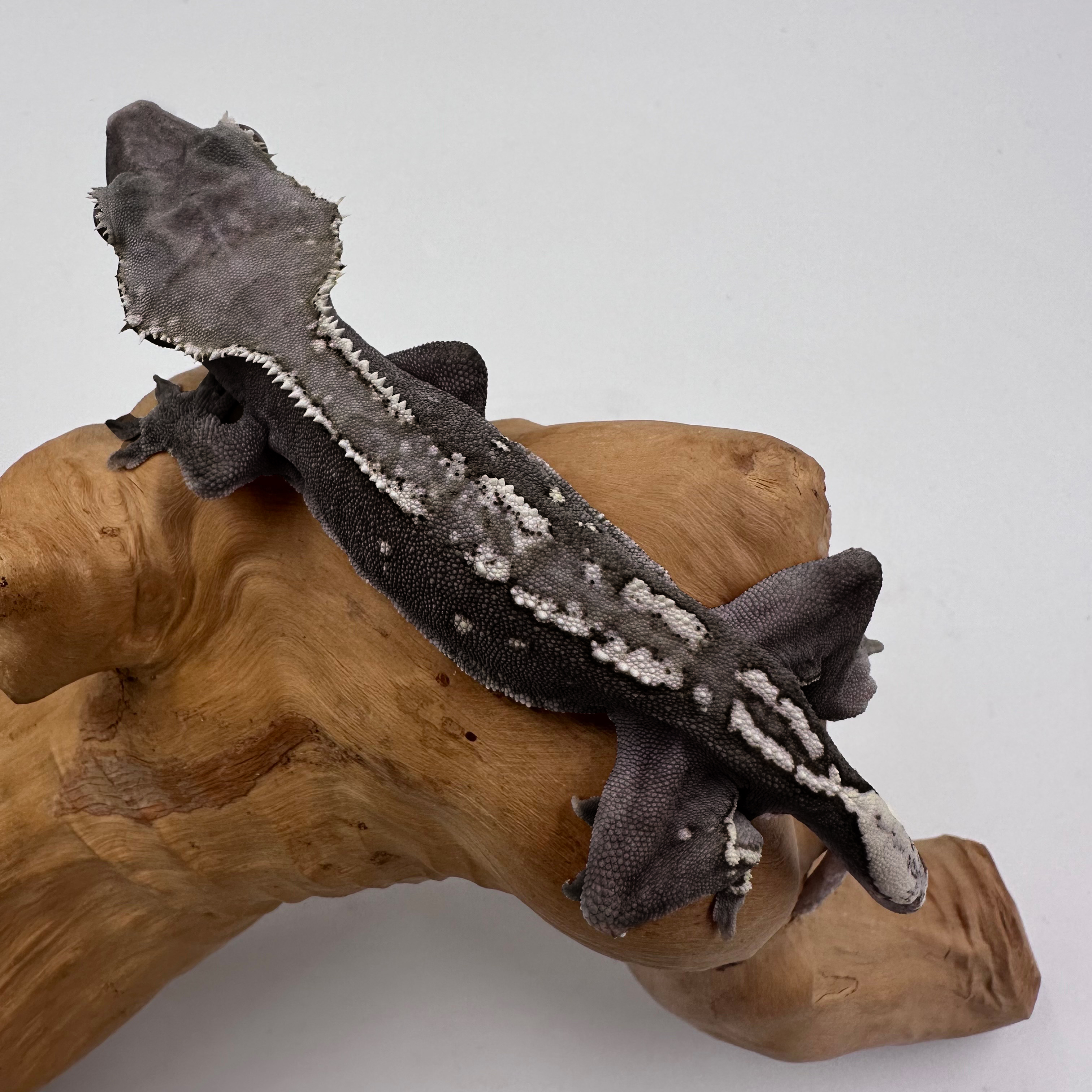
What It Is
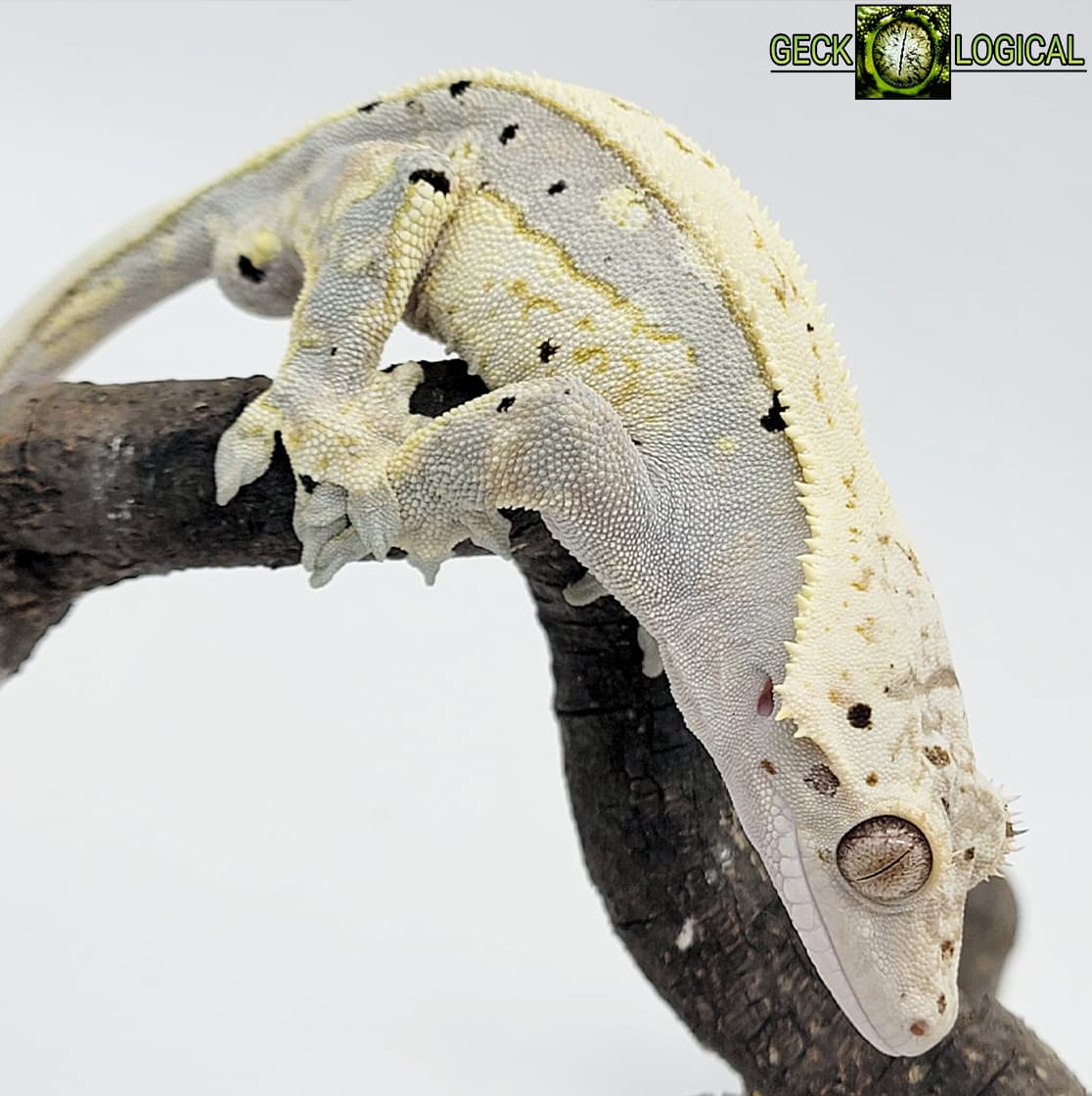
A recessive morph that eliminates yellow and red pigmentation (xanthophores and erythrophores), producing true grayscale geckos in stunning black, white, and gray tones.
The only morph that creates TRUE grayscale appearance.
Genetics Deep Dive
Inheritance: Recessive (simple Mendelian recessive)
Category: COLOR_MODIFIER
Locus Code: x
Visual Expression: Requires TWO copies of the gene (x/x)
The Science:
Axanthic geckos lack functional pigment cells:
- NO xanthophores (yellow pigment cells) - completely absent or non-functional
- NO erythrophores (red pigment cells) - completely absent or non-functional
What remains:
- Melanophores (black/brown pigment cells) - functional
- Iridophores (white/reflective cells) - functional
Result: True grayscale appearance,only black, white, and grey.
Expression:
- Two copies (x/x): Visual Axanthic. True grayscale ✓
- One copy (+/x): Het Axanthic. Appears COMPLETELY NORMAL (carrier)
- No copies (+/+): Normal (non-carrier)
Visual Characteristics
Visual Axanthic (x/x):
- True grayscale - blacks, whites, and grays ONLY
- NO yellow pigmentation anywhere on body
- NO red pigmentation anywhere on body
- Pattern still visible in black and white (not "patternless")
- Dramatic appearance unlike any other morph
- Consistent throughout life - doesn't "fire up" to color
- Can combine with patterns:
- Axanthic Harlequin - grayscale with Harlequin pattern
- Axanthic Pinstripe - grayscale with white pins
- Axanthic Dalmatian - grayscale with black spots
- Axanthic Phantom - grayscale with Phantom modifications
What Axanthic Looks Like:
- Base: Black, grey, or white (no color)
- Pattern: White or light grey against dark grey/black
- Spots (if Dalmatian): Black spots on grey
- Pins (if Pinstripe): White/cream pins on grey
- Eyes: Typically dark
- Overall: Monochromatic, like a black and white photograph
Het Axanthic (+/x):
- Looks 100% COMPLETELY NORMAL
- Indistinguishable from non-carriers visually
- Carries one copy of gene
- Can produce visual Axanthic offspring when bred appropriately
- NO visual indicators of carrying the gene
- Cannot be identified by appearance alone
The "Het" Problem - Why Axanthic Is Challenging
Critical Issue: Het Axanthic geckos look 100% COMPLETELY NORMAL.
This means:
- CANNOT tell by looking if a gecko is het
- Must trust breeder documentation completely
- Must keep meticulous breeding records
- Must prove het status through breeding trials (takes years)
- Gene can "hide" in lines for generations unseen
- Never assume a gecko is het without proof or documentation
Proving Het Status:
To CONFIRM a gecko is Het Axanthic:
Step 1: Breed claimed het to a Visual Axanthic (x/x)
Step 2: Wait for results (6-18+ months)
Step 3: Interpret outcomes:
If ACTUALLY het (+/x):
| Het Axanthic (+/x) × Visual Axanthic (x/x) | Axanthic (x) | Axanthic (x) |
|---|---|---|
| Normal (+) | +/x | +/x |
| Axanthic (x) | x/x ✓ PROOF | x/x ✓ PROOF |
Outcomes: 50% Het (look normal), 50% Visual (grayscale) ✓ PROVES het status
- Expect: 50% of babies are visual Axanthic (grayscale)
- This proves parent is het ✓
If NOT het (+/+):
| NOT Het (+/+) × Visual Axanthic (x/x) | Axanthic (x) | Axanthic (x) |
|---|---|---|
| Normal (+) | +/x | +/x |
| Normal (+) | +/x | +/x |
Outcomes: 100% Het (all look normal), 0% Visual - NOT het
- Expect: NO visual Axanthic babies (all look normal)
- After reasonable sample (15-20 eggs), likely NOT het
Time Investment:
Proving het status takes 2-3 years MINIMUM:
- Breeding age maturity: 18-24+ months
- Breeding season: Wait for spring/summer
- Egg laying: 30-60 days after pairing
- Incubation period: 60-90 days
- Hatching: Immediate visual confirmation (grayscale or not)
- May need multiple clutches for statistical confidence
Market Impact:
- "Proven Het" = higher value (breeding trials confirm)
- "Possible Het" or "Unproven Het" = lower value (no proof, just claim)
- Visual Axanthic = highest value (guaranteed genetics, no guessing)
Breeding Axanthic
Genetic Notation:
- x/x = Visual Axanthic (homozygous recessive)
- +/x = Het Axanthic (heterozygous carrier, looks normal)
- +/+ = Normal (no Axanthic gene)
Visual Axanthic (x/x) × Normal non-carrier (+/+):
| Visual Axanthic (x/x) × Normal (+/+) | Normal (+) | Normal (+) |
|---|---|---|
| Axanthic (x) | +/x | +/x |
| Axanthic (x) | +/x | +/x |
Outcomes: 100% Het Axanthic (+/x) - all look normal
- 100% Het Axanthic (+/x)
- All offspring LOOK NORMAL but carry gene
- All can produce Axanthic if bred to carrier or visual
- Useful for building het lines
Visual Axanthic (x/x) × Het Axanthic (+/x):
| Visual Axanthic (x/x) × Het Axanthic (+/x) | Normal (+) | Axanthic (x) |
|---|---|---|
| Axanthic (x) | +/x | x/x |
| Axanthic (x) | +/x | x/x |
Outcomes: 50% Het Axanthic (+/x), 50% Visual Axanthic (x/x) ✓ PROOF
- 50% Het Axanthic (+/x) - look normal, carry gene
- 50% Visual Axanthic (x/x) - grayscale ✓
- Best pairing for PROVING hets
- Produces visual Axanthics at 50% rate
Visual Axanthic (x/x) × Visual Axanthic (x/x):
| Visual Axanthic (x/x) × Visual Axanthic (x/x) | Axanthic (x) | Axanthic (x) |
|---|---|---|
| Axanthic (x) | x/x | x/x |
| Axanthic (x) | x/x | x/x |
Outcomes: 100% Visual Axanthic (x/x)
- 100% Visual Axanthic (x/x)
- All offspring grayscale
- Guaranteed outcome
- Useful for building pure Axanthic lines
Het Axanthic (+/x) × Het Axanthic (+/x):
| Het Axanthic (+/x) × Het Axanthic (+/x) | Normal (+) | Axanthic (x) |
|---|---|---|
| Normal (+) | +/+ | +/x |
| Axanthic (x) | +/x | x/x |
Outcomes: 25% Normal (+/+), 50% Het Axanthic (+/x), 25% Visual Axanthic (x/x)
- 25% Normal (+/+) - non-carriers
- 50% Het Axanthic (+/x) - carriers, look normal
- 25% Visual Axanthic (x/x) - grayscale ✓
- Classic Mendelian recessive ratios
- Cannot tell hets from normals visually
Challenge: 75% of offspring look normal, but only 2/3 of those are actually het.
Common Axanthic Combinations
Axanthic can combine with ANY pattern or trait:
Axanthic Harlequin:
- Grayscale with Harlequin pattern
- Black and white contrast
- Pattern still visible in monochrome
- Very striking
Axanthic Pinstripe:
- Grayscale with white/cream pins
- Clean monochromatic appearance
- Pins stand out against grey
- Highly desirable
Axanthic Dalmatian:
- Grayscale with black spots
- Spots on grey/white base
- Unique polka-dot appearance
- Every individual different
Axanthic Phantom:
- Grayscale with Phantom pattern modification
- Melanin blending in grey tones
- Subtle pattern effects
- Rare combination
Axanthic + ANY pattern:
- Pattern remains visible
- Expressed in black/white/grey
- No color distraction
- Pure pattern appreciation
All combinations remain true grayscale (no yellow/red returns).
Market Value
Visual Axanthic: $1000-$5000+ (very rare, dramatic appearance, guaranteed genetics)
Het Axanthic (proven through breeding): $200-$800 (value in breeding projects)
Het Axanthic (unproven/possible): $100-$300 (speculation, no proof)
Why Visual Axanthic Is So Expensive:
Rarity:
- True recessive trait (harder to produce than dominant/incomplete dominant)
- Both parents must carry gene
- Only 25% from het × het pairings
- Takes years to establish lines
Appearance:
- Dramatically unique (only grayscale morph)
- Cannot be "faked" (either grayscale or not)
- Stands out completely from all other morphs
- No other morph looks similar
Breeding:
- Limited availability (fewer breeders working with it)
- Breeding projects take years to establish
- High demand from collectors
- Cannot shortcut production time
Genetics:
- Guaranteed genetics (no guessing)
- Can see exactly what you're getting
- No "maybe" or "possibly"
- Visual confirmation
Phantom (PH) - Recessive, Melanin-Producing
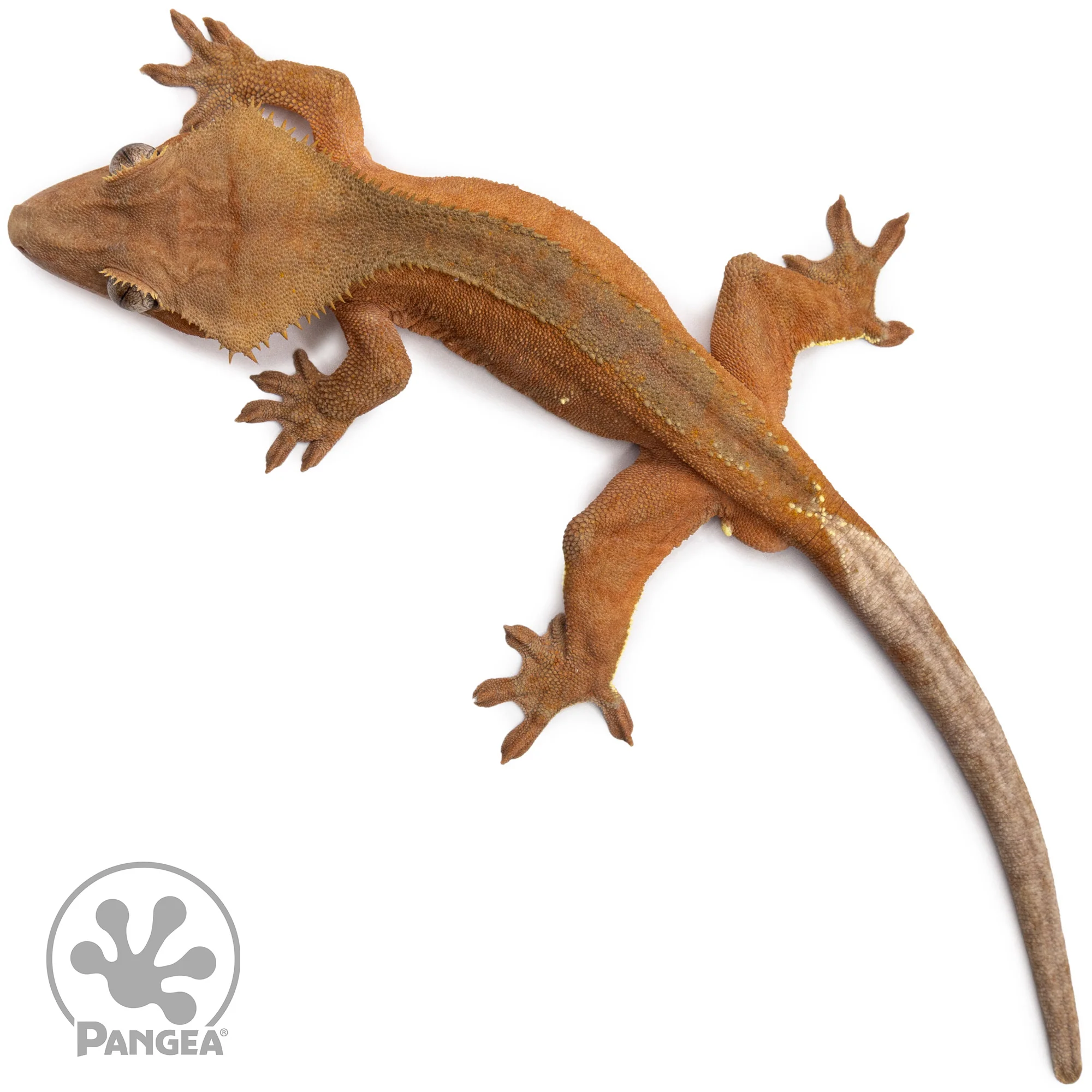
What It Is
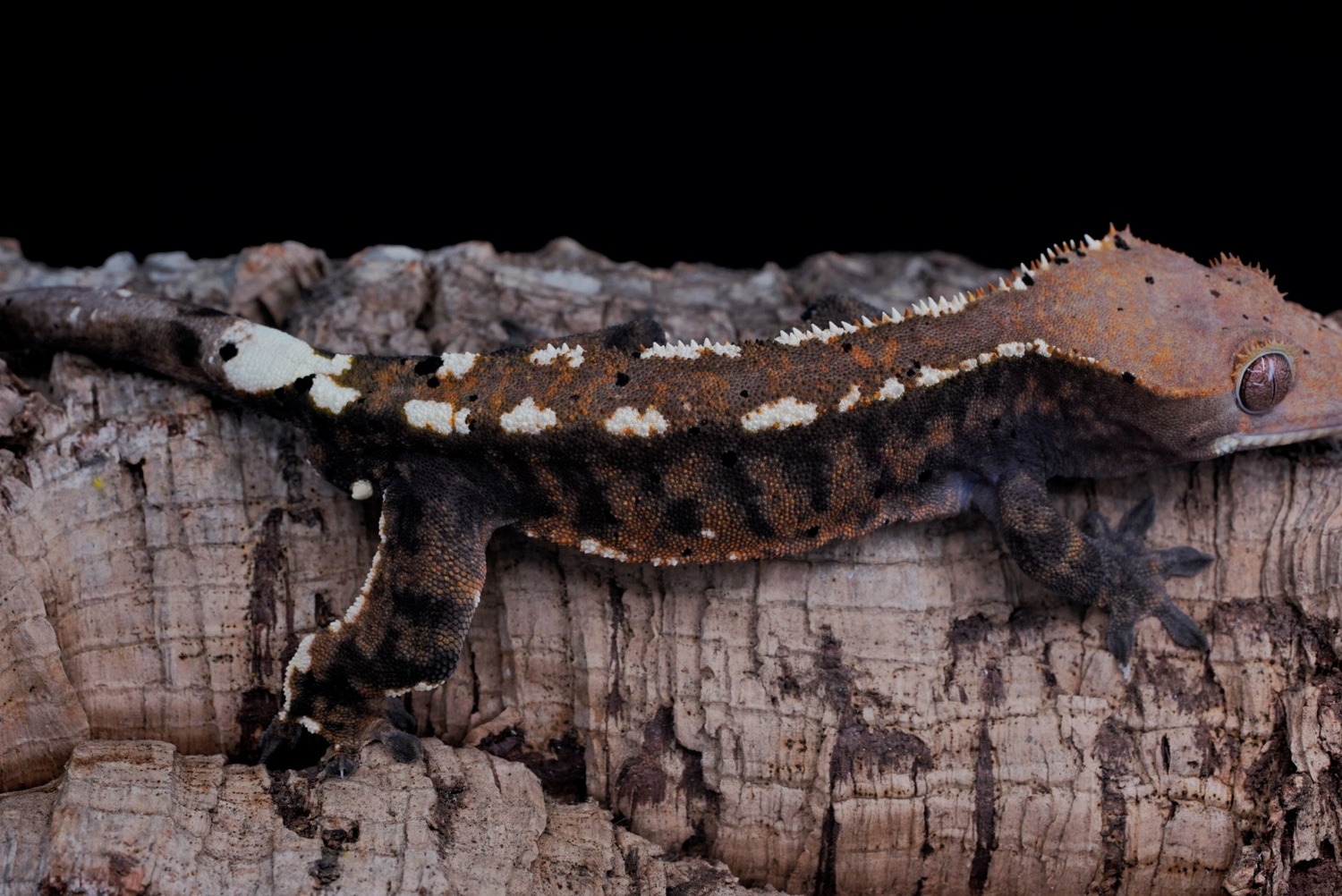
A recessive melanin-producing trait (NOT pattern-removing) that creates various phenotypes including bi-color, buckskin, cream, and tan appearances through melanin blending with base colors.
CRITICAL CLARIFICATION: Phantom is a SINGLE TRAIT that produces multiple phenotypes historically named as separate "morphs" by the hobby.
Genetics Deep Dive
Inheritance: Mendelian recessive (definitively proven through decades of breeding trials)
Category: COLOR_MODIFIER and PATTERN_MODIFIER
Locus Code: PH
Expression:
- Two copies (PH/PH): Visual Phantom. Melanin-producing effects visible
- One copy (+/PH): Het Phantom. Looks NORMAL (carrier), sometimes subtle indicators
- No copies (+/+): Normal (non-carrier)
Historical Note: Some believed Phantom was non-Mendelian (incorrect). Extensive breeding trials across multiple programs (US, Korea, UK) definitively prove it's Mendelian recessive.
What Phantom ACTUALLY Does
Phantom is MELANIN-PRODUCING (not pattern-removing):
Key Function:
- Produces melanin that BLENDS with base color
- Creates range of phenotypes based on:
- Base color present (Black, Red, Yellow)
- Phantom dominance level (high vs. low expression)
- Other traits present (Pinstripe, etc.)
- Affects pattern expression - underlying pattern becomes darkened
- Can suppress White Pattern on raised scalation (Pinstripe interaction)
Phantom Phenotypes (ALL the same PH/PH gene):
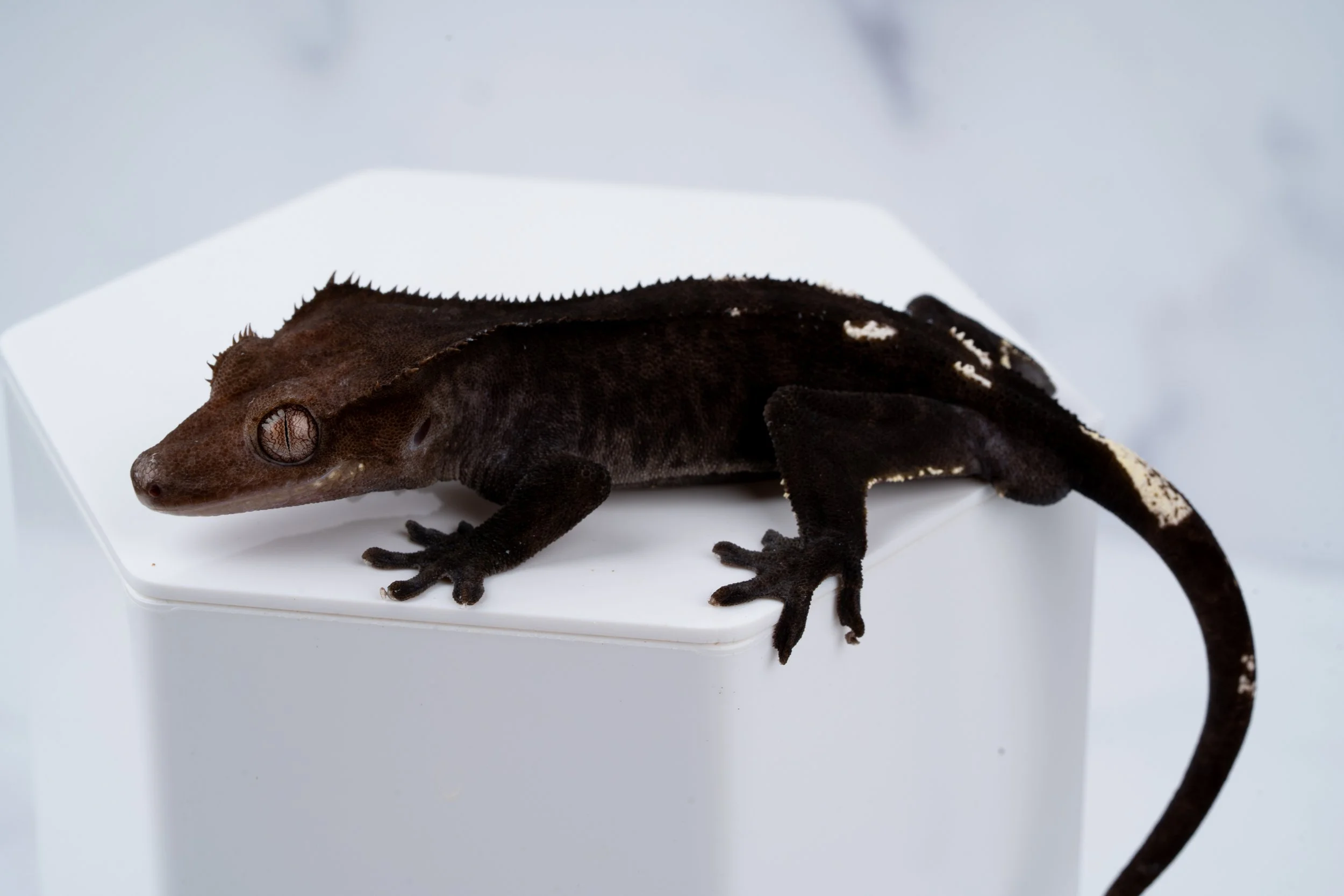
- Bi-color - High dominance Phantom, distinct color zones, two-tone appearance
- Patternless descriptor - High dominance Phantom, solid appearance, minimal visible pattern
- Buckskin - Phantom (PH/PH) + Yellow Base (y) = melanin blends with yellow creating tan
- Cream - Phantom phenotype variation, lighter buckskin expression
- Tan - Phantom phenotype variation, medium buckskin expression
These are NOT separate genes. They're PHENOTYPES (visible expressions) of the single Phantom trait.
Visual Characteristics & Identification
Identification Rules:
RULE 1: Any bi-color or patternless-appearing animal has Phantom
RULE 2: Yellow-based animal with melanin BLENDING (buckskin, cream, tan) = Phantom
- vs. Yellow-based animal with CLEAN yellow (no blending) = Hypo
RULE 3: On Pinstripe animals, White Pattern fades from tail to head when Phantom present
RULE 4: Lower dominance Phantom with Pinstripe shows darker head and specific pattern characteristics
Key Visual Distinction - Phantom vs. Hypo:
Phantom:
- Melanin-PRODUCING
- Melanin BLENDS with base color
- Creates buckskin/cream/tan (NOT clean yellow)
- Melanin integration visible
- Warm, blended appearance
Hypo:
- Melanin-REDUCING
- Creates CLEAN yellow/light colors
- NO melanin blending
- Light, clean appearance
- Crisp color separation
Quick Visual Test:
- See melanin blending with base color → Phantom
- See clean yellow without blending → Hypo
Phantom vs. Patternless (PTL) - Different Traits
CRITICAL DISTINCTION: These are DIFFERENT TRAITS at DIFFERENT LOCI.
Phantom (PH):
- Shows underlying pattern (darkened)
- Melanin-producing trait
- Pattern is modified, not removed
- Melanin blending occurs
- Mendelian recessive at PH locus
Patternless trait (PTL):
- Complete pattern REMOVAL
- NO pattern visible at all
- Clean solid appearance
- Different genetic locus from Phantom
- Recessive at PTL locus
How We Know They're Different:
Evidence:
- Breeding similar-looking animals produces different outcomes
- Phantom × Phantom = 100% Phantom
- Patternless × Patternless = 100% Patternless
- Phantom × Patternless = Neither phenotype (proves different loci)
- They're separate, non-allelic loci
Visual Distinction:
- Phantom: You can see darkened underlying pattern if you look closely
- Patternless (PTL): Absolutely NO pattern visible, completely clean
Breeding Phantom
Same principles as any simple recessive:
Visual Phantom (PH/PH) × Normal (+/+):
| Visual Phantom (PH/PH) × Normal (+/+) | Normal (+) | Normal (+) |
|---|---|---|
| Phantom (PH) | +/PH | +/PH |
| Phantom (PH) | +/PH | +/PH |
Outcomes: 100% Het Phantom (+/PH) - all look normal
- 100% Het Phantom (+/PH) - all look normal (usually)
Visual Phantom (PH/PH) × Het Phantom (+/PH):
| Visual Phantom (PH/PH) × Het Phantom (+/PH) | Normal (+) | Phantom (PH) |
|---|---|---|
| Phantom (PH) | +/PH | PH/PH |
| Phantom (PH) | +/PH | PH/PH |
Outcomes: 50% Het Phantom (+/PH), 50% Visual Phantom (PH/PH)
- 50% Het Phantom (+/PH) - look normal
- 50% Visual Phantom (PH/PH) - show trait
Visual Phantom (PH/PH) × Visual Phantom (PH/PH):
| Visual Phantom (PH/PH) × Visual Phantom (PH/PH) | Phantom (PH) | Phantom (PH) |
|---|---|---|
| Phantom (PH) | PH/PH | PH/PH |
| Phantom (PH) | PH/PH | PH/PH |
Outcomes: 100% Visual Phantom (PH/PH)
- 100% Visual Phantom (PH/PH)
Het Phantom (+/PH) × Het Phantom (+/PH):
| Het Phantom (+/PH) × Het Phantom (+/PH) | Normal (+) | Phantom (PH) |
|---|---|---|
| Normal (+) | +/+ | +/PH |
| Phantom (PH) | +/PH | PH/PH |
Outcomes: 25% Normal (+/+), 50% Het Phantom (+/PH), 25% Visual Phantom (PH/PH)
- 25% Normal (+/+) - non-carriers
- 50% Het Phantom (+/PH) - carriers, look normal
- 25% Visual Phantom (PH/PH) - show trait
The Het Challenge for Phantom
Het Phantom animals usually look normal, though some show subtle indicators.
Subtle Het Indicators (not reliable):
- Slightly darker head
- Subtle melanin blending (hard to spot)
- Minor pattern modifications
- These are NOT diagnostic,cannot reliably identify hets by appearance
Cannot reliably identify by appearance alone,requires:
- Breeding trials (produce visual Phantom offspring)
- Lineage documentation (parents known to carry)
- Test breeding results
Common Phantom Combinations
Phantom Pin (PH + PIN):
- Phantom + Pinstripe combination
- White Pattern fades tail to head (characteristic)
- Popular combination in hobby
- NOT linked or allelic - separate loci, can be combined
- Distinct appearance from either trait alone
Phantom Frappuccino:
- Phantom + Frappuccino (Cappuccino + Lilly White)
- Further white pattern suppression
- Higher contrast appearance
- More vibrant coloration
- Extreme pattern modification
- Very rare triple-trait combination
Axanthic Phantom:
- Phantom + Axanthic
- Grayscale with Phantom pattern modification
- Melanin blending in grey tones
- Rare and interesting combination
Phantom + Base Colors:
- Phantom + Black Base: Bi-color blacks, two-tone appearance
- Phantom + Yellow Base: Buckskin/Cream/Tan (melanin blends with yellow)
- Phantom + Red Base: Subtle melanin influence on red
Market Value
Visual Phantom (standard expression): $150-$400
High-quality Bi-color: $250-$500 (clean two-tone appearance)
Phantom Pin: $300-$600+ (popular combination)
Het Phantom (proven through breeding): $100-$250
Phantom combinations: Variable based on traits
Patternless (PTL) - Recessive, Pattern-Removing
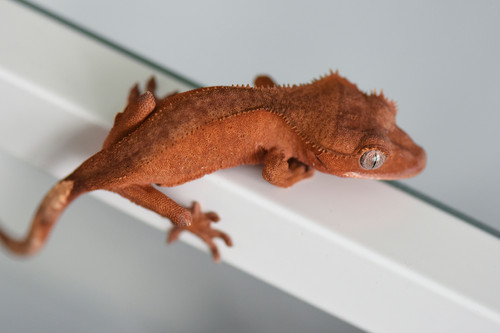
What It Is
A recessive pattern-removing trait that creates complete pattern removal. Distinct from Phantom despite similar appearance in some cases.
Genetics
Inheritance: Recessive
Category: PATTERN_MODIFIER
Locus Code: PTL
DIFFERENT LOCUS from Phantom (PH) - they're separate traits
Expression:
- Two copies (PTL/PTL): Visual Patternless. Complete pattern removal
- One copy (+/PTL): Het Patternless. Looks normal (carrier)
- No copies (+/+): Normal
Visual Characteristics vs. Phantom
Patternless (PTL/PTL):
- COMPLETE pattern removal
- NO pattern visible at all
- Clean, solid appearance
- Base color shows without pattern interference
- Absolutely clean - no underlying pattern
Phantom (PH/PH):
- Shows underlying DARKENED pattern
- Melanin BLENDING occurs with base color
- Pattern is modified, not completely removed
- Can see pattern if you look closely
Proof They're Different:
Evidence:
- Breeding similar-appearing animals produces different outcomes
- Phantom crosses produce Phantom ratios
- Patternless crosses produce Patternless ratios
- Crossing them produces neither phenotype initially
- They segregate independently (different loci)
Why Confusion Exists:
- Both can create animals without obvious pattern
- Bi-color Phantom can look patternless
- High-expression Phantom can look very clean
- Hobby historically named them interchangeably
- Took breeding trials to distinguish them
How to Tell Them Apart:
- Look closely for underlying pattern - Phantom has it (darkened), Patternless doesn't
- Check for melanin blending - Phantom blends, Patternless is clean
- On Yellow Base - Phantom creates buckskin (blending), Patternless creates clean yellow
- Breeding outcomes - Different inheritance (different loci)
Breeding Patternless
Same recessive inheritance as Phantom, but different locus:
Visual Patternless (PTL/PTL) × Normal (+/+):
| Visual Patternless (PTL/PTL) × Normal (+/+) | Normal (+) | Normal (+) |
|---|---|---|
| Patternless (PTL) | +/PTL | +/PTL |
| Patternless (PTL) | +/PTL | +/PTL |
Outcomes: 100% Het Patternless (+/PTL)
- 100% Het Patternless (+/PTL)
- All look normal
Het Patternless (+/PTL) × Het Patternless (+/PTL):
| Het Patternless (+/PTL) × Het Patternless (+/PTL) | Normal (+) | Patternless (PTL) |
|---|---|---|
| Normal (+) | +/+ | +/PTL |
| Patternless (PTL) | +/PTL | PTL/PTL |
Outcomes: 25% Normal (+/+), 50% Het Patternless (+/PTL), 25% Visual Patternless (PTL/PTL)
- 25% Normal (+/+)
- 50% Het Patternless (+/PTL)
- 25% Visual Patternless (PTL/PTL)
Visual Patternless (PTL/PTL) × Visual Patternless (PTL/PTL):
| Visual Patternless (PTL/PTL) × Visual Patternless (PTL/PTL) | Patternless (PTL) | Patternless (PTL) |
|---|---|---|
| Patternless (PTL) | PTL/PTL | PTL/PTL |
| Patternless (PTL) | PTL/PTL | PTL/PTL |
Outcomes: 100% Visual Patternless (PTL/PTL)
- 100% Visual Patternless (PTL/PTL)
Market Value
Visual Patternless (PTL/PTL): $150-$400
Much rarer than Phantom (fewer breeders working with it)
Key Takeaways - Recessive Traits
Understanding Recessives:
- Require TWO copies for visual expression (x/x, PH/PH, PTL/PTL)
- ONE copy = invisible carrier (het) - looks completely normal
- Cannot tell hets by looking - must rely on documentation/breeding
- Proving hets takes YEARS - breeding trials required
- Genes can hide for generations - track carefully
- NO lethal combinations known - safe from that perspective
Comparison:
Axanthic (x):
- Removes yellow/red pigment
- True grayscale
- Most expensive recessive
- Takes years to establish
Phantom (PH):
- Produces melanin that blends
- Creates buckskin, bi-color, etc.
- Single trait, multiple phenotypes
- Mendelian recessive (proven)
Patternless (PTL):
- Removes pattern completely
- Different from Phantom
- Clean solid appearance
- Rarer than Phantom
Breeding Strategy for Recessives:
To establish lines:
- Acquire visual animals (x/x, PH/PH, PTL/PTL)
- Breed to Normal (produces all hets)
- Breed hets together (25% visual offspring)
- Keep visuals and proven hets
- Build pure lines over generations
Timeline: 4-7 years to establish reliable producing lines
This section covers the multiple hypomelanistic forms and how they interact with base colors to create combo morphs
What to Read Next
- Hypo Forms & Epistatic Interactions - The three hypo forms and how gene interactions create combo morphs
- The Sable/Cappuccino Allelic Complex - Another key genetic relationship
- Crested Gecko Breeding Mistakes - Including the het problem and why lineage tracking matters
- Crested Gecko Morph Calculator - Free Punnett square predictions for Axanthic, Phantom, and more
Want to track hets, pairings, and breeding outcomes? ReptiDex handles lineage, pedigree trees, and genetics tracking. I built it for exactly this kind of project. Available on iOS.
About the Author
I'm Dusty Mumphrey, a crested gecko and leachianus breeder in Tyler, Texas. I also build software for breeders through Built By Dusty, including ReptiDex (breeding records app) and the genetics engine that powers this site. If you're a breeder or breed club looking for custom software, get in touch.