Breed Ledger launches May 15 · First 50 waitlist signups get 6 months free · Claim your spot →0d left
All species

Leopard Gecko

Eublepharis macularius

14traits
36morphs

Breeding facts

Clutch / litter size

1 – 2

Incubation / gestation

45 – 65 days

Breeding season

Year-round

Genetics traits

Individual heritable traits tracked on this species.

Bell Albino

BellAlbRecessivebell / Bell / bell/bell / Bell/bell / het Bell / Bell Albino

The Bell Albino locus is one of three independent albino loci in leopard geckos. Homozygous recessive (bell/bell) animals display reduced melanin with a distinctive appearance: ruby-red to deep pink eyes are the hallmark of Bell Albino and the most reliable way to distinguish it from the other two albino strains. Body coloration tends toward lavender, light brown, and soft orange with brown spotting. Bell Albinos often have a cleaner, more pastel appearance compared to Tremper Albinos. The ruby-red eye color makes Bell Albino highly sought after for combo morphs where eye color is a selling point.

ID tips: Bell Albino (bell/bell): Ruby-red to deep pink eyes are the KEY diagnostic feature -- this is the most reliable way to identify Bell Albino vs the other strains. Body color is often softer and more pastel than Tremper Albino, with lavender and light brown tones. Spots are brown to light brown. Overall appearance can be lighter and more washed-out than Tremper. Hatchlings show banded pattern with softer brown bands. Heterozygous carriers (Bell/bell) appear phenotypically normal.

Black Night

BlackNightPolygenicBlack Night / BN

Black Night is a polygenic (line-bred) trait producing extreme melanistic coloration -- ideally a solid jet-black gecko with no visible pattern. Developed by Ferry Zuurmond (Netherlands) over 15+ years of highly selective breeding from his existing gecko colony. Hatchlings may show a normal or muted pattern that is progressively replaced by black over months and years. Final coloration is temperature-sensitive: cooler environments typically produce darker individuals. True Black Night animals are heavily inbred by necessity -- the trait requires accumulation of many melanistic alleles across a closed population. As a result of the inbreeding required, Black Night animals commonly have reduced fertility, slow growth rates, and various health issues. One of the most expensive and sought-after leopard gecko morphs. Cannot be predicted or calculated as a single-gene trait. This record is included for search/display purposes.

ID tips: Black Night: Progressively darkening black coloration replacing normal patterned appearance. Young animals may still show traces of pattern. Mature animals ideally solid jet-black with no visible spots or markings. Coloration is deeper and more uniform in cooler environments. Belly typically dark or black (wild type geckos have pale bellies). Overall body shape and build normal -- the trait affects only coloration. Very expensive -- true high-quality Black Night animals from established Ferry Zuurmond lineage command prices of thousands of dollars.

Blizzard

BlizzardRecessiveblz / Blz / blz/blz / Blz/blz / het Blizzard / Blizzard

The Blizzard locus is a recessive trait that produces a patternless gecko with solid coloration. Homozygous Blizzard (blz/blz) animals lack the normal banded or spotted pattern entirely, displaying a uniform body color that can range from pure white to yellow to dark brown/purple depending on other genetics and temperature. Blizzard is a different gene than Murphy Patternless -- confirmed by complementation testing (crossing Blizzard x Murphy Patternless produces normal-patterned double-het offspring). While both produce patternless geckos, they achieve it through different genetic mechanisms at separate loci. Blizzard is a key component of the Diablo Blanco combo morph.

ID tips: Blizzard (blz/blz): Completely patternless body -- no spots, bands, or markings. Body color varies widely: can be pure white, cream, yellow, gray, brown, or even purplish depending on temperature, age, and other genetic factors. Coloration can shift with temperature (cooler temps often produce darker Blizzards). Eyes are normal (dark with visible iris pattern, unless combined with Eclipse). Distinguished from Murphy Patternless by body color tendency -- Blizzards tend toward white/cream/gray while Murphy Patternless tends more yellow. However, visual identification of Blizzard vs Murphy Patternless can be unreliable without knowing parentage. Heterozygous carriers appear phenotypically normal.

Eclipse

EclipseRecessiveecl / Ecl / ecl/ecl / Ecl/ecl / het Eclipse / Eclipse / snake eyes

The Eclipse locus is a recessive trait that primarily affects eye coloration. Homozygous Eclipse (ecl/ecl) geckos have solid-colored eyes -- the entire visible eye surface is one uniform color with no visible iris pattern. In non-albino Eclipse geckos, eyes are solid black. When combined with any of the three albino strains, Eclipse produces solid red or ruby eyes. Eclipse can also produce "snake eyes" -- a partial expression where only a portion of the eye is solid-colored, creating a striking split appearance. Eclipse is a key component of the RAPTOR combo morph and its derivatives. In addition to eye effects, Eclipse can subtly influence body coloration, sometimes reducing head spotting.

ID tips: Eclipse (ecl/ecl): Eyes are solid black in non-albino animals -- no visible pupil/iris distinction, entire eye surface uniformly dark. With albino, eyes become solid red to ruby. "Snake eyes" (partial solid eye) can occur in homozygous Eclipse animals as variable expression -- this is NOT heterozygous expression but rather incomplete penetrance of the solid eye phenotype. Body may show reduced head spotting. Heterozygous carriers appear phenotypically normal with standard eye appearance.

Enigma

EnigmaDominantEn / en / Enigma / het Enigma

Enigma is a dominant trait producing a distinctive random, speckled, or blotched pattern replacing normal bands. Spots appear scattered or "confetti-like." Tail is often predominantly white. HEALTH WARNING -- REVIEW FLAG: Enigma Syndrome (ES) is an autosomal dominant neurological/vestibular disorder that affects a high percentage of Enigma carriers. Symptoms range from mild star-gazing and head-tilting to severe seizures, spinning, and death rolls. The neurological component co-segregates with the pattern gene -- there is no known way to have the Enigma pattern without the neurological risk. No cure or treatment exists. Enigma Syndrome has been banned in Switzerland since 2015 as a form of torture breeding (Qualzucht). IHS Europe has banned Enigma sales at their events. The disorder is analogous to Spider wobble in ball pythons. Severity varies between individuals and may worsen with age or stress. Included in this database with REVIEW status -- operators should consider whether to display or suppress this morph.

ID tips: Enigma: Random, scattered spotting or "confetti" pattern instead of normal bands. Spots are distributed irregularly across the body without the usual banding structure. Tail often white or mostly white. Head may show unusual pattern or reduced markings. Behavioral signs of Enigma Syndrome (if present): star-gazing (head tilted upward), circling or rolling, spinning, inability to judge distance accurately, seizure-like episodes. Severity ranges from barely noticeable to severely debilitating.

severe homozygous risk: Enigma Syndrome (ES) is an autosomal dominant neurological/vestibular disorder. ALL carriers (heterozygous and homozygous) are affected -- this is not a homozygous-only risk. Symptoms include: star-gazing (head tilted upward), head tilting, circling, difficulty tracking prey, seizures, and "death rolls" (uncontrolled rolling). Severity varies from mild to debilitating. Homozygous Enigma may show more severe symptoms than heterozygous, though data is limited because most breeders avoid producing homozygous. There is no cure -- management involves reducing stress, providing simple enclosure layouts, and hand-feeding if the gecko cannot track prey. Enigma breeding is banned in Switzerland (since 2015) as "Qualzucht" (torture breeding) and banned from IHS events in Europe. Similar to Spider wobble in ball pythons.

Giant

GiantIncomplete DominantGi / gi / GiGi / Giant / Super Giant / het Giant

The Giant locus is an incomplete dominant trait affecting body size rather than color or pattern. Three size phenotypes exist based on zygosity: Wild type (normal size, 45-65g), heterozygous Giant (65-100g+, visibly larger than wild type), and homozygous Super Giant (100-150g+, the largest leopard geckos achievable). Super Giants are the largest form -- record-breaking males have exceeded 150g. The Giant gene affects growth rate, final adult size, and overall body mass. Giant leopard geckos have larger heads, thicker tails, and generally stockier builds. The size difference becomes most pronounced after 12-18 months of age.

ID tips: Giant (Gi/gi): Noticeably larger than normal siblings -- visibly larger head, thicker tail, heavier build. Typically 65-100g+ at adult size vs 45-65g for wild type. Size difference becomes clear by 6-12 months. Super Giant (GiGi): Dramatically large -- the biggest leopard geckos in the hobby. 100g+ typical, record individuals over 150g. Much thicker build than even heterozygous Giants. Requires knowing parentage for certain identification as juveniles, but size difference in adults is usually unmistakable.

Lemon Frost

LemonFrIncomplete DominantLF / lf / Lemon Frost / Super Lemon Frost

Lemon Frost is an incomplete dominant mutation that dramatically increases white coloration and brightens yellow and orange pigmentation. Heterozygous Lemon Frost animals are visually striking with high-contrast white and bright yellow/lemon coloration. Homozygous Super Lemon Frost (LF/LF) shows even more extreme white and bright coloration but develops tumors earlier and more severely. HEALTH WARNING -- REVIEW FLAG: Lemon Frost is genetically linked to iridophoroma, a progressive tumor disease affecting iridophores (pigment cells). Published peer-reviewed research (Guo et al. 2021, PLOS Genetics, doi:10.1371/journal.pgen.1009580) identified SPINT1 as the candidate gene -- a tumor suppressor gene implicated in human skin cutaneous melanoma. Heterozygous Lemon Frost animals develop white nodule tumors at high rates, typically beginning by 1-2 years of age. Tumors are progressive, may metastasize, and are frequently fatal. Homozygous Super Lemon Frost develops tumors more severely and earlier. No effective treatment exists. Included with REVIEW status -- operators should consider whether to display or suppress this morph.

ID tips: Lemon Frost: Striking high-contrast white and bright yellow/lemon coloration. More white on the body than typical animals, brighter and more saturated yellow where present. Appearance is distinctive and visually appealing. White nodule tumors (iridophoroma): Small white bumps or nodules appearing on the skin, typically first appearing on the body or limbs. Tumors grow progressively. Super Lemon Frost (LF/LF): More extreme white and brighter coloration than single-copy Lemon Frost. Tumor development typically faster and more severe than heterozygous form.

severe homozygous risk: Homozygous "Super Lemon Frost" develops iridophoroma (tumors of iridophore origin) earlier, more severely, and with higher penetrance than heterozygous Lemon Frost. Tumors typically appear within the first year of life in homozygous animals (vs 1-2 years in heterozygous). Tumors are progressive, can grow to significant size, and may metastasize to internal organs. The tumor predisposition is caused by a mutation at the SPINT1 locus, a tumor suppressor gene (Guo et al. 2021, PLOS Genetics). NOTE: Heterozygous Lemon Frost animals ALSO develop tumors at high rates -- this is not a homozygous-only risk. The homozygous form simply develops them earlier and more severely. There is currently no way to produce the Lemon Frost phenotype without the tumor predisposition.

Mack Snow

SnowIncomplete DominantSnow / Ss / SS / Mack Snow / Super Snow / het Snow

The Mack Snow locus is an incomplete dominant trait that reduces yellow pigmentation and increases white. Three phenotypes exist based on zygosity: Wild type (no Snow gene) appears normal with yellow/orange coloration. Heterozygous Mack Snow (Ss) hatches with white bands instead of yellow and displays reduced yellow pigmentation throughout life, though some yellow may return with age. Homozygous Super Snow (SS) is dramatically different -- a white or very pale body with bold black spotting and distinctive solid black "eclipse-like" eyes (though genetically distinct from the Eclipse gene). Super Snow is one of the most visually striking leopard gecko morphs. The Snow gene is an extremely popular building block for combo morphs due to its ability to brighten and clean up body color.

ID tips: Mack Snow (Ss): Hatchlings have white bands where normal geckos have yellow bands. Adults show reduced yellow -- more white/cream background with normal dark spotting. Some individuals regain yellow tones as they mature. Super Snow (SS): White to pale gray body with bold black spots/speckles. Eyes are solid dark (often mistaken for Eclipse but genetically distinct). Dramatically different from single-copy Mack Snow. No yellow anywhere on the body. Very distinctive phenotype even as hatchlings.

Murphy Patternless

MurphyRecessivemp / Mp / mp/mp / Mp/mp / het Murphy / Murphy Patternless / Patternless

The Murphy Patternless locus is a recessive trait that produces a patternless gecko, distinct from the Blizzard gene. Homozygous Murphy Patternless (mp/mp) hatchlings emerge with a faint pattern that fades completely as the gecko matures, resulting in an adult with uniform coloration -- typically yellow to greenish-yellow with a subtle lavender tint on the body. The lack of pattern combined with the characteristic yellow-green tone distinguishes Murphy Patternless from Blizzard (which tends toward white/cream/gray). Murphy Patternless is a component of the Ember combo morph (Murphy Patternless + Eclipse + Tremper Albino).

ID tips: Murphy Patternless (mp/mp): Hatchlings show a faint banded or mottled pattern that fades progressively and is typically gone by adulthood. Adults are uniform yellow to greenish-yellow, sometimes with a lavender cast. No spots or banding. Color is generally warmer and more yellow than Blizzard. Head may retain slight color variation. Tail color tends to match body color. Heterozygous carriers appear phenotypically normal with standard patterning.

NDBE (Noir Desir Black Eye)

NDBERecessivendbe / NDBE / ndbe/ndbe / Ndbe/ndbe / het NDBE / Noir Desir / Noir Desir Black Eye

NDBE (Noir Desir Black Eye) is a recessive trait that reduces dark body pigmentation while producing solid black eyes. Homozygous NDBE (ndbe/ndbe) geckos display a distinctive "clean" appearance with reduced melanin on the body but dramatically darkened eyes. The trait interacts with melanistic pathways -- when combined with tangerine line-bred genetics, NDBE can produce strikingly dark orange to red coloration. The acronym stands for "No Dark Body Extension" in some references, though "Noir Desir Black Eye" is the more commonly used full name. NDBE appears to interact synergistically with tangerine/orange polygenic traits, enhancing color intensity.

ID tips: NDBE (ndbe/ndbe): Solid black eyes (similar appearance to Eclipse but genetically distinct). Reduced dark body pigmentation -- cleaner, less melanin on the body compared to normal. When combined with tangerine lines, produces intensely colored animals. Heterozygous animals (Ndbe/ndbe) may show darker-than-normal coloration compared to clutch mates but are not visually definitive -- NDBE hets can carry the gene invisibly. Best identified through known parentage and test breeding.

Rainwater Albino

RainAlbRecessiverain / Rain / rain/rain / Rain/rain / het Rainwater / Rainwater Albino / Las Vegas Albino

The Rainwater Albino locus (also known as Las Vegas Albino) is one of three independent albino loci in leopard geckos. Homozygous recessive (rain/rain) animals are characterized by an overall lighter, more washed-out appearance compared to the other two albino strains. Body coloration is typically pale yellow to light pink with subtle brown spots. Eyes are lighter than normal but not as distinctly red as Bell Albino -- typically dark silver to light pink. Rainwater Albinos tend to be smaller and more delicate in build than the other albino strains, and hatchlings are often noticeably paler and pinker than Tremper or Bell hatchlings.

ID tips: Rainwater Albino (rain/rain): Lightest and most washed-out of the three albino strains. Pale yellow to pink body with faint brown spotting. Eyes are dark silver to pinkish -- NOT the deep ruby-red of Bell Albino and not as variable as Tremper. Overall build tends to be slightly smaller and more refined. Hatchlings are distinctly pale, often appearing almost pink. Can be difficult to distinguish from Tremper Albino in adults -- eye color and overall intensity are the best indicators. Some breeders consider parentage the only reliable identification method. Heterozygous carriers appear phenotypically normal.

Tangerine

TangerinePolygenicTangerine / Tang / SHT / Super Hypo Tangerine / Carrot Tail

Tangerine is a polygenic (line-bred) trait producing orange to deep tangerine body coloration. Not controlled by a single gene -- intensity and distribution of orange are determined by multiple genes with no simple Mendelian ratios. Selective breeding across many generations is required to produce high-quality Tangerine animals. Sub-types by intensity and distribution include: Super Hypo Tangerine (SHT, no body spots + orange coloration), Carrot Tail (orange tail, at least 15% orange per some breeder standards, up to 100%), and Carrot Head (orange head). Tangerine quality is graded subjectively -- "high red" or "blood" Tangerines command premium prices. This record represents the polygenic orange/tangerine trait; individual animals vary enormously. Cannot be predicted via standard Mendelian genetics.

ID tips: Tangerine: Orange to deep orange-red body coloration on at least the anterior body (forward of the tail). Intensity varies widely -- pale pastel orange vs deep blood red. Distribution varies -- spots, hypo (reduced spotting), or fully patternless. Carrot Tail: Orange coloration extending from the tail base toward the tip. Percentage of orange on tail varies. True Carrot Tail by some standards requires 15%+ orange on tail. Super Hypo Tangerine (SHT): Zero or near-zero body spots combined with orange coloration. Cannot be identified as het for Tangerine -- it is line quality.

Tremper Albino

TrAlbRecessivetrem / Trem / trem/trem / Trem/trem / het Tremper / Tremper Albino / Tremper

The Tremper Albino locus is one of three independent albino loci in leopard geckos, confirmed by complementation testing. Homozygous recessive (trem/trem) animals have reduced melanin production, resulting in lighter coloration with brown, orange, and yellow tones replacing the normal dark brown and black. Eyes range from silver to light brown to reddish, depending on the individual and line. Tremper Albino is the most common of the three albino strains and the foundation for many popular combo morphs including RAPTOR and Diablo Blanco. Unlike true amelanistic albinos in some species, Tremper Albinos retain some melanin -- they are technically hypomelanic rather than truly amelanistic. The degree of melanin reduction varies between individuals and breeding lines.

ID tips: Tremper Albino (trem/trem): Body coloration ranges from light yellow to orange-brown. Dark spots are present but reduced to brown or chocolate instead of black. Eyes are lighter than normal -- silver, light brown, or reddish. No solid black pigment anywhere on the body. Hatchlings are often banded with chocolate-brown bands on a lighter background. Distinguished from Bell Albino by eye color (Bell has ruby-red eyes) and from Rainwater by overall color intensity (Rainwater tends to be lighter/more washed out). Heterozygous carriers (Trem/trem) appear phenotypically normal.

W&Y (White and Yellow)

WYDominantWY / W&Y / White and Yellow / het W&Y

W&Y (White and Yellow) is a dominant trait that affects the distribution of white and yellow pigmentation, creating a high-contrast appearance with bright yellow areas adjacent to clean white or pale areas. The trait is expressed in a single copy (heterozygous), making it a simple dominant for breeding purposes. Some sources describe the inheritance as "polygenic dominant" but it behaves as a single dominant gene in breeding calculations -- animals either express the trait or they do not, with approximately 50% of offspring from W&Y x normal pairings showing expression. The homozygous form (if viable) would be expected to show a more extreme phenotype but has not been well-characterized. W&Y can interact with albino strains and other morphs to create high-contrast combinations.

ID tips: W&Y: High contrast white/pale areas adjacent to bright yellow. The distribution creates a distinctive "white and yellow" pattern unlike the more gradual color transitions in normal geckos. Pattern varies between individuals -- some show distinct banding, others show lateral contrast. Unlike many dominant traits, W&Y does not have a readily identifiable "super" form that is consistently distinct in appearance. Animals expressing W&Y should show noticeably higher white/yellow contrast than non-W&Y clutch mates.

Morphs

Named visual expressions and genetic combinations tracked in this species.

Single-gene morphs

color

Bell Albino

Bell Albino (BellAlb)

Common

Black Night

Black Night (BlackNight)

Very Rare

Lemon Frost

Lemon Frost (LemonFr)

Rare

Mack Snow

Mack Snow (Snow)

Common

Normal

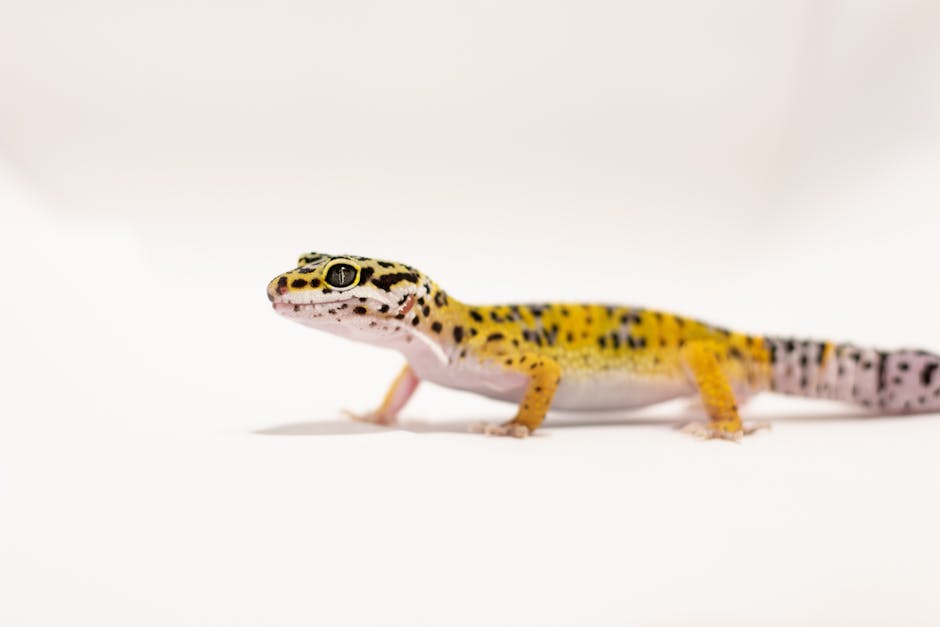
The wild-type leopard gecko phenotype. Yellow to tan body with dark brown to black spots and bands. Hatchlings display bold banding that breaks up into spots as the gecko matures. Belly is white to cream. Tail is banded. Eyes have a standard iris pattern with vertical pupil. This is the baseline phenotype against which all morphs are compared. Genotype: wild type at all loci.

Common

Rainwater Albino

Rainwater Albino (RainAlb)

Uncommon

Super Snow

Mack Snow (Snow)

Uncommon

Tangerine

Tangerine (Tangerine)

Common

Tremper Albino

Tremper Albino (TrAlb)

Common

White & Yellow

W&Y (White and Yellow) (WY)

Common

pattern

Blizzard

Blizzard (Blizzard)

Common

Enigma

Enigma (Enigma)

Uncommon

Murphy Patternless

Murphy Patternless (Murphy)

Common

eye

Eclipse

Eclipse (Eclipse)

Common

NDBE

NDBE (Noir Desir Black Eye) (NDBE)

Uncommon

size

Giant

Giant (Giant)

Uncommon

Super Giant

Giant (Giant)

Rare

Combo morphs

APTOR

Easy

Requires: Tremper Albino

APTOR stands for Albino Patternless Tremper Orange. Similar to RAPTOR but WITHOUT the Eclipse gene -- eyes are normal Tremper Albino (lighter than normal but not solid red). Combines Tremper Albino with Patternless Stripe line-bred genetics for an orange, reduced-pattern gecko.

Banana Blizzard

Moderate

Requires: Blizzard + Murphy Patternless

Double homozygous for Blizzard and Murphy Patternless. Both genes independently produce patternless geckos at different loci. The combination produces a solid yellow to banana-colored patternless gecko -- warmer and more yellow than Blizzard alone.

Blazing Blizzard

Moderate

Requires: Tremper Albino + Blizzard

Double homozygous for Tremper Albino and Blizzard. The Blizzard gene removes all pattern, and the Tremper Albino gene removes dark melanin. The result is a solid white to pale yellow gecko with no pattern or markings. Eyes are Tremper Albino type. A key stepping stone morph in the creation of Diablo Blanco.

Diablo Blanco

Advanced

Requires: Blizzard + Tremper Albino + Eclipse

Diablo Blanco is a combination of four traits: Blizzard (recessive), Tremper Albino (recessive), Eclipse (recessive), and Patternless Stripe (line-bred). Created by Ron Tremper in 2006. The result is a pure white gecko with solid red eyes. The name translates to "White Devil" in Spanish.

Dreamsicle

Advanced

Requires: Enigma + Mack Snow + Tremper Albino + Eclipse

Dreamsicle is Enigma + Mack Snow + RAPTOR (Tremper Albino + Eclipse). White and orange body with scattered Enigma pattern and solid red eyes. HEALTH WARNING: Carries Enigma Syndrome neurological risk.

Ember

Advanced

Requires: Murphy Patternless + Eclipse + Tremper Albino

Triple homozygous for Murphy Patternless, Eclipse, and Tremper Albino. Essentially the Murphy Patternless equivalent of RAPTOR. The result is a solid yellow-bodied gecko with solid red eyes.

Giant RAPTOR

Difficult

Requires: Giant + Tremper Albino + Eclipse

Combination of Giant (incomplete dominant) with RAPTOR (Tremper Albino + Eclipse). A larger-than-normal gecko with the RAPTOR phenotype of solid red eyes and orange body. The Giant gene adds impressive size without altering the RAPTOR color and pattern.

Mack Snow Bell Albino

Moderate

Requires: Mack Snow + Bell Albino

Combination of Mack Snow with Bell Albino. The Snow gene reduces yellow and the Bell Albino reduces melanin, producing a pale, pastel gecko with the distinctive ruby-red eyes of Bell Albino.

Mack Snow Eclipse

Moderate

Requires: Mack Snow + Eclipse

Combination of Mack Snow (heterozygous) and Eclipse (homozygous). The Snow gene reduces yellow and increases white on the body, while Eclipse produces solid dark eyes. A visually striking combination.

Mack Snow Tremper Albino

Moderate

Requires: Mack Snow + Tremper Albino

Combination of Mack Snow (heterozygous or homozygous) with Tremper Albino (homozygous). The Snow gene reduces yellow and increases white while the Tremper Albino removes dark melanin. A popular and accessible combo morph.

Nova

Advanced

Requires: Enigma + Tremper Albino + Eclipse

Nova is Enigma combined with RAPTOR (Tremper Albino + Eclipse). The Enigma gene adds its distinctive random pattern to the RAPTOR base. First debuted in 2007 by A&M Geckos. HEALTH WARNING: Carries Enigma Syndrome neurological risk.

RAPTOR

Moderate

Requires: Tremper Albino + Eclipse

RAPTOR stands for Red-eye Albino Patternless Tremper Orange. It is a combination of Tremper Albino (homozygous), Eclipse (homozygous), and Patternless Stripe (line-bred/polygenic). The result is a gecko with solid red eyes (Eclipse + Tremper Albino), orange body coloration, and reduced pattern from the Patternless Stripe influence. RAPTOR is one of the most iconic and commercially successful leopard gecko combo morphs. Note: Patternless Stripe is a polygenic trait not tracked as a single allele.

Sunglow

Easy

Requires: Tremper Albino

Sunglow is a Tremper Albino (homozygous) combined with Super Hypo Tangerine line-bred genetics (no body spots + intense orange). The result is a vivid, bright orange gecko with no dark body spots. One of the most popular and visually appealing leopard gecko morphs.

Super Snow Bell Albino

Difficult

Requires: Mack Snow + Bell Albino

Combination of Super Snow (homozygous Snow) with Bell Albino (homozygous). Pale white to lavender gecko with ruby-red to pink eyes and minimal spotting. The Bell Albino ruby eye combined with the Super Snow white body is highly sought-after.

Super Snow Eclipse

Difficult

Requires: Mack Snow + Eclipse

Combination of Super Snow (homozygous Snow) and Eclipse (homozygous). Body is white to pale gray with bold black spotting. Completely solid black eyes. One of the most dramatic black-and-white leopard gecko phenotypes.

Super Snow Rainwater Albino

Difficult

Requires: Mack Snow + Rainwater Albino

Combination of Super Snow (homozygous Snow) with Rainwater Albino (homozygous). Extremely pale, almost ethereal white gecko. The least common of the three Super Snow Albino combinations due to Rainwater being the rarest albino strain.

Super Snow RAPTOR

Advanced

Requires: Mack Snow + Tremper Albino + Eclipse

Combination of Super Snow (homozygous) with RAPTOR (Tremper Albino + Eclipse). White-bodied gecko with ruby-red solid eyes. Similar to Diablo Blanco but achieved through Snow genetics rather than Blizzard.

Super Snow Tremper Albino

Difficult

Requires: Mack Snow + Tremper Albino

Combination of Super Snow (homozygous Snow) with Tremper Albino (homozygous). Almost entirely white gecko with Tremper Albino-type eyes. Minimal to no spotting. One of the cleanest all-white leopard gecko phenotypes without Blizzard genetics.

W&Y Eclipse

Moderate

Requires: W&Y (White and Yellow) + Eclipse

Combination of White & Yellow (dominant, one copy) with Eclipse (recessive, homozygous). The W&Y trait provides increased white coloration and reduced spotting, while Eclipse contributes solid dark eyes.

Trait interactions

Known interactions between specific genes, including lethal combinations to avoid.

Tremper Albino + Bell AlbinoGenetically linked

Tremper Albino and Bell Albino are at SEPARATE genetic loci, confirmed by complementation testing. Crossing Tremper Albino x Bell Albino produces phenotypically normal double-het offspring (het Tremper het Bell). This proves the two albino mutations affect different genes. An animal can be visual for one strain while carrying the other as a het (e.g., visual Tremper het Bell).

Tremper Albino + Rainwater AlbinoGenetically linked

Tremper Albino and Rainwater Albino are at SEPARATE genetic loci, confirmed by complementation testing. Crossing Tremper Albino x Rainwater Albino produces phenotypically normal double-het offspring.

Bell Albino + Rainwater AlbinoGenetically linked

Bell Albino and Rainwater Albino are at SEPARATE genetic loci, confirmed by complementation testing. Crossing Bell Albino x Rainwater Albino produces phenotypically normal double-het offspring.

Breed Leopard Gecko?

Track your animals, genetics, and pedigrees on Breed Ledger. Free to start.

Get started free