Breed Ledger launches May 15 · First 50 waitlist signups get 6 months free · Claim your spot →0d left
All species

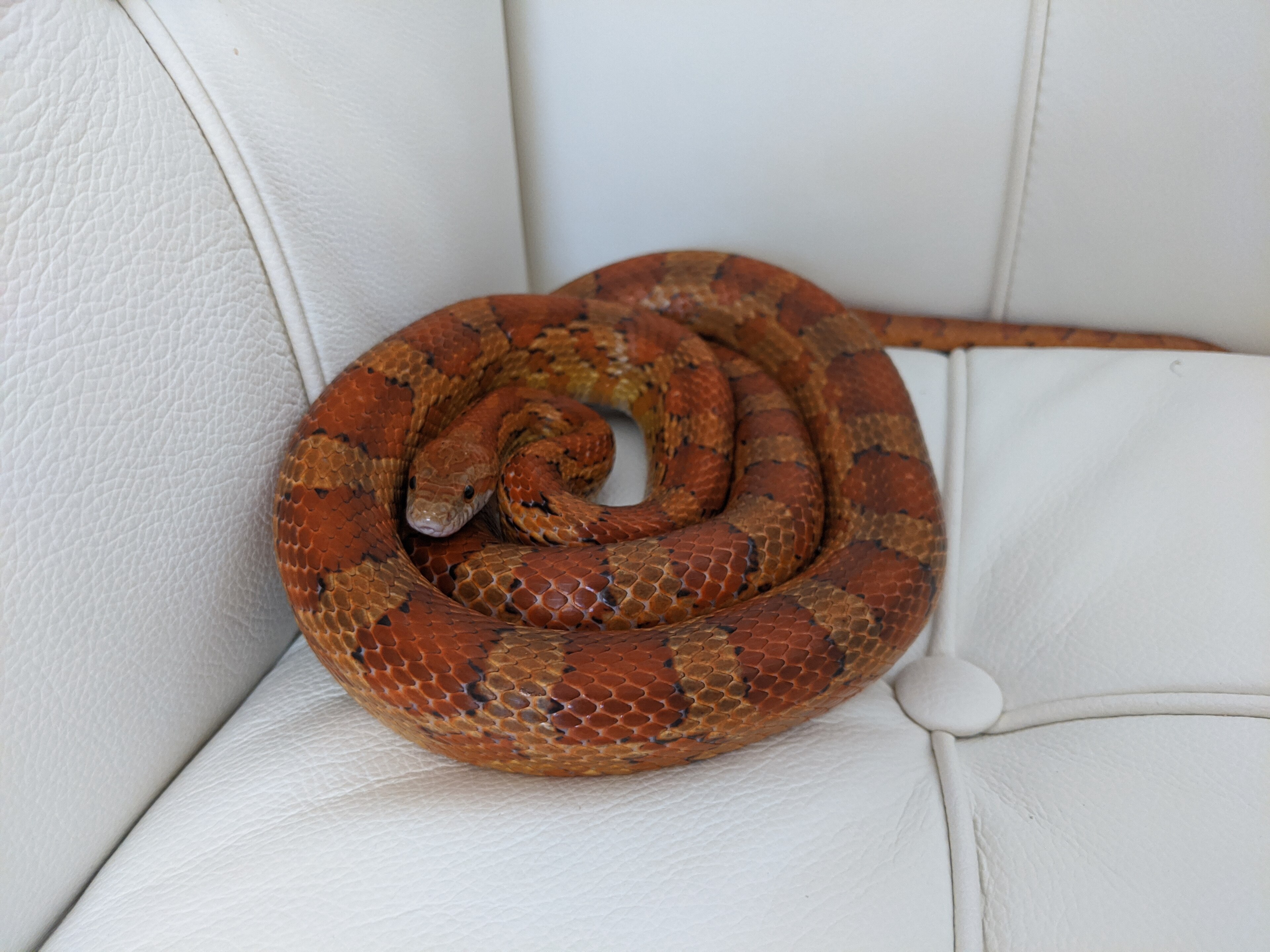
Corn Snake

Pantherophis guttatus

16traits
35morphs

Breeding facts

Clutch / litter size

10 – 30

Incubation / gestation

~65 days

Breeding season

Year-round

Oviparous. One of the most genetically well-documented snake species. Females lay 10-30 eggs per clutch; larger females produce larger clutches. Incubation at 78-82°F takes approximately 55-75 days. Breeding season typically winter through early spring (Dec-Apr) in captivity when temperature cycling is used, though many captive animals will breed year-round. Multiple clutches per season possible. Hatchlings emerge fully independent.

Genetics traits

Individual heritable traits tracked on this species.

Amelanistic (Albino) / Ultra

AmelRecessivehet Amel / Amelanistic / Albino / het Ultra / Ultra / Ultramel / het Albino

Multi-allele locus controlling melanin production. Two confirmed alleles: Amelanistic (Amel/Albino): Removes all melanin. Background color becomes bright orange/red with white or cream saddle marks and red/orange eyes (no dark pigment). The classic "albino" corn snake. First produced in captivity in 1961 by Dr. Bernard Bechtel. One of the foundational mutations in the hobby. Ultra: A distinct allele at the same locus. Produces a reduced-melanin phenotype — animals have muted, pastel coloration (less intense than normal but not fully amelanistic). Eyes appear lighter than wild-type. Subtle reduction of dark pigment. Homozygous Ultra looks similar to but is distinguishable from Amel. Ultramel: Compound heterozygous (one Amel allele + one Ultra allele). Produces a phenotype intermediate between Amel and normal: reduced melanin, pastel/washed-out coloration, lighter eyes. Visually distinct from both homozygous forms. Ultramel is proven by complementation — Amel x Ultra produces visual Ultramel offspring, not wild-type, confirming allelism.

ID tips: Amel: bright orange/red base, white/cream saddles, no dark pigment anywhere, pink/red eyes. Ultra: muted pastel coloration, lighter eyes, subtle overall lightening. Ultramel: washed-out pastel with partial melanin reduction, intermediate eye color. Check under bright light — Amel has zero dark scales; Ultramel has slight dark remnants.

Anerythristic Type A

AnerARecessivehet Anery A / Anery A / Anerythristic Type A / Black Albino / het Anery

Removes all red, orange, and yellow pigment (erythrin pigments). Animals display black, gray, and white coloration with no warm tones. Background becomes silvery-gray; saddle marks remain dark brown to black. Eyes are dark/black (not red — melanin is retained). Often called "Black Albino" informally, though this is a misnomer since melanin is fully present. Independent locus from Anerythristic Type B (Charcoal). Complementation confirms: Anery A x Charcoal produces wild-type-looking double het offspring, proving they are at different loci. Hatchlings from Anery A are often gray and white, becoming more silver/gray as they mature.

ID tips: Gray-white base, dark gray/brown/black saddle marks, dark eyes. No orange or yellow anywhere. Clean silver coloration in adults. Can look similar to Charcoal but complementation distinguishes them.

Buf

BufRecessivehet Buf / Buf

Produces a buff, tan, or pale brown coloration. The mutation shifts the typical orange-red background toward muted tan/buff tones. Dark pigment is retained. The overall effect is a more muted, sandy-brown animal compared to wild-type. The name "Buf" comes from "buff," describing the tan-cream color. When combined with other loci, Buf can contribute to various earth-toned phenotypes.

ID tips: Muted tan-buff to pale brown background, retained dark saddle marks. Less saturated and less red than wild-type. More muted and "dusty" in appearance.

Caramel

CaraRecessivehet Caramel / Caramel

Shifts the pigmentation toward warm yellow-caramel tones. Red pigment is replaced by yellow-amber or caramel coloration. Dark pigment (melanin) is retained but may appear brownish rather than black. Background shifts from the typical orange-red of wild-type toward golden-yellow and caramel. Saddle marks typically appear brown. When combined with Amelanistic, produces the Butter morph (Amel + Caramel): a warm yellow animal with no dark pigment, often cream/yellow with very soft pattern elements.

ID tips: Golden-yellow to caramel background; saddle marks brown rather than the typical dark gray/brown. Lacks the vibrant red-orange of wild-type. Distinguishable from Hypo by the yellow/caramel rather than orange tone of the background.

Charcoal (Anerythristic Type B)

AnerBRecessivehet Charcoal / Charcoal / Anery B / Anerythristic Type B / het Anery B

Removes red, orange, and yellow pigment — similar to Anerythristic Type A in overall effect — but produces a slightly different phenotype with darker, more charcoal-toned animals. Melanin is retained. Background appears darker gray or charcoal compared to the silvery-gray of Anery A; saddle marks tend to be very dark brown or black. INDEPENDENT locus from Anerythristic Type A. Confirmed by complementation: Charcoal x Anery A crosses produce normal-appearing double het offspring (not visual anerythristic), proving the two mutations are at different genes. This distinction is critical for breeding calculations — breeders who cross Anery A and Charcoal stock need to track both loci separately. The Charcoal mutation participates in several combo morphs including Pewter (Charcoal + Diffused) and Blizzard (Charcoal + Diffused + Amel).

ID tips: Dark charcoal-gray base, dark saddle marks, dark eyes. Tends to be darker and more uniform than Anery A. Best distinguished from Anery A via complementation testing. Adults may show very slight warmth in pattern under certain lighting but no true orange/red.

Diffused (Bloodred)

DiffRecessivehet Diffused / Diffused / het Bloodred / Bloodred / Diffused/Bloodred

Modifies both pattern and pigment distribution. Heterozygous expression (Diffused): belly pattern (checkered marks) is reduced or absent; lateral pattern on the sides of the body becomes more diffuse/faded. The dorsal saddle pattern is maintained but lateral blotches fade. Homozygous expression (Bloodred): dramatic and unique phenotype. The belly is completely clean/unpatternned (no checkers). The dorsal saddle pattern is heavily diffused or nearly absent, leaving a mostly solid deep orange-red animal. Adults may appear nearly uniform deep red-orange with faint dorsal pattern remnants. Hatchlings show more pattern that fades with age — breeders call this "growing into color." Rick Staub of Constrictors Unlimited is credited with developing and documenting the Bloodred line. The Diffused gene also participates in Pewter (Charcoal + Diffused) and Blizzard (Charcoal + Diffused + Amel).

ID tips: Het Diffused: clean or reduced belly pattern is the best visual indicator. Dorsal saddles present but lateral blotches faded. Bloodred (hom): clean unpatternned belly, greatly diffused or absent dorsal pattern in adults, deep uniform red-orange coloration. Hatchlings more patterned than adults.

Hypomelanistic

HypoRecessivehet Hypo / Hypomelanistic / Hypo / Hypomelanistic Type A

Reduces melanin expression without eliminating it. Animals display brighter, more vivid coloration: orange-red background is more intense/cleaner, dark pattern elements (saddle outlines, belly checks) are reduced or lightened, and the overall appearance is "cleaner" and brighter than wild-type. Hypomelanistic corn snakes retain some dark pigment but it is visibly reduced. Saddle outlines appear brownish rather than dark gray-black. The belly checkered pattern is reduced or absent in the center rows. DISTINCT from Sunkissed (Sunk locus), which produces a similar hypo-like appearance but is a separate independent locus. Hypo x Sunkissed cross produces wild-type-looking double het offspring (not visual hypos), confirming independence. Some older literature conflates the two. Participates in the Ghost combo morph (Hypo + Anery A) and Amber (Hypo + Caramel).

ID tips: Brighter orange-red background with reduced dark pigment. Saddle outlines brownish/reduced. Belly pattern faded or reduced in center. Overall "clean" appearance. Cannot reliably distinguish from Sunkissed without test breeding.

Kastanie

KasRecessivehet Kastanie / Kastanie

Produces rich chestnut-brown coloration replacing the typical orange-red background. The name comes from the German word for "chestnut." Background color shifts to warm, deep chestnut-brown tones. Saddle marks typically appear a darker chocolate-brown. The overall impression is a warm, earth-toned animal. Distinct from Caramel (warmer/yellower) and wild-type. Independent locus confirmed through test breeding records.

ID tips: Rich chestnut-brown background, dark chocolate saddle marks. Warm earth tones throughout. Distinct from the cooler gray of Anery or the yellower tone of Caramel.

Lava

LavaRecessivehet Lava / Lava

Produces intense, deep red-orange to lava-orange coloration with greatly reduced dark pigment. Similar to Hypomelanistic in reducing melanin, but the Lava mutation produces a more extreme reduction and a distinctly deeper, more saturated red-orange tone. The name reflects the vivid, molten-orange appearance of homozygous Lava animals. Dark pattern elements (saddle outlines, belly checks) are very faint or absent. Background color is a rich, intense orange-red. When combined with other color morphs, Lava produces highly saturated, vivid animals.

ID tips: Deep, intense orange-red to lava-orange coloration. Very reduced dark pigment — saddle outlines faint or absent, belly pattern minimal. Distinctly richer/deeper orange than Hypo or Sunkissed.

Lavender

LavRecessivehet Lavender / Lavender / het Lav / Lav

Removes red and yellow pigment and replaces them with lavender, pink-gray, and silver-purple tones. One of the most visually striking corn snake mutations. Background color becomes silver-gray with lavender/pink undertones; saddle marks are lavender to pink-purple with dark outlines that may fade with age. Eyes are typically dark but may appear slightly lighter. Animals tend to lighten and become more lavender as they age. Hatchlings may appear quite dark gray with pink tones that develop more clearly over the first year. When combined with Amelanistic, produces Opal (Amel + Lavender): a pink-white to pearl-white animal with very soft lavender or pink saddle marks and red/pink eyes. Highly sought after in the hobby.

ID tips: Silver-gray to lavender-pink background; saddle marks lavender/purple rather than red-brown. Dark outlines on saddles. Eyes dark. The lavender/purple tones intensify and clarify with age. Best distinguished from Anery morphs by the pinkish-lavender (not silver-gray) background tone.

Motley / Stripe

MotRecessivehet Motley / Motley / het Stripe / Stripe / het Mot / Mot / Motley/Stripe

Multi-allele locus with two confirmed alleles affecting dorsal pattern: Motley (Mot allele): Homozygous Motley replaces the typical oval/rectangular saddle marks with a connected, chain-link or circular pattern. The saddles are modified into open rings, circles, or connected blotches running down the dorsum. Pattern varies by individual — some show circular openings in saddles, others show an irregular connected chain pattern. Lateral blotches are reduced or absent. Stripe (Str allele at Mot locus): Homozygous Stripe produces a continuous dorsal stripe pattern. The saddle marks are replaced by one to four longitudinal stripes running the length of the body. Lateral blotches absent. Clean, linear pattern. Compound heterozygous (Motley allele + Stripe allele): Both alleles are ALLELIC at the same locus, confirmed by complementation testing by multiple independent breeders (Jeff Mohr, Joe Fauci, Mike Klaas, and others). Motley x Stripe crosses never produce wild-type offspring; instead, compound hets display a variable phenotype — often a stripe or motley pattern — not wild-type. This confirms allelism. IMPORTANT for breeding calculations: Motley/Stripe compound hets are visually expressing (not wild-type carriers). A Motley breeder using Stripe stock (or vice versa) must treat both as alleles at the same locus.

ID tips: Motley: chain-link or circular dorsal pattern; no standard rectangular saddles; lateral pattern reduced/absent. Stripe: continuous dorsal stripe(s); no saddle marks; lateral blotches absent. Compound Motley/Stripe het: typically shows a stripe or motley pattern, variable. Wild-type offspring are impossible from Motley x Stripe pairings.

Palmetto

PalmIncomplete DominantPalmetto / Super Palmetto / het Palmetto

Dominant mutation producing a leucistic-like phenotype with scattered colored scales. One of the most visually dramatic corn snake mutations. Heterozygous Palmetto (one copy): Produces a white or near-white animal with scattered single colored scales distributed randomly across the body. The colored scales may be orange, red, gray, or patterned — and their distribution is unique to each individual. No two Palmetto corn snakes look exactly alike. The random colored scales on a white background give a confetti-like appearance. Homozygous Super Palmetto (two copies): Produces a near-complete to complete leucistic animal — pure white with minimal or no colored scales. Super Palmettos are almost entirely white, lacking even the scattered scales of the het form. This phenotype is more extreme than the het form, confirming incomplete dominance. NOTE: Palmetto is NOT the same as a true leucistic mutation (which would be recessive and produce all-white animals without any scattered scales in the het form). One copy of Palmetto always produces the characteristic scattered-scale phenotype. Discovery search demand: "corn snake palmetto" averages ~2,900/mo.

ID tips: Het Palmetto: predominantly white body with randomly scattered individual colored scales; unique pattern per individual. No standard saddle marks. Super Palmetto: entirely or nearly entirely white, very few to no colored scales. Dominant — one copy always produces visual Palmetto.

Scaleless

ScRecessivehet Scaleless / Scaleless

Recessive mutation causing partial to complete reduction of scales. Heterozygous (het Scaleless) animals appear entirely normal — no visual effect in single-copy form. Homozygous Scaleless animals display dramatically reduced or absent dorsal scales, with the extent of scale reduction varying by individual and line. The ventral (belly) scales are typically retained (necessary for locomotion), but dorsal scales are greatly reduced or absent. Some animals retain scattered scale remnants; others are nearly completely scaleless. The skin of scaleless corn snakes appears smooth or "naked." Color and pattern of scaleless animals are typically striking — without scales to scatter and diffuse light, colors appear more vivid and saturated. When combined with color morphs, scaleless animals can display especially vivid phenotypes. HEALTH NOTE: Scaleless corn snakes may experience minor husbandry differences from scaled animals, including potential skin sensitivity to rough surfaces and possibly different thermoregulation dynamics. Community documentation suggests most Scaleless corn snakes thrive with appropriate care. No documented severe health complications, but husbandry notes are warranted.

ID tips: Het Scaleless: completely normal in appearance. Scaleless (hom): greatly reduced or absent dorsal scales; ventral scales typically present; smooth, naked appearance; colors often appear more vivid due to absence of light-scattering scales.

mild homozygous risk: Homozygous Scaleless corn snakes lack dorsal scales, which may result in increased skin sensitivity to rough surfaces and possible differences in thermoregulation and UV absorption. Community reports indicate most Scaleless animals thrive with appropriate husbandry (smooth surfaces, adequate hides, stable temperatures). No documented severe or lethal health issues, but keepers should be aware of the scale-reduction and provide appropriate care. Ventral scales are typically retained.

Strawberry

StrRecessivehet Strawberry / Strawberry

Enhances red and pink pigment expression, producing a vivid strawberry-red to pink-red coloration. The background color is shifted toward a warmer, pinker-red than typical wild-type orange-red. Saddle marks may appear reduced in contrast. Overall, the animal has a distinctly pinker, more saturated red appearance. When combined with Amel, produces animals with very pink/red-tinged amelanistic phenotypes. The Strawberry mutation is valued for adding warmth and intensity to red tones.

ID tips: Enhanced pink-red to strawberry-red background color. Warmer, more saturated red than wild-type. Saddle marks may show reduced contrast. Eyes dark (melanin retained).

Sunkissed

SunkRecessivehet Sunkissed / Sunkissed

Produces a hypo-like phenotype similar to Hypomelanistic but at an INDEPENDENT locus. Animals display reduced dark pigment, brighter base coloration, and reduced belly checkers — appearances very similar to Hypo. CRITICAL: Sunkissed is NOT allelic with Hypomelanistic. Complementation test: Hypo x Sunkissed produces double het offspring that appear WILD-TYPE (not visual hypos), proving independence. This means: - Hypo + Sunkissed carriers (double het animals) appear normal and show no visual hypo characteristics - A calculator must track both as separate loci - Some older sources and vendors incorrectly label Sunkissed animals as "Hypo" — verify provenance when purchasing het animals Some breeders describe subtle visual differences between Hypo and Sunkissed homozygous animals (Sunkissed may show slightly brighter orange or cleaner saddles), but reliable visual ID is not consistent enough to replace test breeding.

ID tips: Very similar to Hypomelanistic: brighter orange-red base, reduced dark pigment, reduced or absent belly checker pattern. Cannot be reliably distinguished from Hypo by visual inspection alone. Test breeding (Hypo x Sunkissed = wild-type double hets) required to confirm.

Tessera

TessIncomplete DominantTessera / Super Tessera / het Tessera

Dominant pattern mutation producing a modified dorsal pattern distinct from the typical saddle marks. Heterozygous Tessera (one copy): Produces a tessellated/tile-like pattern. The normal saddle marks are modified into a series of smaller, more geometric scale-outlined marks running down the dorsum, creating a "tessera" or tile-like appearance. The lateral pattern is also modified. Animals also tend to show a partial dorsal stripe or broken stripe element. Homozygous Super Tessera (two copies): Produces a cleaner, more defined version of the Tessera pattern — often described as a continuous dorsal stripe or very clean geometric pattern with minimal lateral blotching. The super form is visually distinct from the het form, confirming incomplete dominance. Note: Some breeders describe het Tessera and super Tessera as similar enough to question whether this should be classified as simple dominant rather than incomplete dominant.

ID tips: Het Tessera: geometric tile-like pattern replacing normal saddles; partial dorsal stripe element; lateral pattern modified. Super Tessera: cleaner defined pattern, often a continuous dorsal stripe with minimal lateral blotching. Dominant — one copy produces visual Tessera.

Morphs

Named visual expressions and genetic combinations tracked in this species.

Single-gene morphs

color

Amelanistic

Amelanistic (Albino) / Ultra (Amel)

Common

Anerythristic Type A

Anerythristic Type A (AnerA)

Common

Bloodred

Diffused (Bloodred) (Diff)

Uncommon

Buf

Buf (Buf)

Uncommon

Caramel

Caramel (Cara)

Common

Charcoal

Charcoal (Anerythristic Type B) (AnerB)

Common

Hypomelanistic

Hypomelanistic (Hypo)

Common

Kastanie

Kastanie (Kas)

Uncommon

Lava

Lava (Lava)

Uncommon

Lavender

Lavender (Lav)

Uncommon

Palmetto

Palmetto (Palm)

Uncommon

Strawberry

Strawberry (Str)

Uncommon

Sunkissed

Sunkissed (Sunk)

Uncommon

Super Palmetto

Palmetto (Palm)

Rare

Ultra

Amelanistic (Albino) / Ultra (Amel)

Uncommon

Ultramel

Amelanistic (Albino) / Ultra (Amel)

Uncommon

pattern

Diffused

Diffused (Bloodred) (Diff)

Common

Motley

Motley / Stripe (Mot)

Common

Stripe

Motley / Stripe (Mot)

Common

Super Tessera

Tessera (Tess)

Rare

Tessera

Tessera (Tess)

Uncommon

locality

Okeetee

Selectively bred locality designation — NOT a single-gene Mendelian morph. Named after the Okeetee Hunt Club area of Jasper County, South Carolina, where corn snakes with unusually vivid coloration and thick black saddle borders were historically collected. Captive Okeetee lines have been selectively bred for decades to maintain and intensify the characteristic traits: very vivid orange-red background, large well-defined saddle marks with extremely thick black borders, and clean contrast. The genetic basis is polygenic (multiple genes selected for simultaneously), not a single identifiable locus. Any corn snake labeled "Okeetee" may refer to provenance, line breeding, or simply the visual phenotype. This row is included for search relevance (~1,600/mo for "corn snake okeetee") and breeder education. Allele assignment: none.

Common

scale

Scaleless

Scaleless (Sc)

Rare

Combo morphs

Amber

Moderate

Requires: Hypomelanistic + Caramel

Hypomelanistic + Caramel combination. Produces warm amber/golden coloration.

Blizzard

Advanced

Requires: Charcoal (Anerythristic Type B) + Diffused (Bloodred) + Amelanistic (Albino) / Ultra

Charcoal + Diffused + Amelanistic triple recessive combination. Near-white to ghostly-white appearance. Note: Some sources define Blizzard as only Charcoal + Diffused (2 genes) rather than this 3-gene combination.

Butter

Moderate

Requires: Amelanistic (Albino) / Ultra + Caramel

Amelanistic + Caramel combination. Produces a warm butter-yellow to cream-yellow animal with no dark pigment.

Creamsicle

Moderate

Requires: Amelanistic (Albino) / Ultra + Hypomelanistic

Amelanistic + Hypomelanistic combination. Produces a bright cream-orange to light orange animal.

Ghost

Moderate

Requires: Hypomelanistic + Anerythristic Type A

Hypomelanistic + Anerythristic Type A combination. Produces a muted, ghostly gray-green to silver appearance.

Lava Ghost

Difficult

Requires: Lava + Anerythristic Type A

Lava + Anerythristic Type A combination. Highly reduced pigmentation producing a nearly white to faint lavender-gray animal.

Opal

Difficult

Requires: Amelanistic (Albino) / Ultra + Lavender

Amelanistic + Lavender combination. One of the most visually striking corn snake combos.

Pewter

Moderate

Requires: Charcoal (Anerythristic Type B) + Diffused (Bloodred)

Charcoal (Anerythristic Type B) + Diffused combination. Produces a pewter-gray, mostly unpatterned animal.

Snow

Moderate

Requires: Amelanistic (Albino) / Ultra + Anerythristic Type A

Amelanistic + Anerythristic Type A combination. One of the oldest and most recognized corn snake combo morphs.

Snow Motley

Advanced

Requires: Amelanistic (Albino) / Ultra + Anerythristic Type A + Motley / Stripe

Snow (Amelanistic + Anerythristic A) + Motley triple recessive combination.

Snow Stripe

Advanced

Requires: Amelanistic (Albino) / Ultra + Anerythristic Type A + Motley / Stripe

Snow (Amelanistic + Anerythristic A) + Stripe (homozygous Stripe allele at Mot locus). White body with a visible dorsal stripe in soft pink or lavender tones.

Sunkissed Snow

Moderate

Requires: Sunkissed + Anerythristic Type A

Sunkissed + Anerythristic Type A combination. Functionally similar in appearance to Ghost (Hypo + Anery A) but at distinct loci.

Breed Corn Snake?

Track your animals, genetics, and pedigrees on Breed Ledger. Free to start.

Get started free