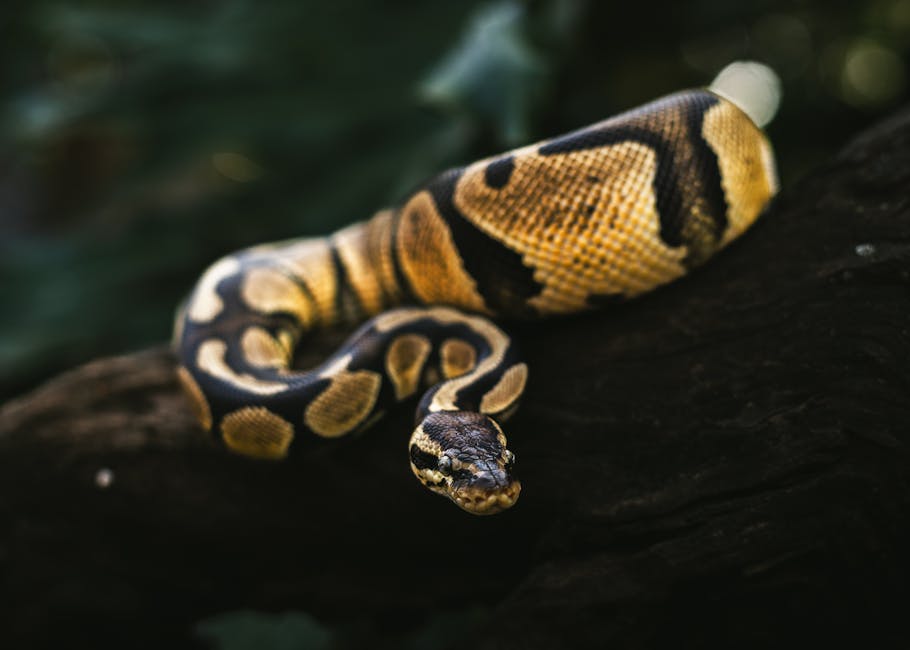
Ball Python
Python regius
Breeding facts
Clutch / litter size
1 – 11
Incubation / gestation
~57 days
Breeding season
Year-round
Clutch size typically 4-8 eggs. Maternal incubation common. One of the most genetically diverse reptile species in captivity with 7,000+ known morphs.
Genetics traits
Individual heritable traits tracked on this species.
Acid
AcidIncomplete DominantAcid / Super AcidPattern-altering mutation that produces a distinctive busy, granular pattern unlike any other ball python morph. Heterozygous Acid shows a busy, speckled pattern with dark and light elements interspersed. Homozygous Super Acid shows dramatically intensified pattern disruption. One of the more recently proven loci.
ID tips: Acid (het): busy granular pattern, distinctive from other pattern morphs. Dark and light speckling throughout. Super Acid: extreme pattern disruption.
Axanthic (Jolliff Line)
AxJolliffRecessivehet Jolliff Axanthic / Jolliff AxanthicReduces yellow/red pigment. Jolliff line established in 1997. Less commonly worked with than VPI and TSK lines but confirmed as an independent locus through complementation testing with other axanthic lines.
ID tips: Grayscale appearance similar to other axanthic lines. Distinguishing between axanthic lines visually is unreliable; lineage tracking is essential.
Axanthic (Markus Jayne Line)
AxMJRecessivehet MJ Axanthic / MJ AxanthicReduces yellow/red pigment. MJ line established by Markus Jayne in 2008. The newest of the four confirmed axanthic lines. Proven independent from VPI, TSK, and Jolliff lines through complementation testing.
ID tips: Grayscale appearance. Visually similar to other axanthic lines. Lineage tracking required to distinguish from other lines.
Axanthic (TSK Line)
AxTSKRecessivehet TSK Axanthic / TSK Axanthic / het Ax TSKReduces yellow/red pigment, producing a grayscale animal. TSK line was established by The Snake Keeper. Incompatible with VPI, Jolliff, and MJ axanthic lines, confirming a separate locus. TSK line tends to hold its grayscale coloring better with age compared to some other lines, though browning out can still occur.
ID tips: Grayscale blacks, whites, and silvers. Similar to VPI Axanthic but reportedly holds color better with age. Normal ball python pattern shape.
Axanthic (VPI Line)
AxVPIRecessivehet VPI Axanthic / VPI Axanthic / het Ax VPIReduces yellow/red pigment (xanthophores), producing a grayscale or silver/black/white animal. Pattern shape is normal. VPI line was established by Dave and Tracy Barker at Vida Preciosa International. Incompatible with other axanthic lines (TSK, Jolliff, MJ) — crossing VPI Axanthic with another line produces normal-looking double-het offspring, proving separate genetic loci.
ID tips: Grayscale appearance: blacks, grays, whites, and silvers. No yellow or brown tones when young. Some VPI Axanthics develop brown tones with age ("browning out"). Pattern shape is normal ball python pattern.
Blue Eyed Leucistic Complex
BELIncomplete DominantLesser / Butter / Mojave / Phantom / Mystic / Russo / Special / Bamboo / DaddyMajor multi-allele locus. Each heterozygous allele produces a distinct morph with its own visual phenotype. Any combination of two alleles from this complex produces a Blue Eyed Leucistic (BEL): a pure white or near-white animal with vivid blue eyes. Core proven alleles: Lesser (lighter color, reduced pattern), Butter (similar to Lesser, sometimes considered the same allele from a different line), Mojave (dark coloration with distinctive "flaming" pattern and patternless belly), Phantom (dark base, reduced pattern), Mystic (dark with subtle purple tones), Russo (lighter with reduced pattern), Special (lighter base), Bamboo (lighter with reduced pattern). The "Daddy" gene is a more recent addition with less extensive documentation.
ID tips: Lesser: lighter overall, reduced dark pigment, clean belly. Butter: very similar to Lesser. Mojave: dark chocolate tones, distinctive flaming on sides, patternless white belly, dark crown on head. Phantom: dark base, subtle pattern reduction. BEL (super form of any combo): pure white, blue eyes.
Calico
CalicoIncomplete DominantCalico / Super CalicoProduces random white patches and reduced pattern with enhanced coloration. Heterozygous Calico shows areas of white or faded pigment interspersed with normal pattern, creating a "calico" patchwork effect. The expression is highly variable between individuals. Some sources classify Calico as dominant rather than incomplete dominant. The super form has been debated.
ID tips: Random white or depigmented patches. Highly variable expression. Patchwork appearance mixing white areas with normal coloration.
Caramel Albino
CaramelAlbinoRecessivehet Caramel / Caramel Albino / T+ AlbinoTyrosinase-positive albinism. Reduces but does not eliminate melanin, producing warm caramel, brown, and yellow tones with lighter eyes. Unlike T- Albino, Caramel Albinos retain some dark pigment. Sometimes called T+ Albino. The relationship to the TYR locus (T- Albino, Candy/Toffee) is debated. Some sources suggest allelism with TYR; others treat it as an independent locus. The Ultramel phenotype may involve interaction between Caramel and Albino alleles, suggesting they could be at the same locus.
ID tips: Warm caramel/brown tones with yellow highlights. Eyes lighter than normal but not pink/red like T- Albino. Retains some melanin (not fully amelanistic). Pattern shape normal.
Cinnamon / Black Pastel Complex
CinnyBPIncomplete DominantCinnamon / Black Pastel / Super Cinnamon / Super Black Pastel / 8-BallDark pigment enhancing locus with two core alleles. Cinnamon (het): deepens and darkens coloration, produces warm brown/cinnamon tones. Black Pastel (het): similar darkening effect with cooler, more charcoal tones. Homozygous forms (Super Cinnamon, Super Black Pastel) are extremely dark, near-solid black animals sometimes called "8-Balls." Cinnamon x Black Pastel compound het also produces a very dark "acts-like-super" animal. Some sources include additional alleles at this locus (Enchi, Het Red Axanthic, Huffman, GHI). The core Cinnamon/Black Pastel allelism is well-proven; extended membership is disputed.
ID tips: Cinnamon: warm dark brown, darkened overall. Black Pastel: cooler dark tones, charcoal/gunmetal. Both produce keyhole-shaped alien head pattern elements. Super forms: extremely dark, near-solid black or very dark brown.
moderate homozygous risk: Homozygous (Super Cinnamon, Super Black Pastel, and Cinnamon x Black Pastel "acts-like-super") animals frequently exhibit health issues including kinking (spinal deformities), "bug eyes" (abnormally protruding eyes), duckbill (malformed jaw), and failure to thrive. Not all super animals are affected, but the incidence is significant enough that many experienced breeders avoid producing super forms of this complex intentionally.
Clown
ClownRecessivehet Clown / ClownMajor pattern and color mutation. Produces a wide, bold dorsal stripe, dramatically reduced lateral pattern, and enhanced golden-copper coloration. The head pattern is also distinctive with a teardrop or "clown face" marking. One of the most visually striking single-gene morphs. Clown pattern tends to dominate in multi-gene combinations, making it a powerful building block in designer morphs.
ID tips: Bold wide dorsal stripe. Dramatically reduced side pattern (clean sides). Enhanced golden/copper coloration. Distinctive head stamp with teardrop marking. Clean belly.
Coral Glow / Banana
BananaIncomplete DominantBanana / Coral Glow / CG / Super Banana / Super Coral GlowProduces vivid yellow and lavender/purple coloration with dark freckle-like spots that develop with age. Heterozygous (Banana/Coral Glow) is a striking bright yellow and lavender animal. Homozygous (Super Banana) is lighter with more lavender and less pattern definition. Banana and Coral Glow are the same gene discovered independently by different breeders. IMPORTANT: This gene shows sex-linked inheritance patterns in the ZZ/ZW sex determination system of ball pythons. Male-maker vs female-maker lines affect the sex ratio of visual offspring. The gene is believed to be on one of the sex chromosomes.
ID tips: Bright yellow and lavender/pink coloration. Dark freckles/spots develop with age (more prominent in males). Super form is lighter/more pastel with enhanced lavender. Distinctive eye color.
Cryptic
CrypticRecessivehet Cryptic / CrypticSubtle recessive mutation that produces a cleaner, slightly faded appearance with subtle pattern modifications. Visual Cryptics can be difficult to distinguish from normal ball pythons without experience. The gene becomes much more visually striking when combined with other morphs.
ID tips: Subtle overall. Slightly faded appearance, minor pattern irregularities. Most easily identified in combination with other genes where its influence becomes more apparent.
Desert Ghost
DGhostRecessivehet Desert Ghost / Desert Ghost / het DG / DGProduces a lighter, cleaner appearance with reduced dark pigment and enhanced yellows. Pattern tends toward banding with reduced lateral blotching. Animals brighten significantly with age. Some breeders report that het Desert Ghosts may show subtle visual influence, but this is not universally agreed upon.
ID tips: Lighter overall appearance with enhanced yellows and reduced dark pigment. Banded pattern tendency. Brightens dramatically with age. Cleaner, less busy appearance than wild-type.
Enchi
EnchiIncomplete DominantEnchi / Super EnchiColor and pattern modifier that reduces pattern complexity, increases orange/copper coloration, and produces cleaner sides. Heterozygous (Enchi) shows moderate effect; homozygous (Super Enchi) is more dramatic with very reduced pattern, enhanced orange, and a distinctly different appearance. One of the most popular building-block genes. Some allelic complex lists place Enchi at the same locus as Cinnamon/Black Pastel, though most major genetic calculators currently treat Enchi as independent.
ID tips: Enchi (het): increased orange, reduced lateral pattern, cleaner sides, subtle banding. Super Enchi: dramatically reduced pattern, vivid orange/copper, very clean sides, distinctive "super" appearance.
Fire Complex
FireIncomplete DominantFire / Super Fire / Black Eyed Lucy / Flame / Vanilla / Sulfur / DiscoMulti-allele locus producing brightening/whitening effects. Heterozygous Fire produces a lighter, brighter animal with enhanced yellows and slight overall brightening. Homozygous Fire produces a Black Eyed Leucistic (all-white animal with black eyes). Multiple alleles reported at this locus: Fire, Flame, Vanilla, Sulfur, and Disco — though some may represent the same allele from different lineages rather than truly distinct alleles. Any two alleles from this complex bred together produce a Black Eyed Leucistic super form.
ID tips: Fire (het): subtle brightening, lighter overall, enhanced yellows, slightly faded pattern. Super Fire / Black Eyed Lucy: completely white or near-white with solid black eyes. Fire is one of the subtler morphs as a single gene.
Genetic Stripe
GStripeRecessivehet Genetic Stripe / Genetic Stripe / het GS / GSPattern mutation that converts the normal ball python blotch pattern into a pair of continuous dorsal stripes running the length of the body. Normal ball python coloration is retained but the pattern is completely reorganized. Het Genetic Stripe animals appear normal with no reliable visual markers for carrier status.
ID tips: Two continuous dorsal stripes from head to tail. Normal coloration (browns, blacks, golds) but in a completely different pattern layout. No lateral blotching. Clean sides between the stripes and the belly.
GHI (Gotta Have It)
GHIIncomplete DominantGHI / Super GHIDarkens and intensifies coloration with a distinctive iridescent sheen. Heterozygous (GHI) produces a darker animal with deep golden-brown and black tones, often with an oily or iridescent quality to the scales. Homozygous (Super GHI) is extremely dark, near-solid black with intense iridescence. GHI is highly valued as a building-block gene in dark or melanistic combos.
ID tips: GHI (het): darker overall coloration, deep golds and blacks, iridescent/oily sheen on scales, patternless belly. Super GHI: extremely dark, near-solid black with strong iridescence.
Ghost (Hypo)
GhostRecessivehet Ghost / Ghost / het Hypo / HypoHypomelanistic mutation that reduces melanin (dark pigment) without eliminating it. Produces a lighter, more muted appearance with faded browns and reduced black pigment. Pattern shape is normal but colors are "washed out." Hatchlings may appear relatively normal and lighten with age. Sometimes referred to simply as "Hypo" in the hobby.
ID tips: Lighter overall appearance. Faded/reduced black and brown pigment. Pattern shape normal but colors muted. Often becomes lighter with age. Eyes normal color (not red/pink like albinos).
Lavender Albino
LavAlbinoRecessivehet Lavender Albino / Lavender Albino / het LavTyrosinase-positive albinism at the OCA2 gene. Produces a distinctive lavender/pink base color with bright yellow pattern elements and ruby-red eyes. Independent locus from T- Albino (TYR). Animals darken with age, developing deeper lavender and purple tones.
ID tips: Lavender-pink base color (not yellow like T- Albino). Ruby red eyes. Pattern retains normal ball python shape but in lavender/yellow. Darkens significantly with age.
Leopard
LeopardIncomplete DominantLeopard / Super LeopardPattern and color modifier that produces a distinctive reduced, more open pattern with enhanced yellow tones. Heterozygous Leopard shows a more "spaced out" pattern with aberrant elements. Homozygous Super Leopard shows dramatically reduced pattern with extensive blushing. The Leopard gene is particularly valued for its pattern-disrupting effects in combination with other morphs.
ID tips: Leopard (het): more open/spaced pattern, subtle pattern aberrations, slightly enhanced coloring. Super Leopard: dramatically reduced pattern, extensive blushing.
Mahogany / Cinder Complex
MahoganyIncomplete DominantMahogany / Cinder / Super Mahogany / Super CinderDark color modifier locus with at least two known alleles. Mahogany (het): subtle darkening with warm reddish-brown tones. Cinder (het): darkening with cooler tones. Both produce dramatic super forms that are very dark. Mahogany x Cinder produces an acts-like-super result, confirming allelism.
ID tips: Mahogany: warm dark reddish-brown tones, subtle as single gene. Cinder: cooler dark tones. Super forms are dramatically dark.
Monsoon
MonsoonRecessivehet Monsoon / MonsoonPattern mutation that produces a distinctive raindrop or speckled pattern across the body. The normal ball python blotch pattern is broken into smaller, more scattered pattern elements resembling raindrops.
ID tips: Raindrop or speckled pattern covering the body. Normal blotch pattern broken into smaller scattered elements. Distinctive and easily identifiable when visual.
Orange Dream
ODIncomplete DominantOrange Dream / OD / Super Orange DreamColor modifier that enhances orange and yellow tones. Heterozygous (Orange Dream) produces subtle warming of colors with enhanced orange/gold. Homozygous (Super Orange Dream) shows dramatically intensified warm coloration. Widely used as a building-block gene in warm-toned combos.
ID tips: Orange Dream (het): subtle increase in orange/gold tones, slightly brighter appearance. Super Orange Dream: dramatically enhanced warm coloration. Subtle as a single gene but powerful in combination.
Pastel
PastelIncomplete DominantPastel / Super PastelOne of the most widely used morphs in ball python breeding. Heterozygous (Pastel) produces enhanced yellow coloration, reduced dark pigment, and lighter overall appearance with "blushing" (faded head color). Homozygous (Super Pastel) is dramatically lighter with intense yellow and minimal dark pigment, often with a mostly white head. Pastel is the most common building-block gene used in designer morph combos.
ID tips: Pastel (het): enhanced yellows, reduced dark pigment, lighter head with blushing, green/hazel eyes. Super Pastel: extremely light, intense yellow, mostly white head, very reduced dark pigment.
Piebald
PiedRecessivehet Pied / Piebald / PiedCauses large areas of unpigmented (pure white) skin interspersed with normally patterned sections. The amount and distribution of white is highly variable, ranging from low-white (mostly patterned with small white patches) to high-white (mostly white with small patterned sections). Het Pieds sometimes show subtle markers (slightly higher white on belly, "train tracks" on belly pattern) but are not reliably visually identifiable.
ID tips: Unpigmented pure white patches on body. Normal pattern and color where pigmented. Amount of white varies dramatically between individuals. Head is almost always patterned. White areas have no pattern or color at all (not faded, truly white).
Pinstripe
PinstripeDominantPinstripe / Super PinstripeDominant pattern mutation producing thin, pin-like stripes and dramatically reduced lateral pattern with enhanced warm coloration. The pattern is reduced to thin lines and the overall coloration shifts toward copper and gold. One copy produces full visual expression. The super form (Super Pinstripe) is debated — some breeders report subtle differences from single-gene Pinstripe, but the distinction is not dramatic enough for reliable visual identification. Modeled as simple dominant based on the inability to reliably distinguish het from super.
ID tips: Thin pin-like pattern elements replacing normal blotches. Warm copper/gold coloration. Clean sides with reduced lateral pattern. Distinctive thin dorsal stripe.
Spider Complex
SpiderIncomplete DominantSpider / Champagne / Blackhead / Hidden Gene Woma / HGW / Woma / Spotnose / Wookie / Cypress / Chocolate / BongoLarge multi-allele complex containing pattern-altering alleles. Spider: dramatic thin-banded pattern with reduced dark pigment; dominant presentation (super is lethal). Champagne: lavender/peach coloration with reduced pattern; super is lethal. Blackhead: very dark head and anterior with reduced pattern; super form viable. HGW (Hidden Gene Woma): subtle pattern changes; super form viable with enhanced expression. Woma: banded pattern similar to a woma python; super form viable. Spotnose: distinctive spot on nose with pattern/color modification. Chocolate: warm brown coloration with subtle pattern changes. Wookie: pattern reduction. Cypress: subtle pattern modifier. Bongo: banded pattern. CRITICAL: Several alleles in this complex are associated with neurological wobble syndrome (vestibular disorder). Spider and Champagne always exhibit wobble. HGW and Woma may show wobble. Super Spider and Super Champagne are embryonic lethal. Spider x Champagne cross-allele pairing is also lethal.
ID tips: Spider: thin irregular bands, busy pattern, distinct from normal blotches. Champagne: lavender/peach wash, reduced/faded pattern. Blackhead: very dark head. Spotnose: distinctive nose spot. All Spider Complex members may show wobble (head tremors, corkscrewing).
lethal homozygous risk: Multiple alleles in this complex are homozygous lethal. Super Spider and Super Champagne are embryonic lethal (dead in egg). Cross-allele combinations within the complex (e.g., Spider x Champagne) are also lethal. Additionally, ALL heterozygous carriers of Spider, Champagne, and some other alleles in this complex exhibit neurological wobble syndrome (vestibular disorder) ranging from mild head wobble to severe corkscrewing and inability to strike accurately. Wobble severity varies by individual and is exacerbated by stress. The wobble is caused by malformations of the semicircular canals and sacculus in the inner ear. The IHS banned sale of Spider morphs at shows in 2018 due to welfare concerns.
Sunset
SunsetRecessivehet Sunset / SunsetColor mutation that produces intensified red and orange coloration. Visual Sunset animals display vivid warm tones that intensify with age. A highly sought-after recessive morph for color-focused breeding projects.
ID tips: Intense red/orange coloration throughout the body. Colors deepen with age. Normal pattern shape but dramatically altered coloration.
T- Albino (Amelanistic)
TAlbinoRecessivehet Albino / Albino / T- / het Candy / Candy / Toffee / UltramelTyrosinase-negative albinism locus. Multiple alleles confirmed at the TYR gene. The Albino allele eliminates melanin production, producing bright yellow/orange animals with white pattern and pink/red eyes. The Candy/Toffee allele (same mutation, different discovery lines) produces a similar but subtly different amelanistic phenotype with more lavender/purple tones. Compound heterozygous Albino/Candy produces the Ultramel phenotype: a visually reduced-melanin animal distinct from either homozygous form.
ID tips: Albino: bright yellow/white with pink-red eyes, no dark pigment. Candy/Toffee: similar but tends toward lavender/purple undertones. Ultramel: intermediate melanin reduction, darker than visual Albino but lighter than normal with distinctive eye color.
Yellow Belly Complex
YBIncomplete DominantYellow Belly / Specter / Gravel / Asphalt / Spark / Ivory / Super StripeMulti-allele locus with subtle heterozygous expression and dramatic super forms. Yellow Belly (het): subtle — slightly cleaner pattern, enhanced yellow tones, distinctive "flames" along the belly edge, and a mostly unmarked yellow belly (hence the name). Specter: very similar to Yellow Belly, sometimes considered the same allele. Gravel: subtle dusty/granite appearance. Asphalt: subtle dark modifier. Spark: similar to Yellow Belly. Homozygous or compound het forms: Ivory (Super Yellow Belly) is a near-white animal with slight yellow wash and lavender highlights. Super Stripe (Yellow Belly x Specter or similar) produces dorsal striping pattern.
ID tips: Yellow Belly: clean belly, subtle flames on lower sides, slightly enhanced yellows. Very subtle as a single gene. Ivory (super form): near-white with lavender/yellow wash, no pattern. Super Stripe: dorsal stripe pattern.
Morphs
Named visual expressions and genetic combinations tracked in this species.
Single-gene morphs
pattern
Acid
Acid (Acid)
Blackhead
Spider Complex (Spider)
Calico
Calico (Calico)
Clown
Clown (Clown)
Cryptic
Cryptic (Cryptic)
Genetic Stripe
Genetic Stripe (GStripe)
Hidden Gene Woma
Spider Complex (Spider)
Leopard
Leopard (Leopard)
Monsoon
Monsoon (Monsoon)
Piebald
Piebald (Pied)
Pinstripe
Pinstripe (Pinstripe)
Spider
Spider Complex (Spider)
Spotnose
Spider Complex (Spider)
Woma
Spider Complex (Spider)
color
Albino
T- Albino (Amelanistic) (TAlbino)
Banana
Coral Glow / Banana (Banana)
Black Eyed Leucistic
Fire Complex (Fire)
Black Pastel
Cinnamon / Black Pastel Complex (CinnyBP)
Blue Eyed Leucistic
Blue Eyed Leucistic Complex (BEL)
Butter
Blue Eyed Leucistic Complex (BEL)
Candy
T- Albino (Amelanistic) (TAlbino)
Caramel Albino
Caramel Albino (CaramelAlbino)
Champagne
Spider Complex (Spider)
Chocolate
Spider Complex (Spider)
Cinder
Mahogany / Cinder Complex (Mahogany)
Cinnamon
Cinnamon / Black Pastel Complex (CinnyBP)
Coral Glow
Coral Glow / Banana (Banana)
Desert Ghost
Desert Ghost (DGhost)
Enchi
Enchi (Enchi)
Fire
Fire Complex (Fire)
GHI
GHI (Gotta Have It) (GHI)
Ghost
Ghost (Hypo) (Ghost)
Gravel
Yellow Belly Complex (YB)
Ivory
Yellow Belly Complex (YB)
Jolliff Axanthic
Axanthic (Jolliff Line) (AxJolliff)
Lavender Albino
Lavender Albino (LavAlbino)
Lesser
Blue Eyed Leucistic Complex (BEL)
Mahogany
Mahogany / Cinder Complex (Mahogany)
MJ Axanthic
Axanthic (Markus Jayne Line) (AxMJ)
Mojave
Blue Eyed Leucistic Complex (BEL)
Mystic
Blue Eyed Leucistic Complex (BEL)
Orange Dream
Orange Dream (OD)
Pastel
Pastel (Pastel)
Phantom
Blue Eyed Leucistic Complex (BEL)
Russo
Blue Eyed Leucistic Complex (BEL)
Specter
Yellow Belly Complex (YB)
Sunset
Sunset (Sunset)
Super Banana
Coral Glow / Banana (Banana)
Super Black Pastel
Cinnamon / Black Pastel Complex (CinnyBP)
Super Cinnamon
Cinnamon / Black Pastel Complex (CinnyBP)
Super Enchi
Enchi (Enchi)
Super GHI
GHI (Gotta Have It) (GHI)
Super Pastel
Pastel (Pastel)
Toffee
T- Albino (Amelanistic) (TAlbino)
TSK Axanthic
Axanthic (TSK Line) (AxTSK)
Ultramel
T- Albino (Amelanistic) (TAlbino)
VPI Axanthic
Axanthic (VPI Line) (AxVPI)
Yellow Belly
Yellow Belly Complex (YB)
Combo morphs
Banana Clown
ModerateRequires: Coral Glow / Banana + Clown
Banana/Coral Glow + Clown combination.
Bee
EasyRequires: Pastel + Spider Complex
Pastel + Spider combination. Also known as Bumble Bee.
Firefly
EasyRequires: Fire Complex + Pastel
Fire + Pastel combination.
GHI Mojave
EasyRequires: GHI (Gotta Have It) + Blue Eyed Leucistic Complex
GHI + Mojave combination.
Killer Bee
ModerateRequires: Pastel + Spider Complex
Super Pastel + Spider combination.
Lemonblast
EasyRequires: Pastel + Pinstripe
Pastel + Pinstripe combination.
Panda Pied
ModerateRequires: Cinnamon / Black Pastel Complex + Piebald
Black Pastel + Piebald combination.
Pastel Ghost
ModerateRequires: Pastel + Ghost (Hypo)
Pastel + Ghost combination.
Pewter
EasyRequires: Pastel + Cinnamon / Black Pastel Complex
Pastel + Cinnamon combination.
Spinner
EasyRequires: Spider Complex + Pinstripe
Spider + Pinstripe combination.
Breed Ball Python?
Track your animals, genetics, and pedigrees on Breed Ledger. Free to start.
Get started free