Rottweiler breeders
Rottweilers are large, powerful working dogs descended from the Roman drover dogs that worked cattle through the German town of Rottweil, and they carry the same calm, confident guardian temperament into an eighty-to-one-hundred-thirty-pound frame.
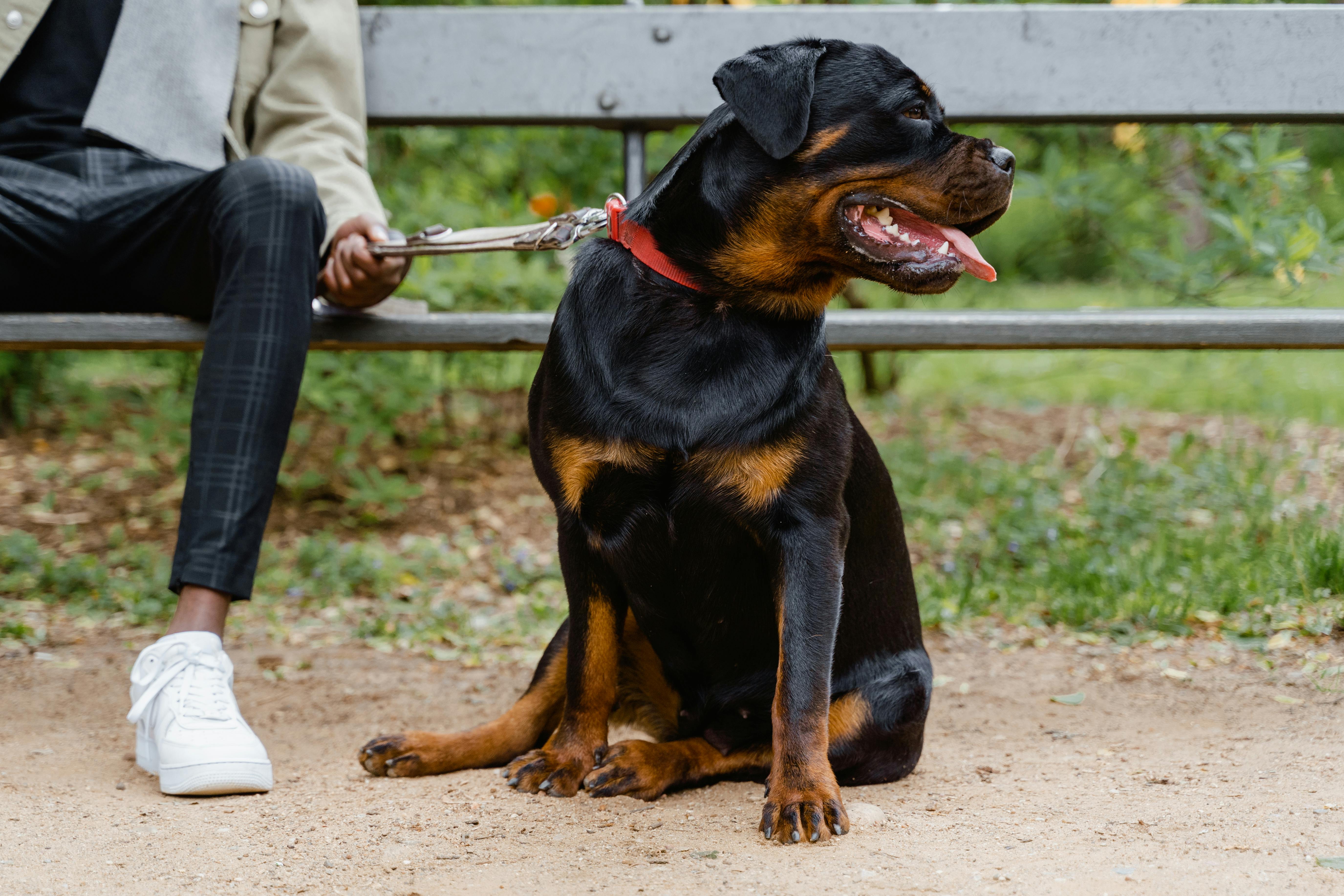
Also known as: Rottie
Buying a Rottweiler, the working-breeder checklist.
A serious Rottweiler breeder shows you OFA hip and elbow scores on both parents, a cardiac clearance from a board-certified cardiologist, a JLPP (juvenile laryngeal paralysis and polyneuropathy) DNA test, and a current eye exam. They tell you whether the litter comes from German working lines, bred under the ADRK with temperament titles and a natural tail, or American show lines bred to the AKC standard, because the two carry different drive and structure. They ask about your household, your fencing, your other dogs, and your experience with confident working dogs, because a Rottweiler that misses early socialization becomes a hundred-pound liability rather than the steady guardian the breed is meant to be. A breeder who places one in a first-time-dog home without a long conversation is not protecting the dog. Ask to spend real time with the dam off-leash in her own yard. The temperament you see in the parents is what your puppy grows into.
Typical price range
A Rottweiler puppy from a responsible breeder usually costs between two thousand and four thousand dollars in the United States, with German-titled working lines on the higher end at four to seven thousand. Anything under a thousand dollars almost always means the breeder skipped at least one of the four core clearances, and JLPP is the one screen you cannot skip with this breed, because the condition is fatal and a single DNA test rules it out. Be skeptical of anyone advertising a "rare" red, blue, or albino Rottweiler at a premium, because none of those is a correct color and some carry real health risk. Ask exactly what is included: shots, microchip, dewormer, vet check, AKC paperwork, the clearance documents with their OFA and CHIC numbers, and the lifetime take-back clause.
Health checks worth asking about
The American Rottweiler Club recommends OFA hips, OFA elbows, a cardiac evaluation by a board-certified cardiologist, an annual CAER eye exam, and a JLPP DNA test on every breeding pair. Many breeders also screen for hereditary cataracts and von Willebrand disease through Embark. The breed-defining health reality is osteosarcoma, an aggressive bone cancer Rottweilers develop more than almost any other breed, which is part of why the breed lives only eight to ten years on average. A UC Davis study on spay and neuter timing in Rottweilers found that early gonadectomy raised bone-cancer risk, so a good breeder will talk you through when to alter your dog rather than mandating it at eight weeks. The most useful signal a breeder can give you is honest longevity data: how long their dogs lived and what they died of.
No Rottweiler breeders on Breed Ledger yet.
What buyers ask about Rottweiler.
Other working breeds worth considering.
Each link goes to the breeder directory for that breed. Rottweiler not quite the match for your household? These are the closest relatives.